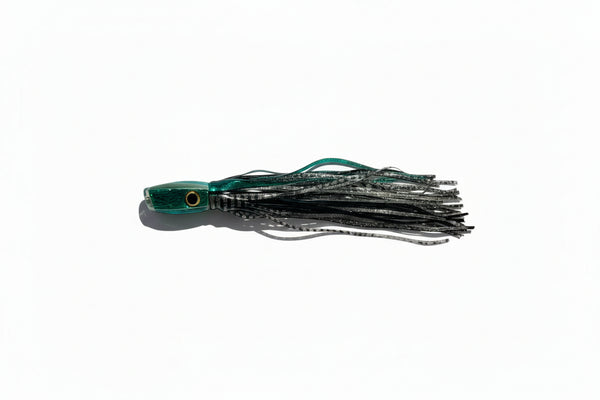
You usually know a bad spread before the first knockdown. One lure is blowing out, another is dragging dead, and the short bait looks good only every third wave. If you want to know how to build trolling spread that consistently raises fish, start there - not with random lure colors or whatever happened to be in the tackle bag. A productive spread is a system. Every position has a job, every lure has a speed window, and the whole pattern needs to stay clean in real water, not just in your head.
How to build trolling spread with a system
The biggest mistake offshore anglers make is treating the spread like a pile of individual lures. It is not. A spread works when the positions complement each other. You are building a pattern that shows fish different targets, different levels of aggression, and different silhouettes without turning the wake into a mess.
Start with the boat, because your wake tells you where your lures can actually run. A center console, express, and sportfish all throw a different pattern of whitewater. Trim, sea state, and trolling speed change it again. That means there is no universal lure chart that works every day. There are proven starting points, then there is adjustment.
For most offshore trolling, think in terms of five working zones: close aggressive water, short clean edge, middle lanes, long corner or shotgun water, and outside teaser water if you run it. Your spread should cover those zones with lures that stay in their lane and keep swimming. If one lure keeps washing out, it is in the wrong position, the wrong head shape, or both.
Start with target species and trolling speed
Before you rig anything, decide what the spread is built to do. Tuna, marlin, mahi, and wahoo will all eat in the same day, but they do not always want the same look.
If you are targeting marlin at moderate trolling speeds, you want a spread with smoke, surface commotion, and enough contrast that a fish can pick a target fast. Larger resin heads, bullets in cleaner lanes, and a teaser or chain can make that spread feel alive without overloading it.
If you are targeting tuna, especially school fish or mixed yellowfin and blackfin, cleaner tracking and smaller profiles often matter more than dramatic surface action. Too much turbulence can actually cost you bites if the fish are keyed on tighter bait. Medium resin heads, bullet-style lures, and squid chains can tighten things up.
Wahoo changes the equation again. Higher speeds favor lures that hold straight, stay down enough, and do not spin under pressure. That is where streamlined heads and durable rigging matter. A pretty lure that cannot track at speed is wasted tackle.
The point is simple: speed decides lure action, and species decides how much action you want. Build the spread around those two variables first.
Match head shape to position
This is where a lot of spreads get fixed. Not every lure belongs everywhere.
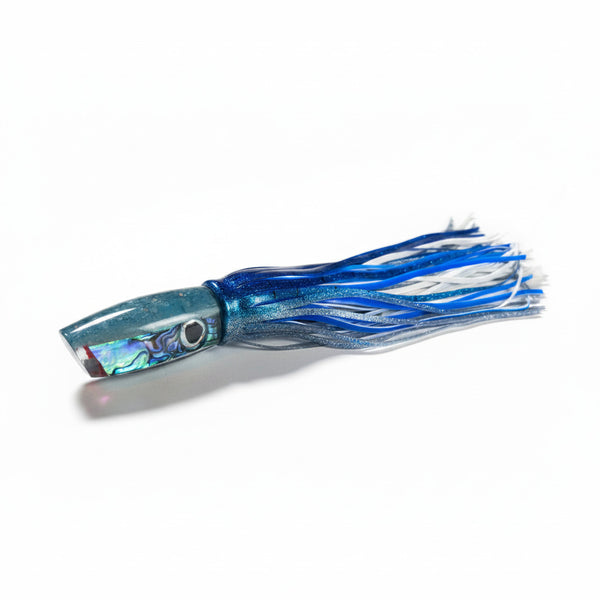
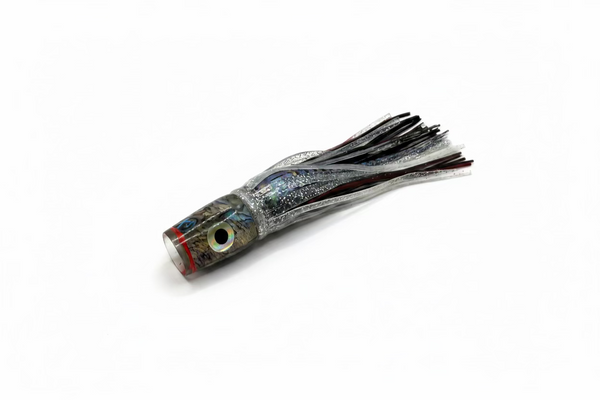
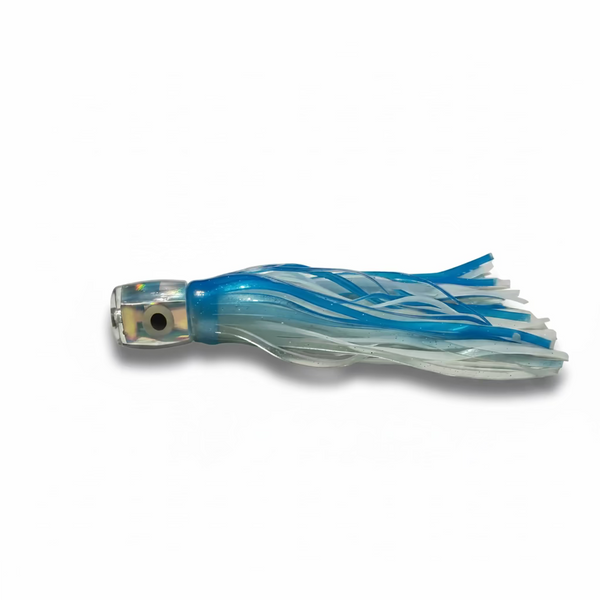
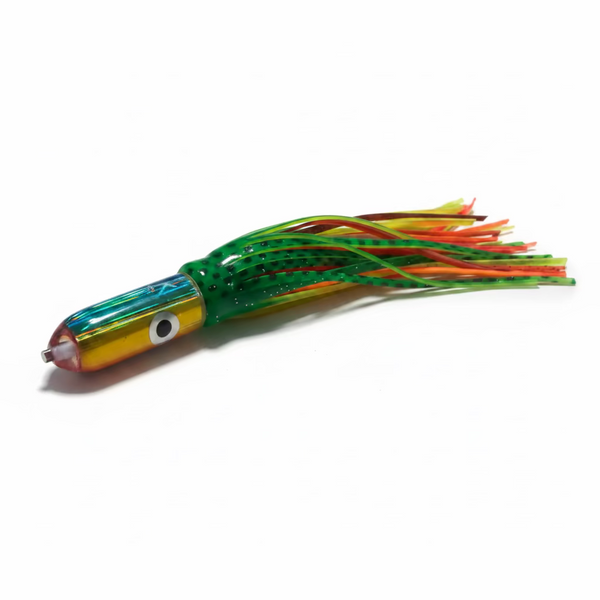
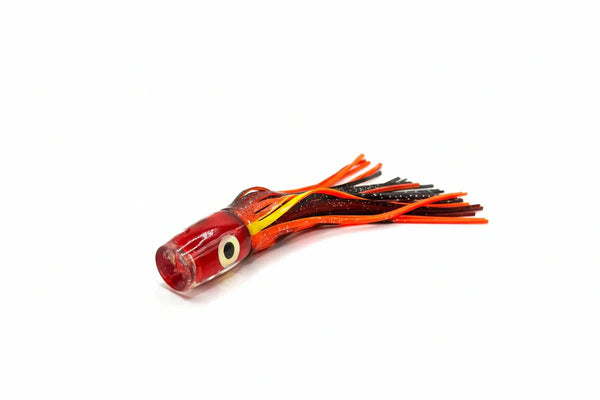
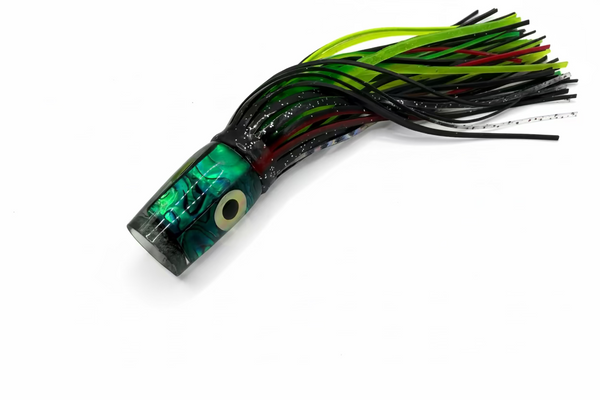
A more active cup or slant-style head usually belongs in water where it has room to pop, breathe, and recover. Corners and short positions are often right for that. A bullet head is more forgiving in cleaner water and higher speed lanes, which makes it a strong long rigger, shotgun, or wahoo position lure. Medium resin-coated lures can bridge that gap when you need a little more life without losing stability.
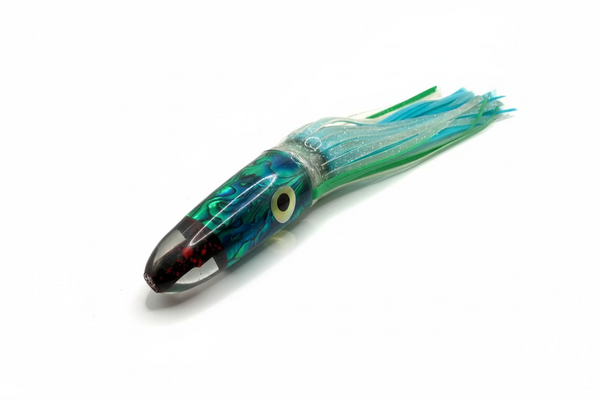
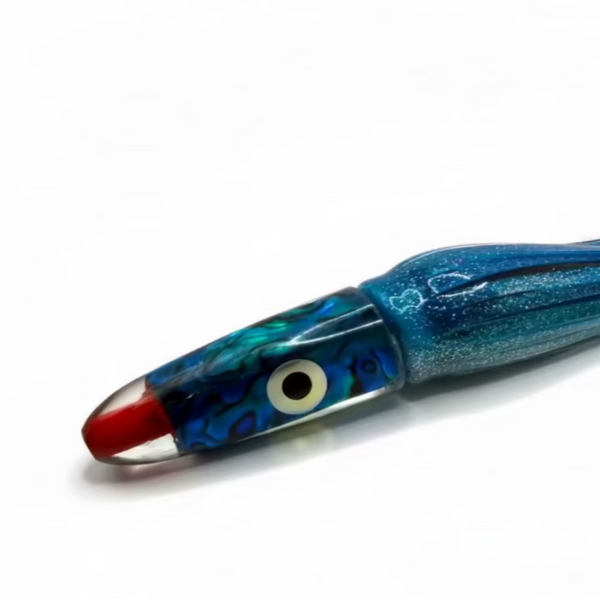
If you are running premium flash materials like abalone resin, position matters even more. Flash is not just about color. It is about when the lure rolls, when it catches light, and whether the fish gets a clean tracking target after the flash. Too much chaos around a lure can hide the effect instead of helping it.
A practical five-lure trolling spread
For most bluewater crews, a five-lure pattern is the cleanest place to start. It gives you enough coverage without making every turn risky.
Run your short corner in the heaviest useful water, but not so close that the lure never gets a clean cycle. This is a good place for a larger, more aggressive lure that can push smoke and raise a fish. Your long corner should be slightly cleaner and often likes a lure with a strong but more controlled action.
The short rigger is usually one of the highest-percentage positions in the spread. It sits where fish can see it clearly, and it gives a lure room to work. A medium aggressive head or a proven all-around marlin-tuna lure often fits well here. The long rigger wants consistency. This is a prime lane for a bullet striker or a stable resin lure that stays clean in mixed conditions.
The shotgun should be your tracker. It is not there to create chaos. It is there to hold a line, stay visible, and pick off fish trailing the spread or sliding in behind the boat. For tuna and wahoo, this can be one of the most reliable positions on the boat.
Add teasers only when they help
A teaser is useful when it creates attention without stealing control from the spread. Bird chains, squid chains, and dredges can all raise fish, but they also add drag, turn management, and cockpit work. If your crew is light or your conditions are sloppy, simpler can fish better.
For marlin-focused trolling, a teaser can absolutely sharpen the pattern and pull fish into the short baits. For tuna trolling, it depends. Sometimes extra commotion helps. Sometimes it muddies the picture. If your lure spread is already getting window shoppers, add attraction. If fish are already striking but not sticking, clean the spread instead of adding hardware.
How to set lure distance and spacing
There is no magic number in feet that beats all sea conditions. What matters is the lure cycle. You want each lure to enter, breathe, smoke, and dive in a repeatable rhythm. If it is skipping wildly, burying too long, or crossing lanes on every swell, move it.
Close positions should work off pressure and turbulence, not disappear in it. Longer positions should sit in cleaner water where their action is easy to read. Spacing between lures matters because fish need lanes to attack. If two baits are too tight, they compete visually and make turns ugly.
A good rule offshore is to set the spread, watch it for several minutes, then adjust only one variable at a time. Move one lure back. Change one head shape. Shift one teaser. Serious anglers lose fish when they change three things at once and never learn what solved the problem.
Color matters less than contrast and confidence
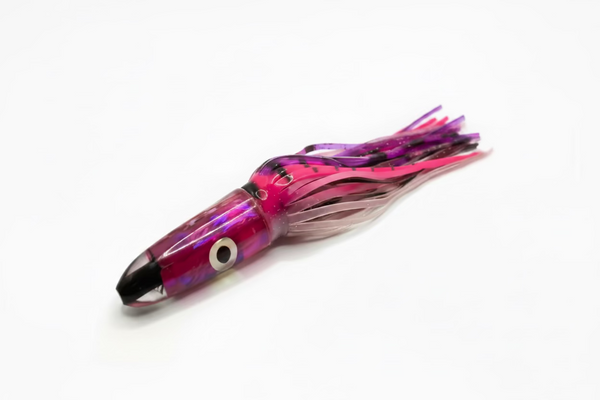
Color gets too much credit and not enough context. Yes, some days blue-white gets crushed. Some days black-purple or pink earns every bite. But in a trolling spread, profile, action, and flash usually matter first.
That said, you still want contrast across the pattern. Do not run five near-identical lures unless the fish are locked onto one exact bait profile. Mix dark and light, natural and bright, and different flash signatures so fish have options. Printed resin-dipped and abalone flash patterns can be especially effective when you want visible change without sacrificing durability.
Confidence counts too. If you know a lure has held together, tracked clean, and raised fish under pressure, you fish it better. That matters more than chasing every color rumor from the dock.
Rigging quality decides whether bites turn into fish
A spread can be perfect and still underperform if the rigging is poor. Offshore, bad hooks and lazy rigging get exposed fast.
Your lures need to track straight, stay centered, and hold hook position without fouling. Leader size should match target species, lure size, and expected sea conditions. Too heavy can kill action on smaller lures. Too light can cost you a fish that finally commits. Hook size and stiffness should match the lure head and skirt profile so the bait still swims the way it was designed to.
This is one reason serious anglers gravitate toward USA-rigged, performance-built tackle instead of generic offshore kits. A lure built to get strikes still needs rigging built to finish the job.
Read the spread and make real-time changes
A trolling spread is never finished at the dock. It gets finished behind the boat.
If the short corner keeps getting window-shopped, swap to a cleaner head or move it slightly. If tuna are showing on the long rigger but not eating, downsize the profile or tighten the lane. If wahoo are slashing and missing, look hard at speed and hook placement before changing every lure color you own.
Watch how fish enter the spread. Aggressive fish that crash the corners tell you one story. Fish that hang behind the shotgun tell you another. The spread should evolve with the bite. Skip the guessing and let the fish tell you which lane is working.
K2Fishing builds spreads around that exact reality - lures and components that hold their action, keep their flash, and stay fishable in real offshore conditions.
The best spread is not the busiest one or the most expensive one. It is the one where every bait has a purpose, every position stays clean, and every adjustment moves you closer to the next bite. Build it that way, and your spread starts working before the fish ever show up.