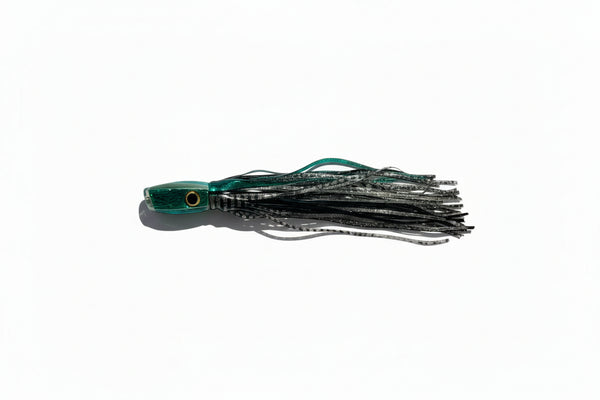
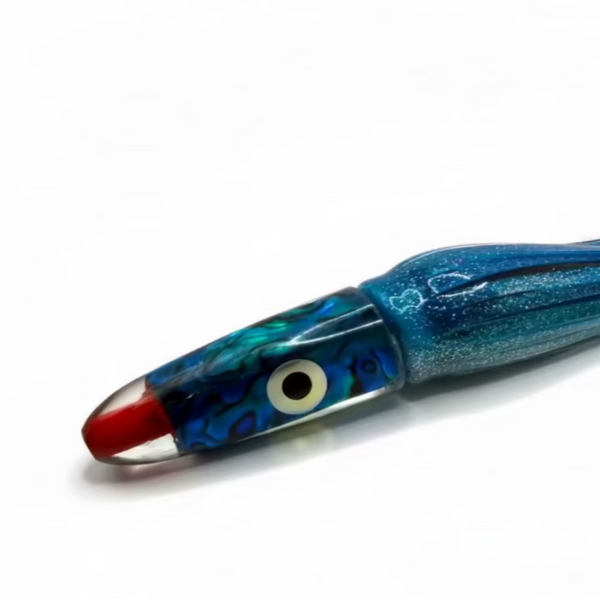
A good marlin spread usually tells on itself in the first 30 seconds. If the short corner is blowing out, the long rigger is dead, or every lure is smoking instead of breathing, the problem is not the fish. It is the setup. A solid marlin trolling lure setup is built around clean lure positions, predictable action, and enough contrast in size, shape, and surface commotion to give a billfish something worth tracking.
That matters more than loading the wake with random heads that look good in the tackle bag. Marlin are visual predators, but they are not grading your spread by paint alone. They react to cadence, smoke trail, head shape, and how each lure fits into the pressure lanes behind the boat. If your spread is balanced, you raise more fish. If it is balanced and rigged right, you convert more of those window-shopping bites into hookups.
What a marlin trolling lure setup needs to do

At a basic level, every lure in the pattern has one job - run clean in its lane. Clean does not mean lifeless. It means the lure pops, dives, breathes, and leaves a defined smoke trail without tumbling, spinning, or skipping out every few seconds.
For marlin, the spread also needs separation. You want different targets in different parts of the wake. One lure can be aggressive and noisy on the short corner. Another can be a cleaner, more deliberate swimmer on the long rigger. That mix gives fish options and lets you learn what they want that day.
There is no single perfect spread because sea state, boat size, trolling speed, and target species mix all change the picture. A 31-foot center console pulling four lures at 7.5 knots is not creating the same wake as a larger sportfisher running six at 8.5. The principles stay the same, but placement and lure style have to match the water your boat creates.
Start with the wake, not the lure bag
The biggest mistake in any marlin trolling lure setup is choosing positions by theory instead of by what the boat actually does. Your wake creates pressure lanes, whitewater, and clean windows. The lure has to fit the lane.
The short corner usually carries your most aggressive lure because it is working closest to the prop wash and hardest water. This is where a larger cup-faced or slant-style lure can do serious work if the boat leaves enough clean face in that zone. It should grab, smoke, dive, and reappear with rhythm. If it is blowing out constantly, either the head shape is wrong for that position or it is set too short.
The long corner often gives you a slightly cleaner track, and that makes it a strong place for a medium-large lure with a steady cycle. A lot of crews like this spot for a lure that leaves a strong smoke trail without too much side-to-side wandering.
Short rigger and long rigger positions usually carry lures that can run cleaner and show more consistent action in calmer water. These are often your best fish-raising positions because the lure is easier to track and attack. On many boats, the long rigger becomes a high-percentage bite lure because it sits in a clean lane with enough visibility to get noticed.
If you are running a shotgun, keep it simple. It should track far back, stay in clean water, and act like an easy target. That lure is not there to make chaos. It is there to look vulnerable.
A practical four-lure spread
For most offshore crews, four lures is enough to build an effective marlin pattern without clutter. A common setup is one larger, more active lure on the short corner, one medium-large lure on the long corner, one medium lure on the short rigger, and one medium or slightly smaller lure on the long rigger.
That gives you shape variation, different smoke signatures, and clean spacing. If your crew is less experienced or your cockpit is tight, four well-run lures will outperform six poorly managed ones every time.
Match lure head style to position
Not every marlin lure belongs everywhere in the spread. Head shape controls action, and action has to fit the water.
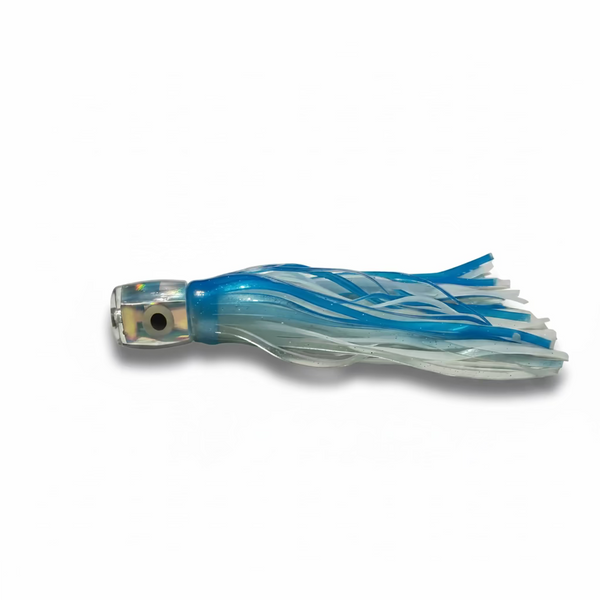
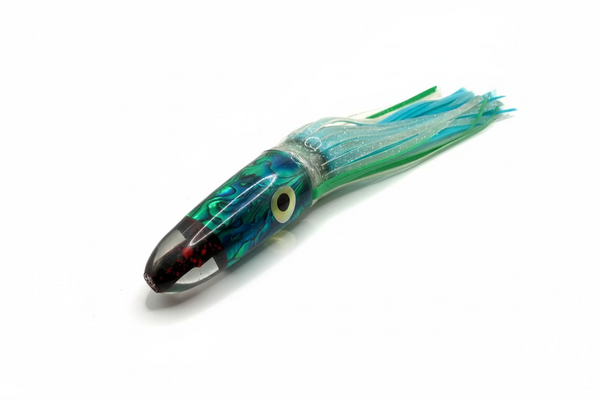
Bullet-style lures are excellent in cleaner positions and at higher trolling speeds. They track straight, stay in the water, and work well farther back or in calmer lanes. They can be deadly on tuna and wahoo too, but they still earn a place in marlin spreads when you want a stable long rigger or shotgun lure.
Slant heads and other angled-face designs give you more visible surface disruption. These are useful when you want a lure to grab water, throw smoke, and show a defined dive-and-pop cycle. They often shine on corners and some rigger positions, depending on sea state.
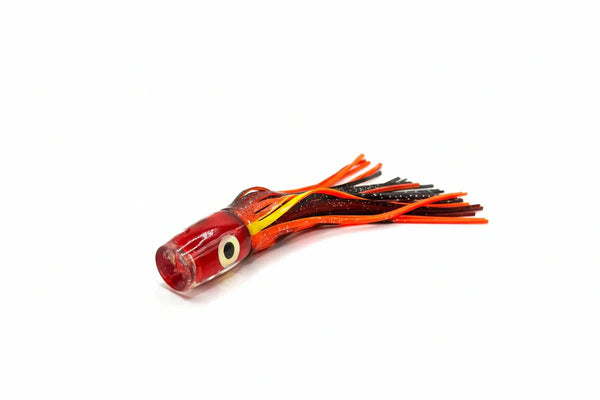
Cup-faced lures push more water and create a louder presence. In the right lane, they get attention fast. In the wrong lane, they can blow out and waste a prime spot. Bigger is not always better here. If the lure cannot stay engaged with the water, it is not fishing.
This is where premium construction matters. A well-built resin head with consistent balance and clean rigging tends to hold its track better than a flashy lure with poor weight distribution. Serious anglers know the difference after one rough day offshore.
Size and color are part of the system
Marlin will eat a range of lure sizes, but your pattern should still show intent. On most spreads, larger offerings belong closer and smaller or more streamlined offerings can run farther back. That creates a natural progression through the wake.
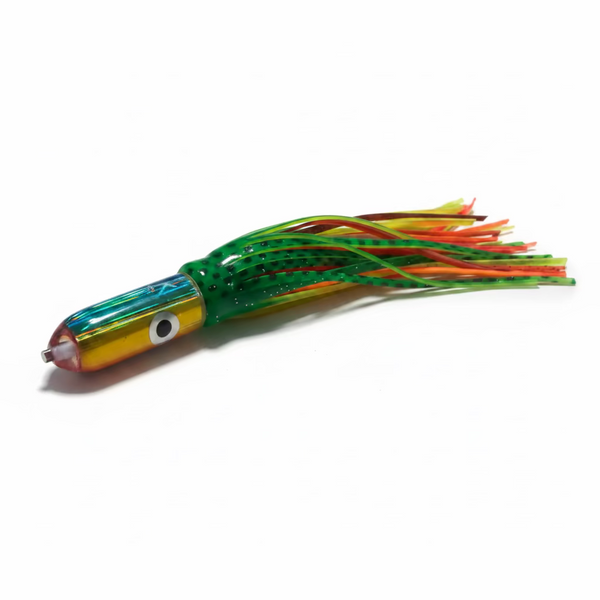
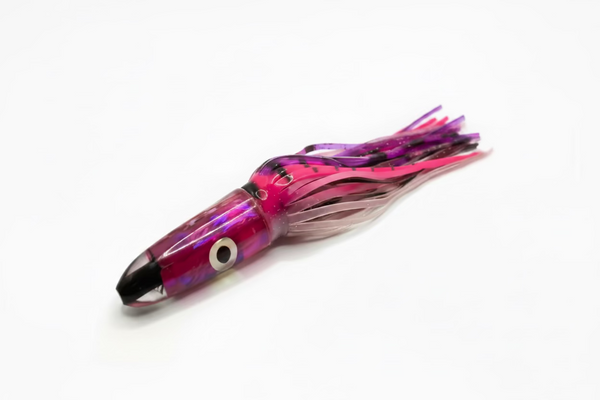
Color matters, but not in the way many anglers think. Contrast and visibility matter more than collecting every pattern on the wall. Dark profiles, blue-silver combinations, purple-black, and bait-oriented greens all have their place. The better question is whether the lure stays visible in the light and water color you are fishing.
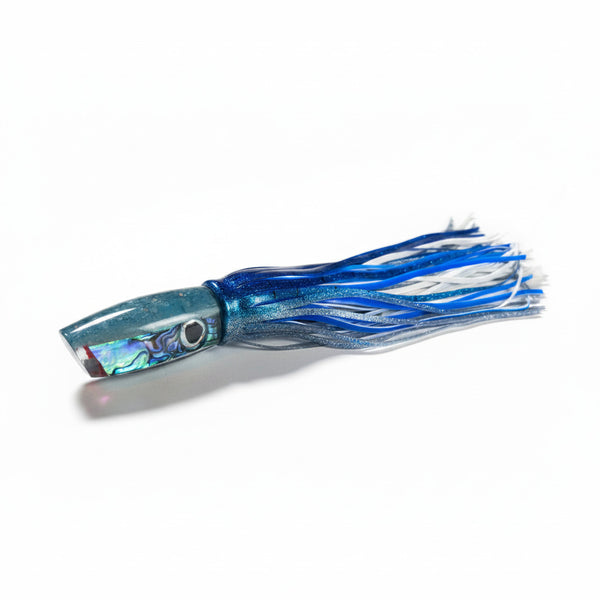
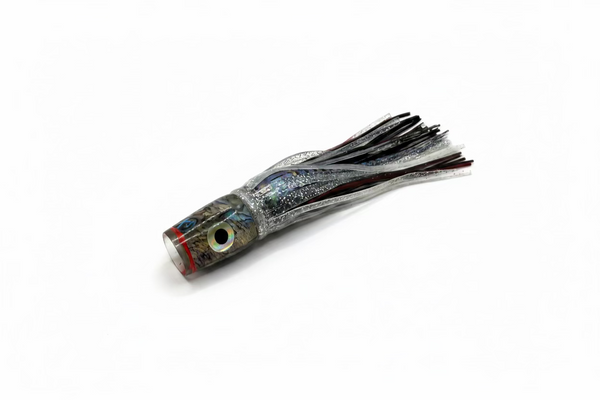
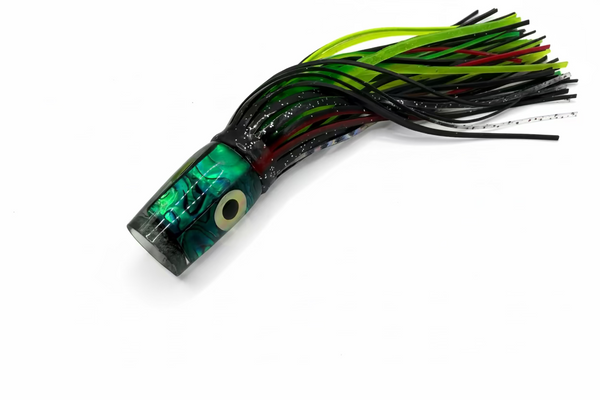
Flash also matters when the lure is moving correctly. That is one reason abalone resin heads get noticed. They throw a different kind of life in the water, especially when the lure is breathing clean and showing its sides during the cycle. It is not decoration. It is part of the trigger.
Rigging can save or waste the bite
Even the best marlin trolling lure setup falls apart if the rigging is wrong. Hook size, leader stiffness, hook orientation, and lure-to-hook balance all affect hookup ratio and lure action.
A lure that runs perfectly with one hook can get lazy with an oversized double. A stiff leader can help certain heads track better, but too much stiffness can make a lure look unnatural in calmer water. Hook placement matters too. If the hook rides too far back, you may get more tail swats and fewer clean eats. Too far forward, and the lure can lose its balance.
Single-hook rigs are popular for good reason. They are often easier on fish, easier on crews, and can improve lure action on many heads. Double-hook rigs still have a place, especially when crews know exactly how they want them pinned and aligned. The right answer depends on your lure size, your target fish, and how your crew fishes the bite.
At K2Fishing, the advantage of a USA-rigged lure is simple - you skip the guessing and start with hardware built to fish, not just to sit in packaging.
Speed changes everything
Most marlin trolling happens in the 7 to 9 knot range, but that does not mean every lure likes every speed in that band. Some heads come alive at 7.2 and get loose at 8.4. Others need more water pressure to cycle properly.
That is why lure testing behind your actual boat matters. Watch each lure at your normal trolling speed, then bump up and back down. A good spread gives you room to adjust for sea conditions without every lure falling apart.
If the weather comes up and you have to slow down, some aggressive heads may stop working. If you speed up to cover ground, some softer swimmers may wash out. There is no shame in swapping positions or changing one lure to keep the pattern fishing right.
Build around confidence, then refine
A productive marlin spread is usually built from a few proven pieces, not a pile of experiments. Start with heads you trust, give each one a clear job in the wake, and pay attention to what gets followed, what gets eaten, and what keeps getting ignored.
If one lure is raising fish but not getting hooked, the issue may be hook placement or lure size. If one position never gets touched, it may not be the lure at all - it may be sitting in dirty water. If one lure consistently gets crushed in a certain sea state, remember that and build around it next trip.
That is how good crews dial in a marlin trolling lure setup. Not by chasing hype, but by watching the spread, making disciplined changes, and fishing tackle built to get strikes when the pressure is on.
When your lures are running where they should, with the action they were built for, the whole spread starts to look like a system instead of a guess. That is when marlin stop window-shopping and start committing.