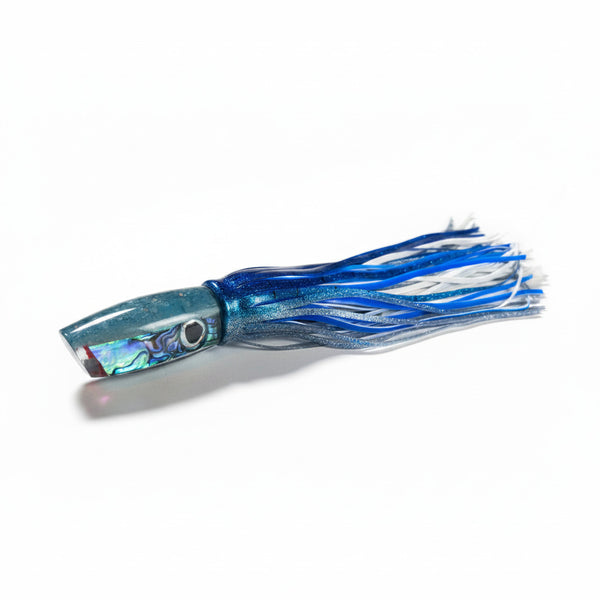
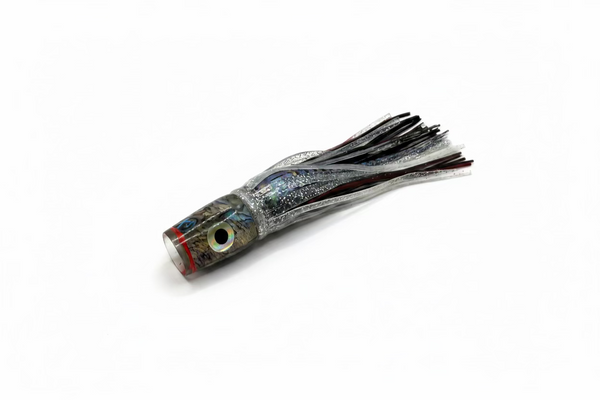
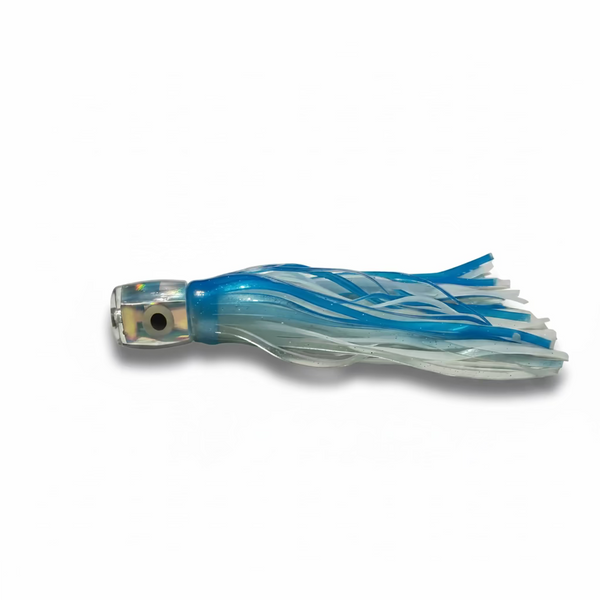
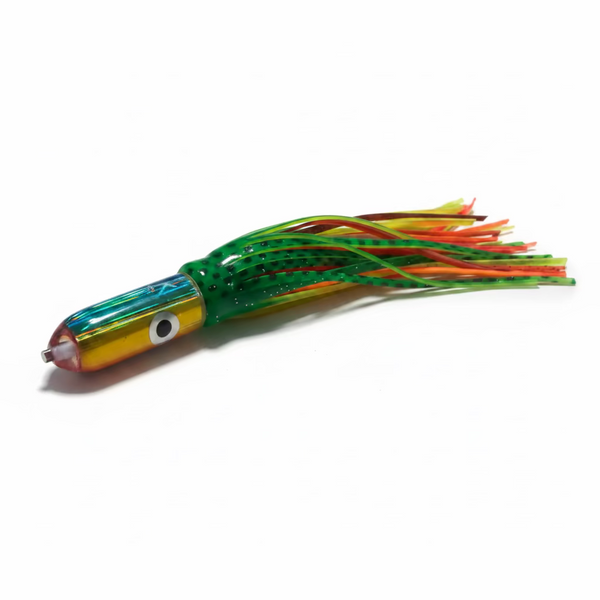
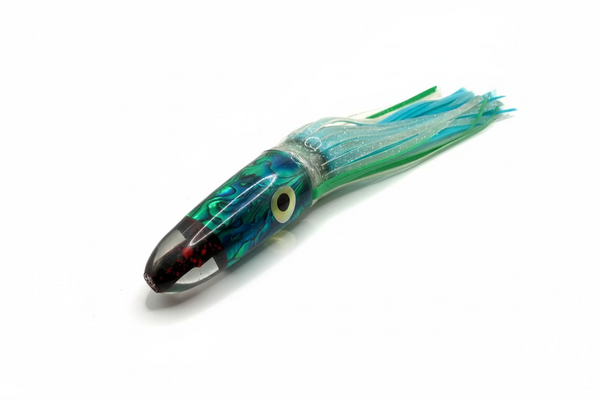
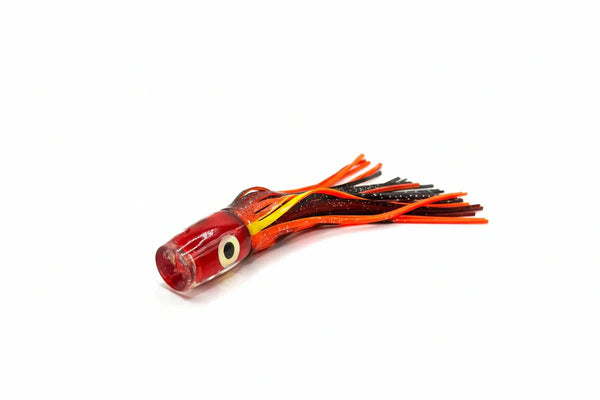
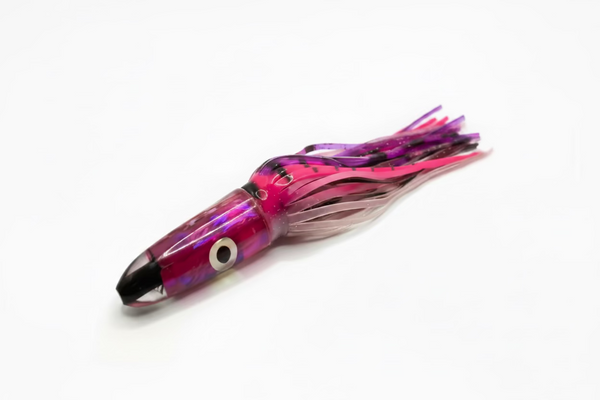
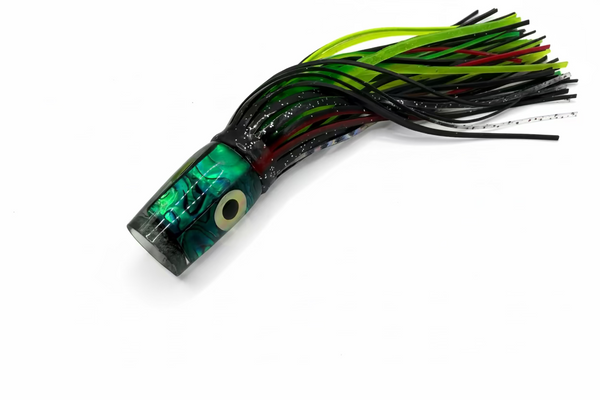
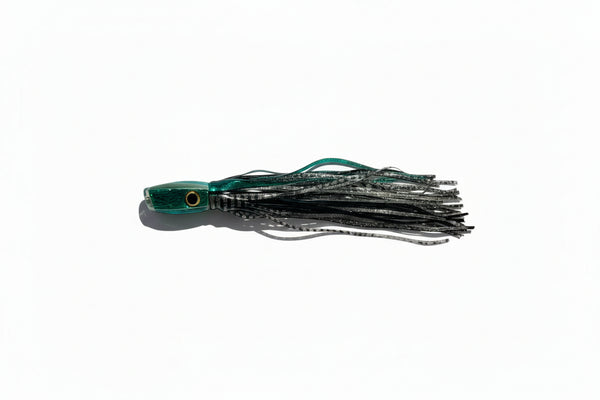
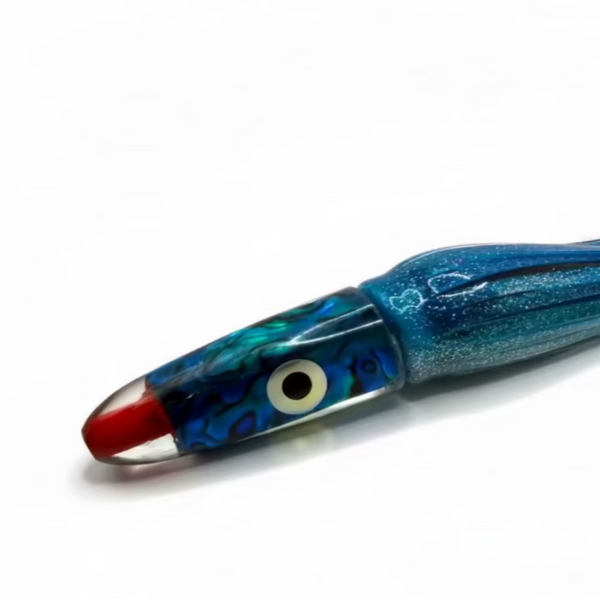
When a fish tracks a lure in blue water, tiny details decide whether it commits or fades off. That is where abalone resin lures earn their place. They are built to throw a harder, cleaner flash profile than standard resin heads, while still holding up to trolling speed, repeated strikes, and long days in a rough spread.
For serious offshore anglers, that matters more than hype. You are not buying color for the tackle tray. You are buying a lure head that stays true in the wake, shows life in changing light, and keeps producing when tuna, marlin, wahoo, or mahi are keyed in on flash and movement.
Why abalone resin lures get noticed
Abalone shell has a natural iridescence that changes with angle, depth, and sunlight. Encased in resin, it creates a flash pattern that looks less flat and less uniform than many painted or foil-based heads. In practical terms, that means the lure can show one look on the pop, another on the smoke trail, and another when it tracks just below the surface.
That changing flash is a big part of the appeal. Pelagic fish do not always respond to a static look. On some days they want a lure that throws hard visual signal in bright conditions. On others, especially when the water is clean and the bait is glossy, a shifting flash pattern helps close the deal.
Resin matters too. A well-built resin head protects the shell effect, keeps the lure balanced, and stands up better than cheaper cosmetic finishes that chip, peel, or wash out after a few trips. If you troll often, durability is not a side benefit. It is part of the value.
What abalone resin lures do better in the spread
A good offshore lure has to do more than look sharp in your hand. It has to run correctly at speed, recover cleanly after surfacing, and stay predictable in a mixed spread. This is where abalone resin lures separate themselves from novelty tackle.
First, they produce visible life without needing gimmicky head shapes. The flash carries the visual load, so the lure can still be tuned for real trolling performance. That helps when you are trying to build a spread that covers water efficiently instead of just creating surface commotion.
Second, they hold their appearance over time. Offshore tackle takes abuse - sun, salt, washdowns, teeth, and hours of pressure at trolling speed. A resin-coated abalone finish keeps the lure fishable and presentable much longer than many low-end decorative heads.
Third, they fit naturally into species-specific trolling. Tuna often respond well to compact, fast-running profiles with clean flash. Marlin can be drawn by larger heads that throw a bigger visual signature and hold position in rougher water. Wahoo demand speed and toughness. Mahi will crash a lot of things, but a lure that tracks clean and flashes hard still raises more consistent interest.
Where abalone resin lures fit best
Not every lure belongs everywhere in the wake. Head shape, face cut, size, and sea state still matter. Abalone resin is an advantage, not a replacement for proper spread design.
On the short rigger or long rigger, medium and large abalone resin heads are strong choices when you want a visible target with enough presence to hold in cleaner water behind the boat. They can be especially effective for tuna and marlin when the lure has a stable smoke trail and an easy breathing cycle.
On shotgun positions, smaller bullet-style heads with abalone flash can be deadly for tuna and wahoo. The narrower profile tracks clean at higher speed and gives fish a tight, disciplined target. If your program includes a lot of ground coverage and high-speed consistency, this is where a bullet striker style really earns its keep.
Closer positions can also work, but only if the lure is built for the pressure and turbulence there. Some resin heads are too pretty and not functional enough to stay in the pattern. A lure needs to pop, dive, and recover without blowing out every few seconds. Skip the guessing and run heads that have already proven they can hold.

Choosing the right abalone resin lures
The wrong way to shop is by finish alone. The right way is to match the lure to the job.
Start with target species. For wahoo, lean toward faster-running heads with a tighter profile and solid rigging. For tuna, think about whether you need a smaller bait profile or a more aggressive visual trigger. For marlin, larger heads with more displacement and a strong flash signature can make sense, especially in a spread built to raise fish from distance.
Then consider trolling speed. Some lures look great at five knots and wash out at eight. Others come alive once the boat is moving properly. Offshore anglers already know this, but it is worth repeating - action beats appearance. If the lure does not run right at your actual speed, the finish is irrelevant.
Sea conditions matter just as much. In calm water, a subtler head with abalone flash may be enough. In rougher water, you may need a larger resin head or a more aggressive face shape to keep the lure visible and active. Bright sun versus overcast sky can also change what fish respond to. Abalone tends to stay effective across both, but your skirt color, lure position, and head size still need to work together.
Rigging quality is part of lure performance
A premium head with bad rigging is still a bad lure. This is one of the biggest reasons experienced offshore anglers get selective fast.
Hook alignment, leader weight, crimp quality, and overall balance all affect how the lure swims. A poorly rigged lure can spin, track sideways, or fail to convert bites even when it gets attention. That is wasted opportunity, especially when the fish window is short.
USA-rigged construction matters because consistency matters. When a lure is built for offshore use from the start, not just dressed up for online photos, you see it in the spread. It tracks cleaner. It lasts longer. It gives you fewer surprises when the bite turns on.
That is also why serious anglers tend to buy curated lure systems instead of random one-offs. A lure is not just a lure. It is part of the spread, and every position has a job.
Trade-offs anglers should know
Abalone resin lures are not magic, and they are not automatically the right answer every day. There are trade-offs.
They usually sit at a more premium price point than basic resin or soft-head options. For anglers who troll a few weekends a year, that may feel like a big jump. For captains and regular offshore crews, longer service life and better fishability often justify it.
They also work best when the rest of the setup is right. If your spread is poorly arranged, your speeds are inconsistent, or your leaders and hooks are mismatched, the lure will not fix those problems. Good tackle helps, but presentation still wins.
And while flash is an advantage, too much of the wrong kind can hurt you. There are days when fish want a cleaner, darker, less aggressive look. That does not make abalone a bad choice. It just means lure selection should stay tactical, not automatic.
Why serious crews keep them in rotation
The best reason to fish abalone resin lures is simple - they stay relevant across a wide range of offshore conditions. They give you a durable head, a premium flash effect, and strong visual presence without sacrificing real trolling function.
That combination is why they stay in rotation on boats that fish for results. Not because they are trendy, but because they offer something useful in the spread: flash with depth, toughness under pressure, and enough variety to match different species and speeds.
At K2Fishing, that is the whole point of lure design. Build heads that look alive, run correctly, and keep getting bites after the first trip. If you are putting together an offshore spread for tuna, marlin, wahoo, or mahi, abalone resin lures deserve a serious look - especially when you want tackle built to get strikes instead of just take up space in the tackle bag.
The next time your spread needs more visual pull without giving up clean action, start with the lure that can do both.