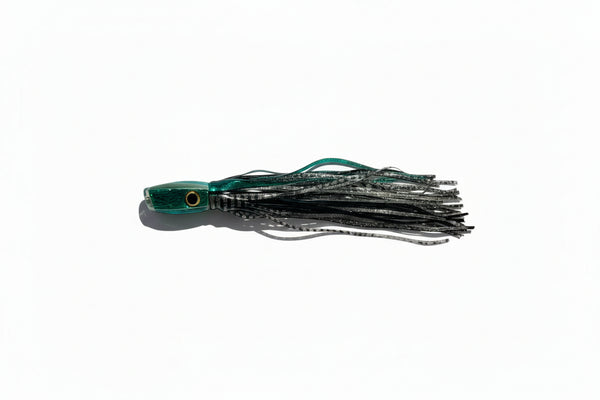
A blue marlin lure selection guide should start where most spread decisions actually get made - not at the tackle wall, but in the wake. If your lures will not hold, smoke, track, and recover cleanly at your real trolling speed, the rest of the conversation is noise. Blue marlin are built to punish weak presentations, and the right lure is the one that keeps working when the ocean gets ugly, the bait changes, and the fish shows up behind the short corner with bad intentions.
Most anglers lose time and money by treating blue marlin lures like collectibles instead of tools. Head shape, face design, skirt profile, rigging quality, and position in the spread matter more than hype. You do not need a random pile of heads in every color ever made. You need a small group of proven lures that run where they should, match your boat and sea conditions, and stay in the water long enough to get eaten.
How to use this blue marlin lure selection guide
Start with the boat, not the fish. Hull design, prop wash, transom height, teaser program, and normal trolling speed all change what a lure does. A lure that looks perfect behind a larger diesel sportfisher can blow out behind a smaller center console. A heavy cup-faced head may hold well in rough water but can be too aggressive in a clean lane on a calm day.
That is why blue marlin lure selection is always about fit. You are not buying the "best" lure in the abstract. You are choosing the best lure for your spread position, water movement, and speed window.
For most serious marlin spreads, you are trying to cover three jobs at once. You want one or two lures that raise fish aggressively, one that stays easy to track in rougher conditions, and at least one clean swimming bait-sized profile that converts window-shoppers into committed bites. The balance matters. A spread full of oversized, hard-smoking heads can look impressive, but it can also reduce your consistency when fish want an easier target.
Start with lure size, not color
Size is the first filter because it affects profile, smoke trail, stability, and hook package. Blue marlin will absolutely eat a large lure, but that does not mean larger is always better. In many fisheries, medium to large lures raise just as many fish and often produce cleaner hookups because they stay in shape at speed and look easier to kill.
A practical range for blue marlin is usually 10 to 16 inches overall, depending on head weight, sea state, and spread position. Smaller boats often get better performance from medium heads in that range because they can run clean in tighter lanes. Larger boats with heavier wash can support bigger lures on the corners, especially when the goal is to call fish up from deeper water.
If you run only giant heads, you limit your spread. If you run only small, light lures, you may lose visibility and presence when the water is rough. The smart move is a mix. Let your corners carry more profile and weight, then use slightly cleaner, more agile lures farther back.
Head shape decides how a lure behaves
This is where experienced anglers separate themselves. Blue marlin do not eat labels. They react to movement, pressure change, flash, and vulnerability. Head shape controls most of that.
Bullet and slant styles
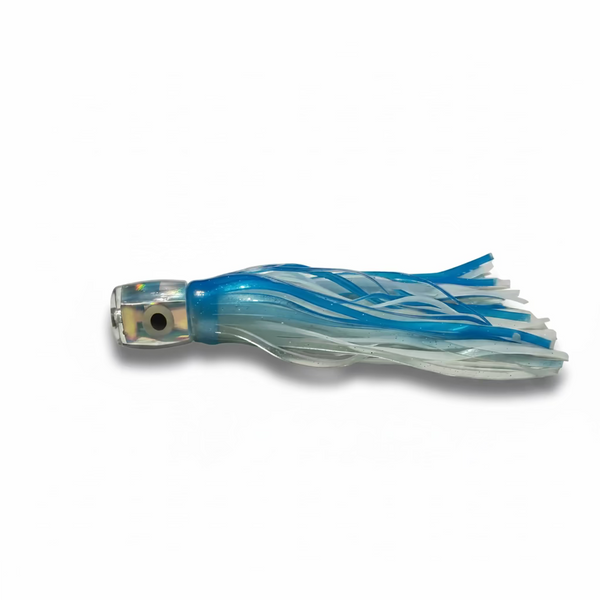
Bullet-style lures are built for stability. They track well in faster water, hold shape in rough conditions, and fit naturally in long rigger or shotgun positions. They are not usually your most aggressive surface lure, but they are excellent when you want a lure that stays in the game without constant babysitting.
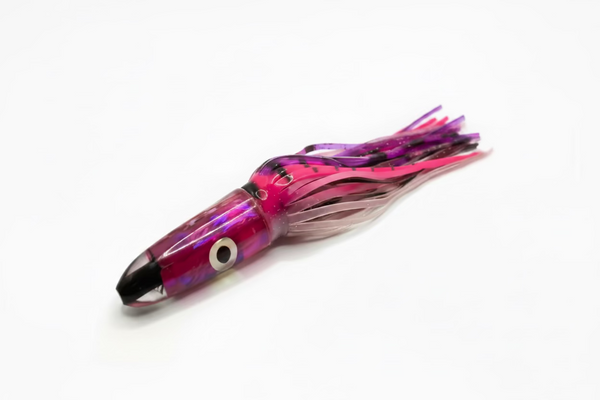
Slant heads add more action and smoke while still staying fairly versatile. They can work on riggers or even corners depending on the specific head weight and face cut. If you want one of the best all-around options for a mixed pelagic spread that may also raise blue marlin, slant profiles earn their place.
Cup-faced and angled aggressive heads
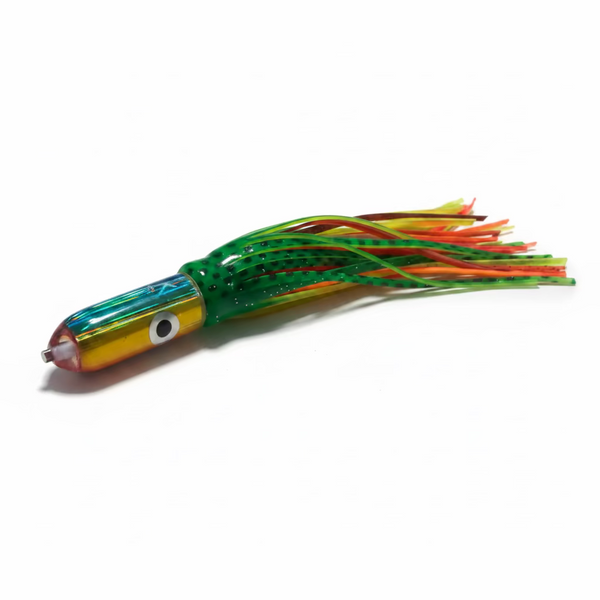
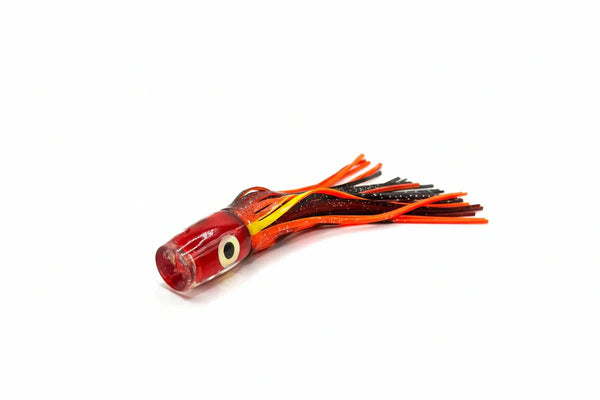
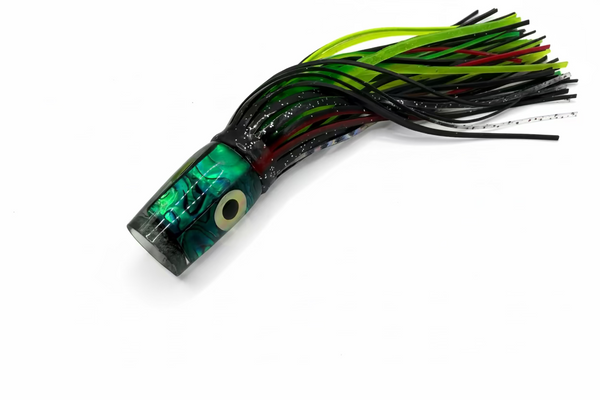
These are built to get strikes. They dig, pop, throw smoke, and create a bigger visual event in the water. On short corners and long corners, a well-tuned aggressive head can be a fish-raiser all day. The trade-off is control. Some aggressive heads are speed-sensitive, and some will blow out if the lane is too clean or the sea is too steep.
That does not make them bad. It means they need the right job. Put your most active lure where it can work with enough surface tension and prop wash to cycle properly, then watch it. If it is spending more time tumbling than breathing and diving, it is in the wrong place or the wrong sea state.
Color matters, but less than action
Anglers love to argue color because it is visible and easy to swap. Blue marlin care more about presentation than tackle-box theory. A lure with strong action, good flash, and a clean smoke trail will outfish a bad-running lure in the "right" color most days.
That said, color still has a role. Blue, black, purple, pink, and silver remain consistent producers because they cover the common offshore light conditions and bait profiles blue marlin see. Darker colors can hold a stronger silhouette in rougher or lower-light conditions. Brighter skirts and reflective flash can help when the water is clean and the sun is high.
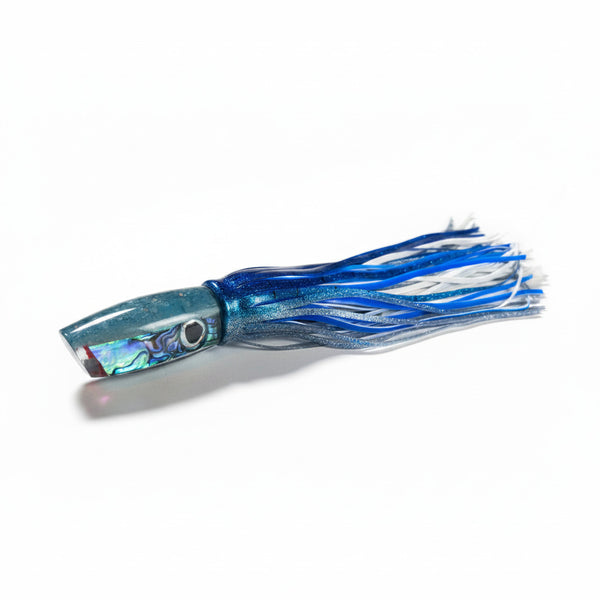
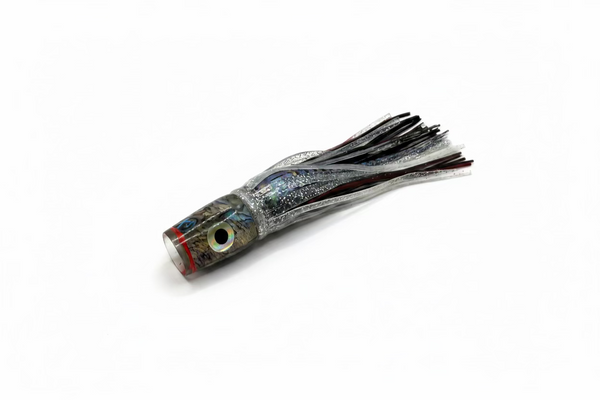
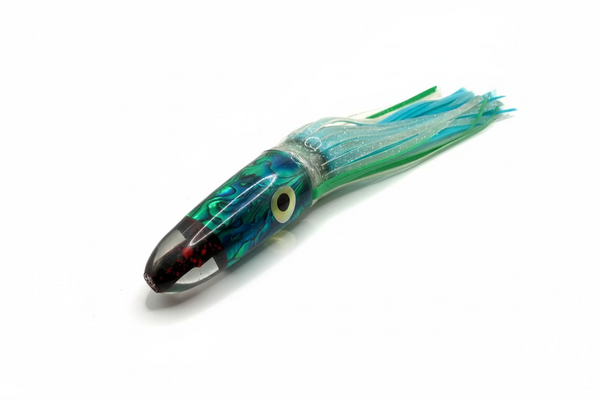
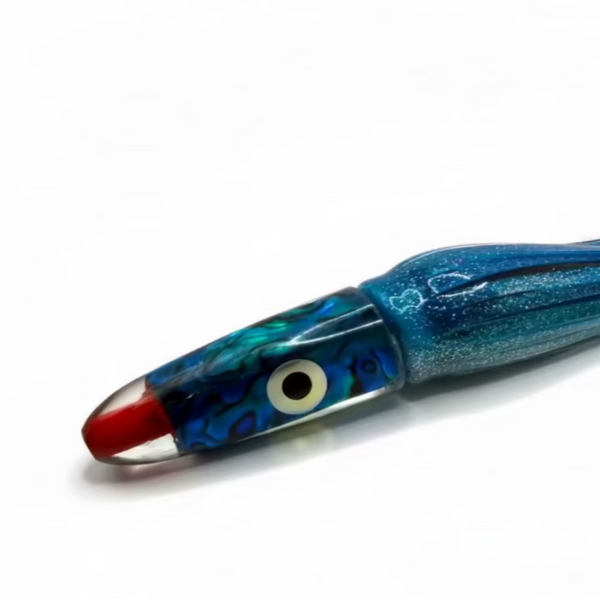
Abalone-style flash is valuable because it adds changing light without making the lure look unnatural. That shifting flash can help a lure stay visible during the turn and on the drop-back, when marlin often commit. K2Fishing builds around that kind of real offshore trigger because visible flash is useful only if the lure still tracks correctly at speed.
A simple rule works well here: pick your shape and size first, then choose a color family that matches your water clarity, sky condition, and confidence. Do not reverse that order.
Match each lure to a spread position
A good marlin spread is not just a set of individual lures. It is a system. Each position asks a lure to do something different.
Short corner
This is where larger, heavier, more aggressive lures often shine. They have enough disturbed water to dig, smoke, and re-enter without washing out. A large slant or active cup-faced lure can be deadly here, especially if you are trying to raise fish.
Long corner
This is still a strong spot for a substantial lure, but usually one that is slightly cleaner and easier to track than your short corner bait. You want presence without chaos. Many anglers get excellent results here with medium-large heads that throw smoke but stay predictable.
Short rigger
This lane usually favors a cleaner swimmer with enough action to stay interesting. Slants and medium aggressive heads work well, especially if they can cycle in and out without overworking. This is often a strong conversion bait for fish that show up hot behind a teaser.
Long rigger and shotgun
These positions usually call for stable lures. Bullets, lighter slants, and streamlined heads work because they track cleanly in less broken water. If your long bait cannot hold shape, it becomes dead water in the spread.
Rigging can make or ruin the lure
A perfect head with poor rigging is still a bad lure. Hook size, hook orientation, leader stiffness, and overall balance all affect action and conversion. Serious offshore anglers know this, but plenty still blame the lure when the real problem is the hook package.
For blue marlin, the goal is a rig that keeps the lure swimming freely while presenting a clean, reliable hookup point. Too much hook can deaden the action. Too little can cost you on the bite. Stiff or poorly matched leaders can make a lure spin or track sideways. Cheap skirts and weak crimps do not fail in calm water at the dock. They fail when a big fish piles on at speed.
This is one reason premium USA-rigged trolling lures matter. Consistency is not glamorous, but it catches fish. When a lure runs the same way every time it hits the pattern, you can make real adjustments instead of guessing.
What changes with sea conditions and speed
No blue marlin lure selection guide is complete without this point: sea state changes your best lure faster than any catalog ever will.
In calm water, you can get away with lighter and more active lures farther back. They have room to breathe, dive, and leave a clean trail. In rough water, heavier heads with better tracking become more important. You may need to shorten positions, move lures into dirtier water, or drop one overly aggressive lure for something that stays consistent.
Speed matters the same way. If you normally troll at 7.5 to 8 knots, your stable heads and moderate-action lures will usually earn more water time. If you push faster to cover ground or mix in wahoo gear, bullets and tighter tracking heads start making more sense. The key is not forcing one favorite lure to do every job.
Build a tighter marlin program
If your spread feels random, simplify it. Start with one aggressive corner lure, one medium-large corner or short-rigger bait with a clean cycle, one stable long-rigger lure, and one dependable bullet or streamlined shotgun. Fish that set long enough to learn what each lure really does. Then make one change at a time.
That is how serious bluewater anglers tighten up a marlin program. They do not chase every new head shape that shows up online. They build around lures that run clean, stay durable, and keep producing when the pressure is on.
The best blue marlin lure is not the loudest one in the tackle bag. It is the one you trust enough to leave in the spread when the next fish climbs into your wake.