When yellowfin are up and feeding, bad trolling gets exposed fast. You can have the right ocean, good marks, and clean water, then spend the whole morning dragging a spread that looks fine to the crew but never gets touched. Strong yellowfin trolling techniques are about more than pulling lures around bait. They are about speed control, clean positions, lure balance, and showing tuna something they can track and commit to.
What yellowfin actually respond to
Yellowfin are built for speed, but they do not feed the same way wahoo do. Wahoo often crash a lure out of pure reaction. Yellowfin usually give you a little more information if you pay attention. They rise on bait schools, push into current edges, and often key on one class of forage for hours at a time. If your spread is too big, too loud, or running out of position, they will inspect it and slide off.
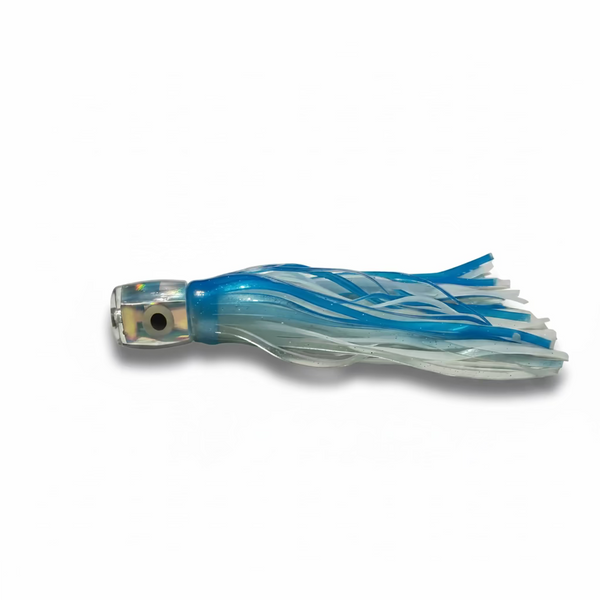
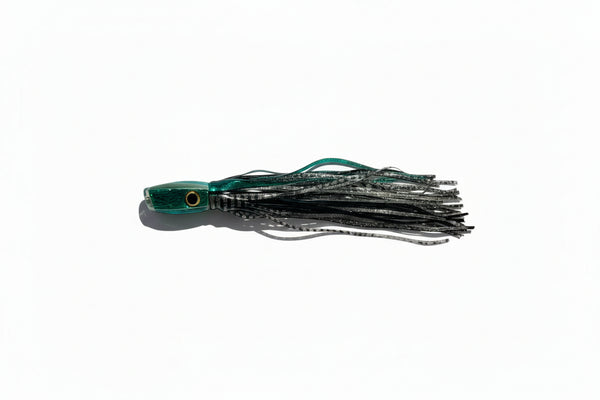
That is why yellowfin trolling is usually best when the spread looks easy to chase and easy to eat. Medium-profile lures with stable action, clean smoke, and strong flash tend to outperform oversized heads unless the fish are crushing larger flying fish or saury. On a tough bite, the difference between a lure that tracks true and one that blows out every few seconds is the difference between teasing fish and hooking them.
Yellowfin trolling techniques start with speed
Most crews talk first about lure color. Speed matters more. For yellowfin, the productive range is often around 6.5 to 8.5 knots, with 7 to 8 knots being the starting point for many offshore spreads. That range gives most tuna lures enough smoke and surface life without making them skitter unnaturally.
There are exceptions. If you are pulling a mixed spread for tuna and wahoo, you may push faster. If the fish are keyed on tiny anchovies or halfbeaks and just slapping, backing down a few tenths can clean things up. The point is not to chase a fixed number on the GPS. The point is to troll at the speed where each lure in the spread is working correctly in its assigned position.
Watch your short corner and long rigger first. If the short lure is digging too hard and throwing erratic spray, it is probably overworked for that sea state. If the long lure is dead and barely breathing, it is too light for the water or too far back. Good speed control is always tied to conditions. Quartering into a head sea at 7.5 is not the same presentation as running downhill at the same number.
Build a spread that stays clean
A yellowfin spread does not need to be crowded. In many cases, five well-placed presentations will outfish seven or eight average ones. Tuna punish clutter. Every lure should have a lane, and every lure should have a job.
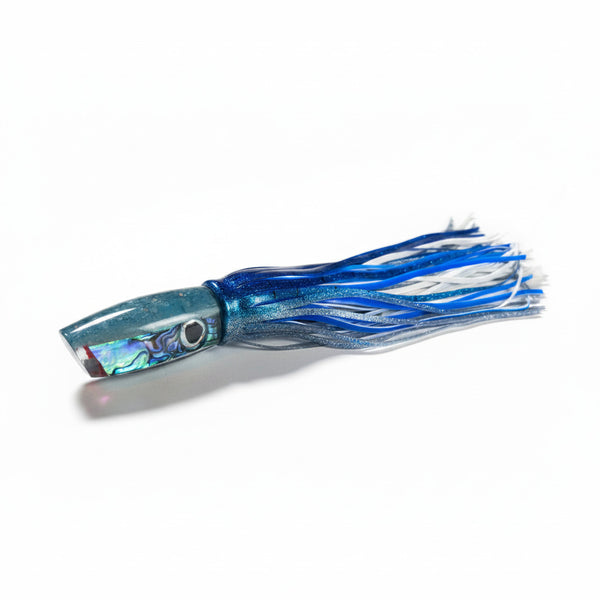
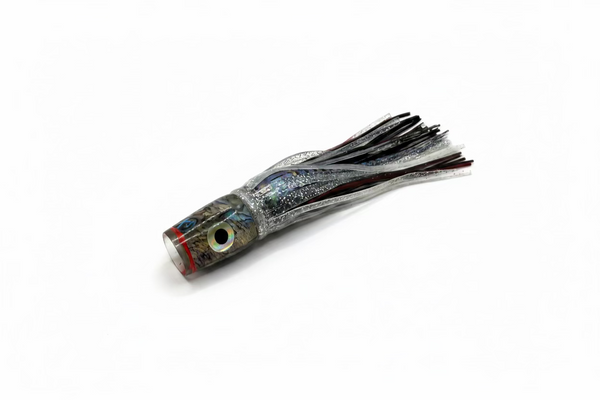
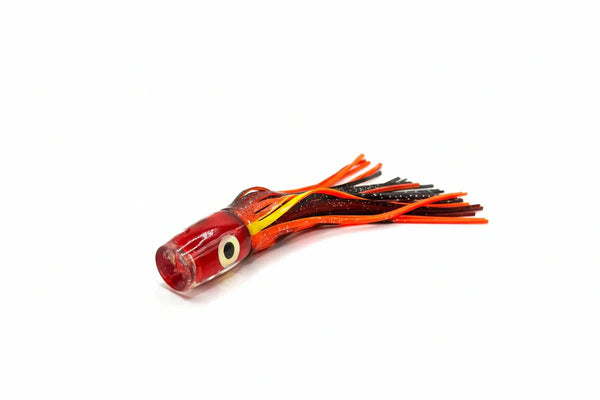
A practical spread starts with a short corner bait that can handle rougher water without blowing out. A medium or bullet-style head often fits well here, especially one with enough face shape to hold the water but not so much that it becomes aggressive and sloppy. On the long corner or short rigger, a slightly more active lure with strong flash can give the fish a cleaner target as they come in. Long riggers are often where a stable resin lure shines because it can stay in the water, smoke, and pop without looking wild.
Way back on the shotgun, keep it simple. This is a good place for a smaller bullet or a straight-running tuna lure that stays narrow and clean. The shotgun is not there to create chaos. It is there to pick off fish hanging off the edge of the commotion or following the boat wake without fully committing.
Teasers can help, especially birds, chains, and compact surface commotion that pulls fish into the pattern. But there is a trade-off. If the crew is light, or if the cockpit is already busy with turns, traffic, and clearing rods, too many moving parts can cost you bites when the moment comes. Run enough teaser to raise fish, not so much that you turn the spread into a mess.
Lure size, profile, and flash matter more than trendy colors
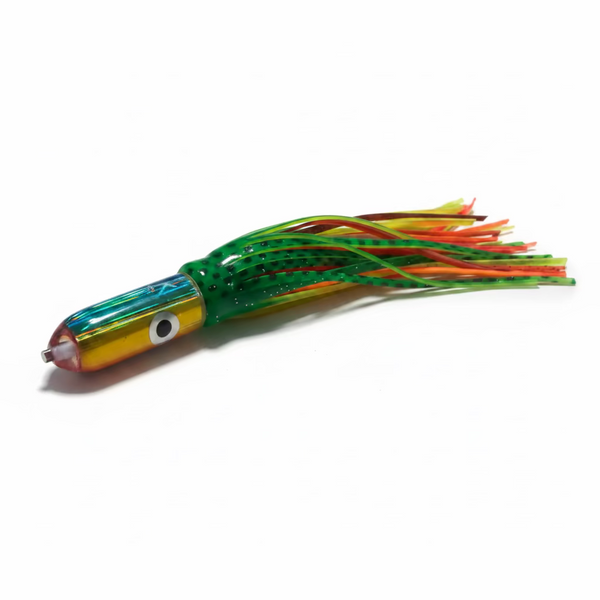
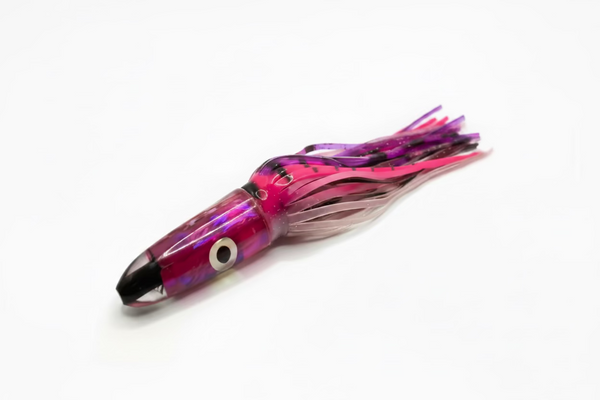
Yellowfin are often less color-picky than anglers want to believe, but profile and contrast absolutely matter. Blue and white, green/yellow, pink, black/purple, and natural bait tones all catch tuna. What separates productive lures from average ones is how they show in the water.
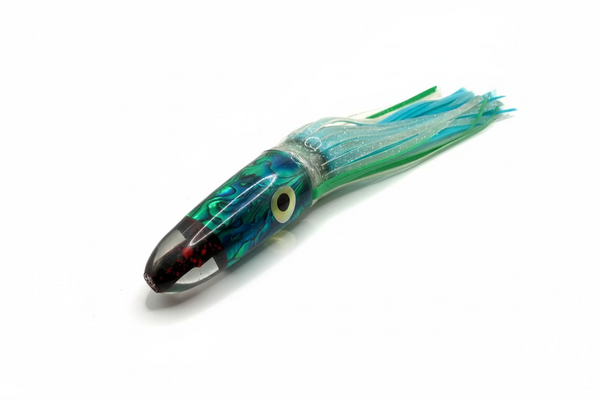
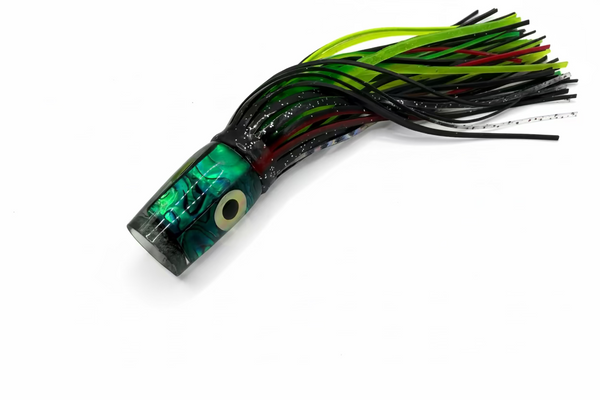
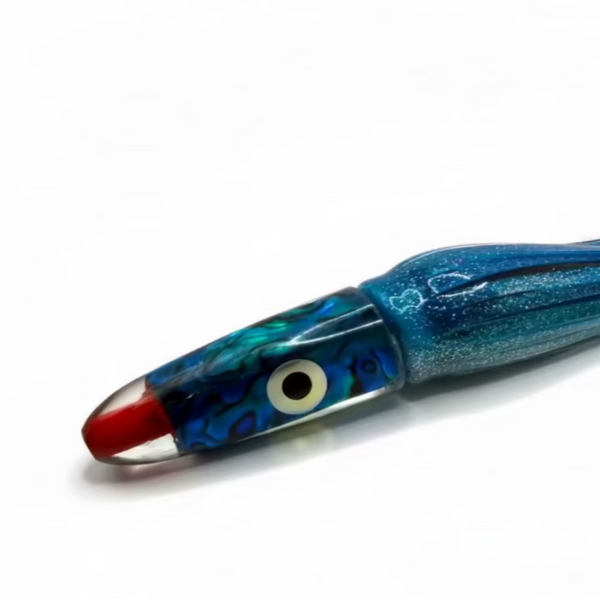
Flash is part of that equation. In clean blue water, a lure with layered flash can pull fish from farther off track, especially when the sun is high and the spread needs extra visibility. Abalone-style flash has a different look than flat foil or printed finishes. It throws broken, shifting color rather than one-dimensional shine, and that can matter when yellowfin are tracking from below and behind.
Size should follow the forage and the mood of the fish. If tuna are feeding on small bait and your spread is all large cup-faced heads, do not be surprised when they swipe and miss or ignore you completely. Smaller to medium trolling lures often produce more consistent yellowfin bites because the fish can eat them cleanly at speed. Bigger lures still have a place, especially when you are targeting larger tuna offshore or fishing areas with bigger flying fish, but they need to fit the day.
Get the lure positions right
Most yellowfin trolling mistakes are positional. A good lure in the wrong water is still the wrong lure. You want each bait running in a clean rhythm relative to the wave pattern behind the boat.
The short corner usually belongs in heavier water where a lure with some backbone can dig, smoke, and pop without tumbling. The long corner should run where it gets room to breathe between the prop wash and the cleaner face of the wake. Short riggers are often prime real estate because the lure gets visibility, movement, and enough clean water for tuna to line up. Long riggers and shotguns need to stay disciplined. If they wander, skip too high, or die in the trough, yellowfin will track them without eating.
A simple rule helps - if a lure looks hard to catch, fix it. Tuna like targets they can close on. That means steady cycle, predictable smoke trail, and no random blowouts.
Read bites and adjust fast
Yellowfin usually tell you what is wrong before they tell you what is right. If fish are window-shopping behind the long rigger but not eating, the lure may be too large, too hot in color, or just running too fast. If you get repeated short bites on one position, that often points to a lure that has good attraction but poor hookup geometry. Sometimes the answer is a different head shape. Sometimes it is rigging.
Hook placement matters. So does stiffness. A lure that tracks beautifully but carries a poorly aligned hookset can cost fish all day. Serious crews know that clean rigging is not an accessory. It is part of the presentation. Premium, USA-rigged trolling lures earn their keep here because consistency under pressure matters when a good yellowfin finally commits.
If one lure raises fish three times in an hour and never hooks up, do not just leave it because it is getting attention. Change it, shorten it, swap the hook angle, or move it into another lane. Raised fish are useful, but landed fish are the metric.
Work the right water, not just the right numbers
Yellowfin trolling techniques only hold up if you are putting the spread where tuna want to travel. Temperature breaks matter, but not every break is alive. Current edges, rip lines, bird activity, foam patches, suspended bait, and life on the machine all help narrow the field.
One of the biggest offshore mistakes is trolling too fast through fishy water because the crew is covering ground. When you find bait, marks, and color change lined up together, slow down mentally even if the boat speed stays the same. Make cleaner turns. Keep the spread fishing. Yellowfin often show on the second or third pass if the first one was clean and quiet.
Boat traffic matters too. In popular tuna zones, fish get educated. A spread that is tighter, cleaner, and more natural often beats the loudest one in the fleet. Skip the guessing and pay attention to what your lures are doing in the water behind your boat, not what worked for somebody else last week in a different sea state.
When to stay trolling and when to switch
Trolling is one of the best search tools in offshore fishing, but it is not always the best finishing tool. If yellowfin are foaming on micro bait and ignoring the spread, you may be better off using the troll to locate fish, then switching to chunks, live bait, or casting. That is not a failure of trolling. It is just reading the day correctly.
On the other hand, when tuna are spread out, covering water, and feeding on scattered bait, trolling remains one of the highest-percentage ways to get bit. This is where durable, performance-built lures earn their spot. At K2Fishing, that idea drives the tackle - lures built to run clean, hold speed, and keep producing in real offshore conditions instead of just looking good in a tackle bag.
Yellowfin reward the crews that stay disciplined. Keep the spread clean, match the profile to the bait, and watch the water behind the transom like it matters. Because it does. The next bite usually comes from the small adjustment most boats never make.