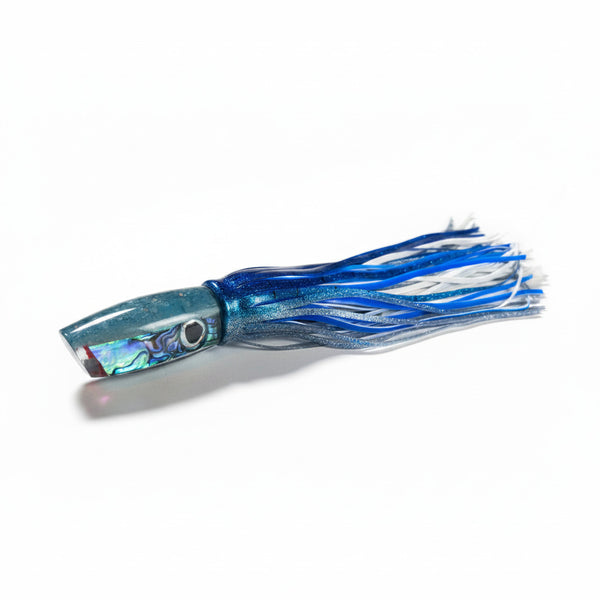
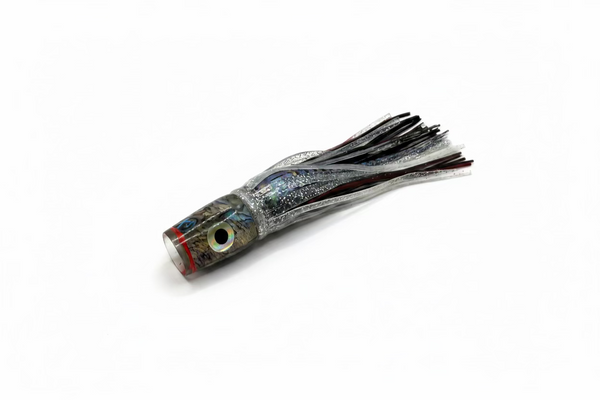
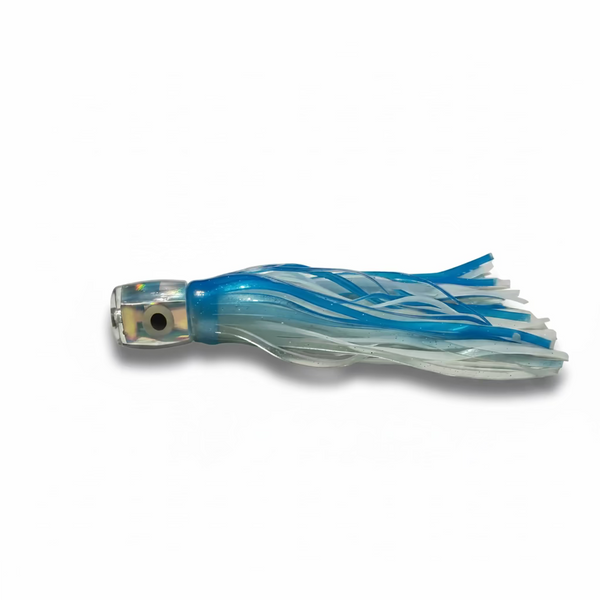
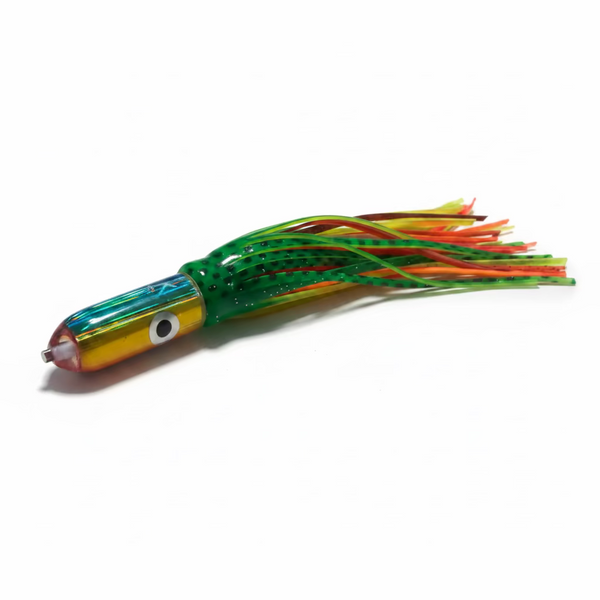
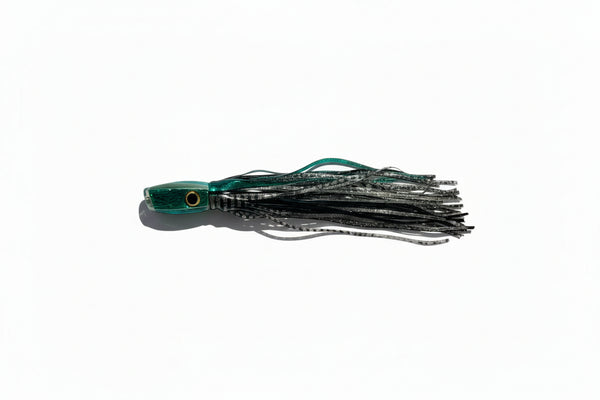
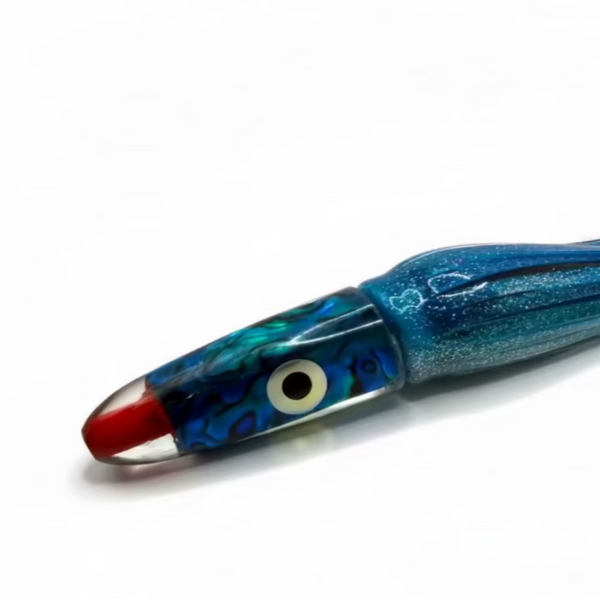
When yellowfin are showing on the machine but not climbing on the deck, the problem is usually not the area. It is the presentation. A solid yellowfin lure spread example is not about filling every wake position with random color and hoping one gets chewed. It is about putting the right head shape, size, and action in the right water so tuna can track, commit, and stay hooked.
Yellowfin are clean feeders compared with marlin, and they often tell you fast when a spread is wrong. If the lures are blowing out, tracking too wide, or carrying too much drag for the sea state, they may rise on it without finishing. If the pattern is too small for the bait around you, you get window shoppers. If it is too heavy and aggressive on pressured fish, you can troll all day for one lazy swipe. Skip the guessing. Start with a balanced pattern that gives you contrast in size, smoke, and position, then make small changes with a purpose.
A practical yellowfin lure spread example
For a typical offshore center console or sportfish pulling a five-lure pattern, this is a proven starting point for yellowfin. Run a smaller, faster-tracking lure on the long rigger, a medium straight-runner on the short rigger, a bullet or striker on one shotgun, and two medium tuna lures in the short corner and long corner. The goal is simple: one lure close and aggressive, one close and cleaner, two fishable mid-spread baits, and one long lure that holds at speed and stays in the clear.
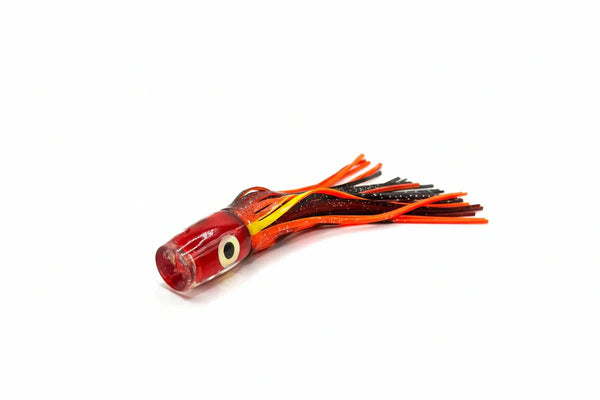
A practical setup looks like this. In the short corner, run a medium or medium-large pusher or slant that can handle disturbed water and leave a visible smoke trail without blowing out. In the long corner, run a slightly smaller cup-faced or slant-style lure with a tighter cycle. On the short rigger, run a medium straight swimmer or slant that tracks clean just off the whitewater. On the long rigger, run a smaller tuna lure with less drag and a more subtle action. Then put a bullet striker on the shotgun where it can stay clean, stay in the water, and look like an easy target lagging behind the school.
That is the yellowfin lure spread example most crews can deploy quickly and tune easily. It works because each position has a job.
Why each position matters
Short corner
This is your heaviest water and usually your most aggressive lure. It needs enough face and weight to stay planted when the boat surges, but not so much that it rips through the cycle and spins. Yellowfin will absolutely eat in the short corner, especially when they are fired up, but this lure has to behave. If it is spending too much time airborne, it is not fishing.
Long corner
The long corner often gets overlooked in tuna spreads because anglers either crowd it too close to the short corner or run something too large there. Keep it distinct. This bait should still show presence, but it needs a cleaner, easier cadence than the short corner lure. Think of it as the bait that gets followed after a tuna notices the spread.
Short rigger
The short rigger is usually one of the highest-percentage yellowfin positions in a clean spread. The water is better, the lure is easier to track, and the fish can approach it with less turbulence around it. A medium lure with a stable head shape is hard to beat here. If you only had one position to judge whether your spread is dialed, this is a good one.
Long rigger
This is where smaller tuna lures shine. Yellowfin often key on the bait that looks separated, vulnerable, and simple to eat. You do not need a wild action here. You need consistency. A lure that leaves a clean bubble trail, breathes every few seconds, and stays locked in the lane will get bit more often than a lure that looks exciting to the crew.
Shotgun
The shotgun is your clean-water insurance policy. A bullet, bullet striker, or other low-drag lure belongs here because it tracks straight and keeps working even when conditions get sloppy. It is also a smart place to imitate sauries, small flying fish, and narrow tuna forage. If fish are showing behind the spread and fading off, the shotgun often saves the day.
Lure size, speed, and sea state
Most yellowfin trolling happens in a speed window where lure action matters more than top-end speed. Around 6.5 to 8 knots is the common range for a mixed yellowfin spread, but sea state and lure shape decide where you should actually fish. In calm water, smaller heads and tighter swimming lures usually get more honest bites. In chop, a little more weight and face helps the lure hold and smoke correctly.
This is where experienced crews separate themselves. They do not lock into one speed because a chart said so. They watch the pattern. If the long rigger is dropping out every few cycles, speed may be too low for that lure or the lure is too light for the water. If the short corner is blowing out repeatedly, either slow down, shorten it, or move to a head shape that carries better in rougher water.
Yellowfin are less forgiving than some anglers think. A lure that looks close enough to the crew may look wrong to the fish.
Color and flash for yellowfin
Color matters, but not as much as position and action. Start there. Once the spread is swimming correctly, use color to match light conditions and the forage profile.
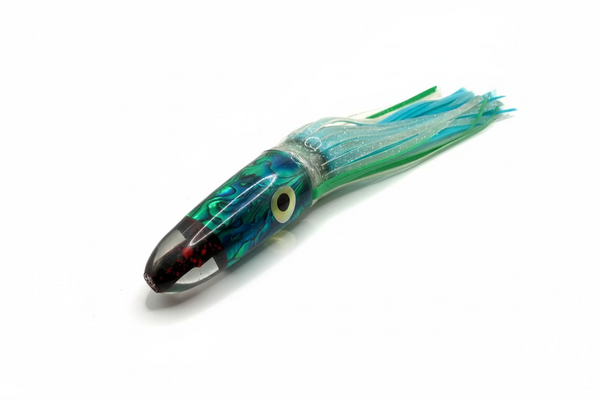
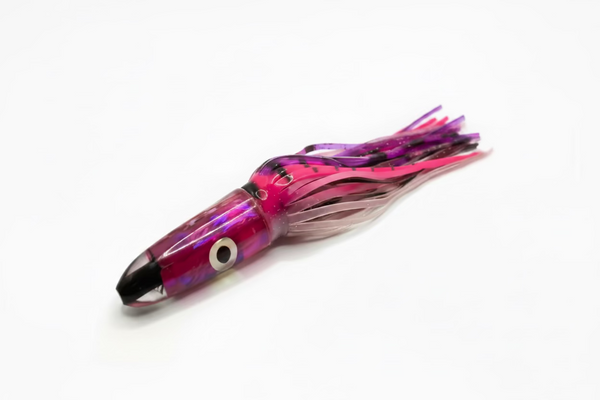
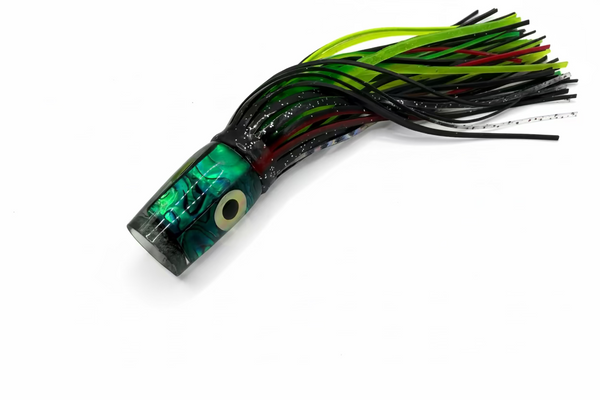
Dark colors, blue-black, and purple tones remain solid low-light producers and hold a strong silhouette. Green-yellow patterns, sardine tones, and natural baitfish colors work well when fish are feeding on smaller, brighter bait. On clear days, a lure with strong internal flash can separate itself without becoming gaudy. That is where abalone-style flash can be productive - not because it is magic, but because it throws a broken, alive-looking signal that yellowfin can pick up from deeper in the spread.
If your spread is getting looked at but not eaten, do not change every color at once. Switch one bait in one position and watch what happens. Tuna often tell you whether they want darker contrast, cleaner natural tones, or more flash within a pass or two.
When to scale up or down
The right spread depends on the bait and the class of fish. That is the trade-off most generic spread charts ignore.
If you are marking school fish on anchovy, small sardines, or tiny flying fish, oversized lures can cost you opportunities. Scale down the long rigger and shotgun first. Keep the corners fishable, but less aggressive. Let the spread look edible.
If the zone is holding better-grade yellowfin on larger bait, do the opposite. Keep enough profile in the corners to draw attention and make your riggers match the feed. Bigger fish do not always want bigger lures, but they do respond to a spread that looks confident and cohesive.
Pressure matters too. In heavily worked water, quieter lure actions often outperform a spread full of violent surface commotion. On wide-open fish, you can get away with more noise and more face.
Common mistakes that kill a yellowfin spread
The first mistake is running too many lures that do the same thing. If every head shape is aggressive, every lure competes in the same lane and the spread loses contrast. The second is ignoring clean water. Tuna need to see the bait clearly enough to commit, especially in bright conditions.
The third is poor spacing. Lures stacked too tightly create visual clutter and cross into each other when the boat turns or surges. The fourth is dragging hooks and leaders that are too heavy for the lure size. Over-rigging can kill action fast. Yes, you need strength, but yellowfin lures still have to swim.
Another major issue is making emotional changes. One missed bite does not mean the whole pattern is wrong. One lazy swipe in the short corner does not mean that lure is dead. Good crews change one variable at a time and fish the answer.
How to tune this spread during the day
Start the morning with the full pattern and pay attention to where the first real interest shows up. If the shotgun gets all the attention, you may need to lengthen the entire spread or reduce turbulence in the middle positions. If the short rigger gets repeated bites, keep that lure in place and adjust around it.
If tuna are crashing bait but ignoring the spread, shorten your corners and scale down one rigger lure. If they are streaking in behind the transom and fading, clean up the long positions and consider a narrower-profile shotgun. If you get multiple slashes without solid hookups, check hook size, hook orientation, and whether the lure is running too fast for a clean bite.
For serious tuna crews, lure spread building is not decoration. It is system design. Every bait in the pattern should give you a different trigger while still looking like it belongs to the same meal. That is why product quality matters. Head shape, resin finish, rigging balance, and how the lure tracks under pressure all show up once the trolling day gets real. K2Fishing builds around that reality.
A good yellowfin spread does not need to be complicated. It needs to be honest in the water, easy for a tuna to track, and tough enough to keep fishing through changing conditions. Build it with purpose, watch what the fish tell you, and let the spread earn its place one bite at a time.