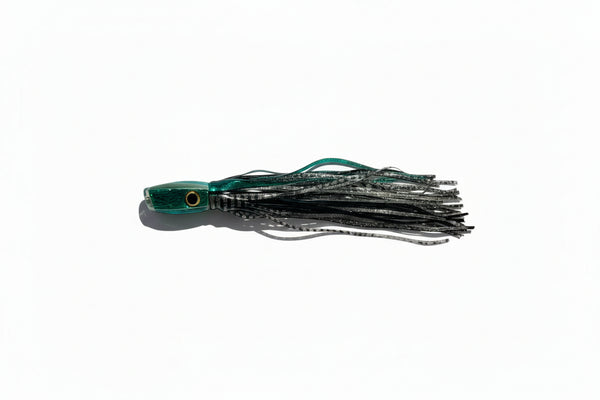
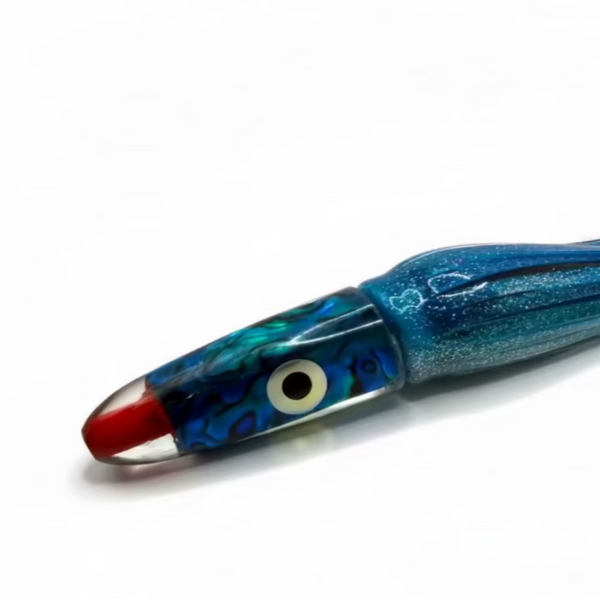
Wahoo do not give you much time to be wrong. They hit hard, they show up fast, and if your spread is off, you can troll right through good fish without getting touched. That is why anglers keep asking what color lures for wahoo produce best. The short answer is simple: blue and white, black and purple, pink, red and black, and high-flash baitfish patterns all catch. The better answer is that color matters most when it matches light level, water color, and the speed profile of the lure.
Wahoo are visual predators built for speed. They are wired to crush a target that looks vulnerable, flashes hard, and tracks clean at trolling pace. So the right color is never just about paint. It is about how that lure shows up in clean blue water, in overcast light, in chop, and at the exact speed you are pulling it.
What color lures for wahoo catch most consistently?
If you want a starting point that works in the widest range of conditions, fish dark contrast and bright flash. That means blue and white when the water is clean and the sun is up, black and purple when you want a strong silhouette, and pink or red accents when you need the lure to stand out and trigger a reaction strike.
A lot of offshore anglers overcomplicate this. Wahoo are not studying your lure in the spread like a picky finicky fish on a flat. At trolling speed, they are reacting. The best colors create one of two effects: they either imitate a fleeing baitfish, or they throw enough contrast and flash to force a violent commitment.
That is why productive wahoo lure patterns usually land in a few categories. Natural baitfish colors work because they look right in clear water. Dark colors work because they hold shape and contrast. Abalone, chrome, and resin flash work because they throw light at speed and help the lure look alive.
The best wahoo lure colors by condition
Blue and white in clean water
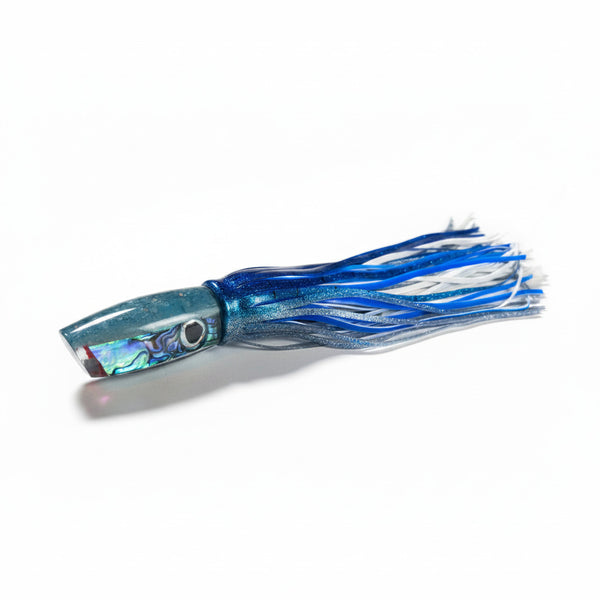
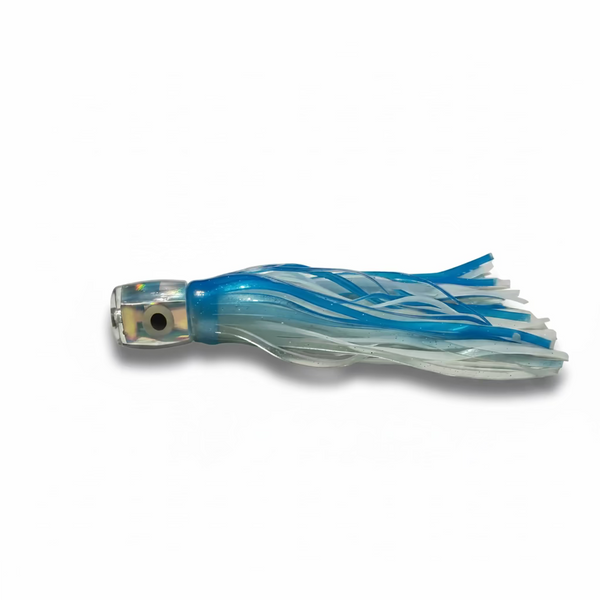
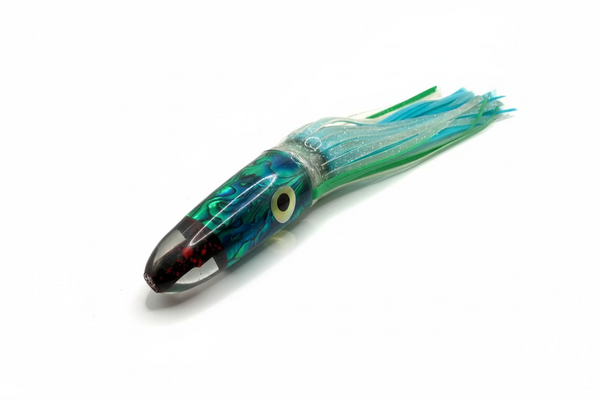
Blue and white is a standard for a reason. In clear offshore water, it tracks like flying fish, small tuna, or other bright bait. It has enough contrast to stay visible, but it still looks natural. If you are pulling a high-speed spread in cobalt blue water with good sun, this is one of the first colors that deserves a position.
It is especially effective on bullet-style lures and streamlined heads that stay true at speed. A clean blue-over-white pattern also plays well with flash, which matters when fish are tracking from behind or coming in from below.
Black and purple for silhouette and contrast
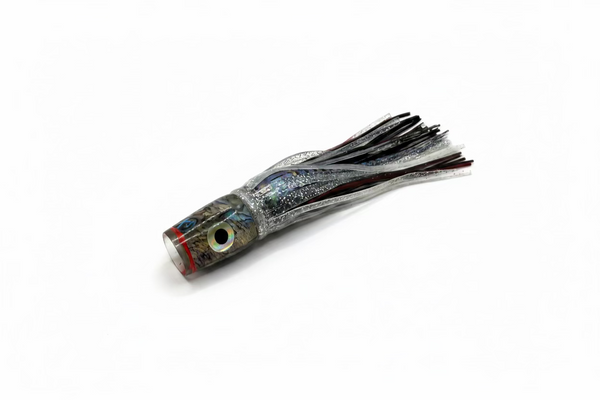
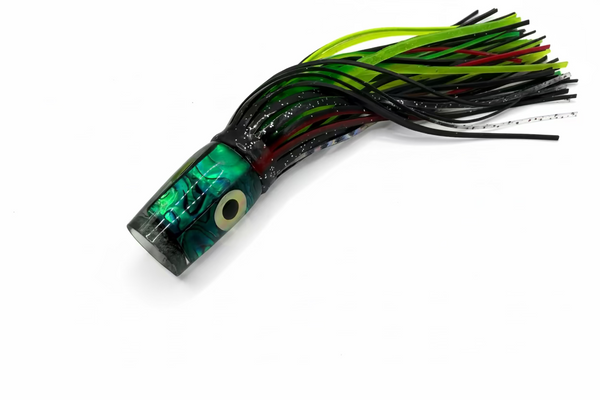
Black and purple remains one of the most dependable offshore color combinations because it gives fish a defined target. In lower light, rougher surface conditions, or days with cloud cover, dark colors often outproduce brighter patterns because they keep a strong profile.
This matters with wahoo. They are fast, but they still need to see the lure cleanly enough to commit. A black and purple lure does not wash out. It creates a sharp target line, especially when the lure head is running clean and smoking just enough.
Pink gets reaction bites
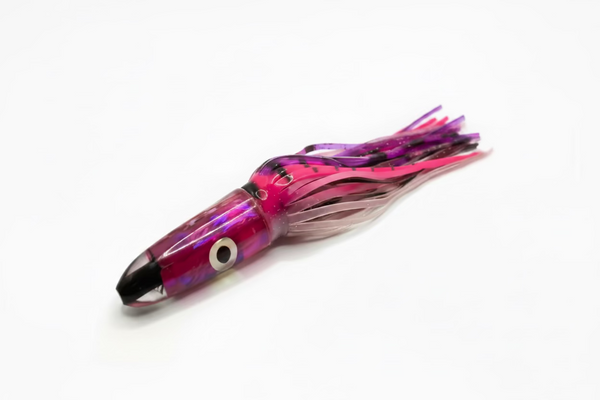
Pink is one of those colors anglers either swear by or ignore until it saves the day. For wahoo, pink works because it is visible, aggressive, and different enough to trigger reaction strikes. It is not always the best color in the spread, but it is often the color that gets noticed.
On brighter days, pink can be deadly when other patterns start blending into a lot of surface glare. It also pairs well with silver, white, or reflective shell finishes that add extra life. If you are running four to six lures, pink has earned a slot.
Red and black in changing light
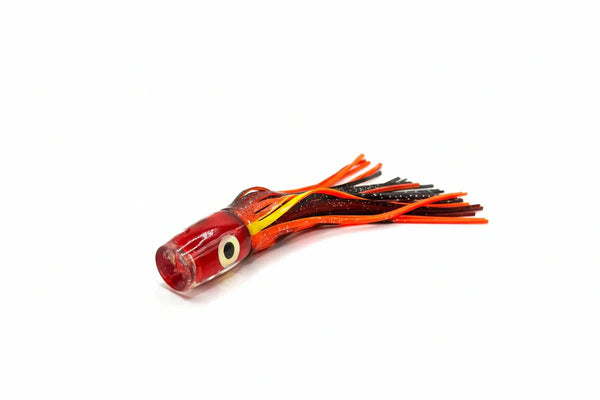
Red and black is another proven producer, especially early, late, or whenever the light gets flat. It gives you darkness for profile and enough color aggression to stand out. Some anglers like it because it resembles wounded prey. Others like it because it simply gets bit. Both can be true.
You do not need every lure in the spread to carry red, but having one red-accented lure can be a smart adjustment when your standard blue patterns are not getting attention.
Chrome, silver, and abalone for flash
Wahoo respond to flash. That is not theory. It shows up over and over in productive spreads. Chrome finishes, silver sides, mirrored inserts, and abalone resin effects all add a trigger that plain color sometimes cannot match.
Flash works best when it is controlled by the lure design, not just painted on. A well-built head with reflective material under resin throws light differently as it tracks, smokes, and recovers. That changing flash can look a lot more like panicked bait than a flat finish. For serious offshore anglers, this is where lure construction matters as much as color choice.
What color lures for wahoo at high speed?
At high trolling speeds, clean visibility matters more than subtle detail. If you are pulling true high-speed presentations, focus on colors that stay readable and lures that hold their action. Blue and white, black and purple, pink, and black-red combinations all fit. So do silver and reflective shell patterns that keep flashing without blowing out.
The trade-off is simple. Some highly detailed natural patterns look great in your hand but lose their advantage once you push speed. Wahoo often see shape, flash, and contrast first. If the lure cannot track cleanly, the best color in the world will not save it.
That is why experienced crews build around tested lure heads and rigging before they worry about fine color theory. A premium resin lure with stable action and strong flash usually beats a cheaper lure with a pretty pattern and poor tracking.
How water color and light change your choice
Water clarity changes everything. In blue, clear conditions, natural baitfish colors and bright reflective finishes are hard to beat. In greener water or dirtier edges, stronger contrast tends to hold up better. Black, purple, red, and heavier dark-over-light patterns become more useful because they stay visible.
Light angle matters too. Midday sun can make a lure flash hard, which helps chrome, abalone, and bright blues. In overcast conditions or early morning, darker colors often show a cleaner outline. If you are not getting bit, changing color based on the light is a smarter first adjustment than random lure swapping.
This is where disciplined spread management pays off. Keep one natural pattern, one dark contrast pattern, one bright reaction color, and one heavy-flash lure in play. Let the fish tell you what they want, then tighten the spread around that signal.
Don’t separate color from lure style
Color gets the conversation, but lure style closes the deal. Wahoo often favor lures with a tight, aggressive tracking profile over bigger, lazier actions. Bullet heads, strikers, and compact resin heads are common producers because they run straight, hold speed, and give fish a clean target.
A great color on the wrong head shape is still the wrong lure. If you are running long in clean water, you may want a bright baitfish pattern with flash. If you are pulling a short corner lure in rougher water, a darker high-contrast pattern may simply stay visible better. Position in the spread changes how color performs.
That is also why handcrafted offshore lures with real flash materials and consistent rigging have an edge. They are built to track clean, hold speed, and survive repeated strikes. K2Fishing puts a lot of emphasis on that kind of real-world performance because offshore anglers do not need more guesswork in the spread.
A practical color rotation that makes sense
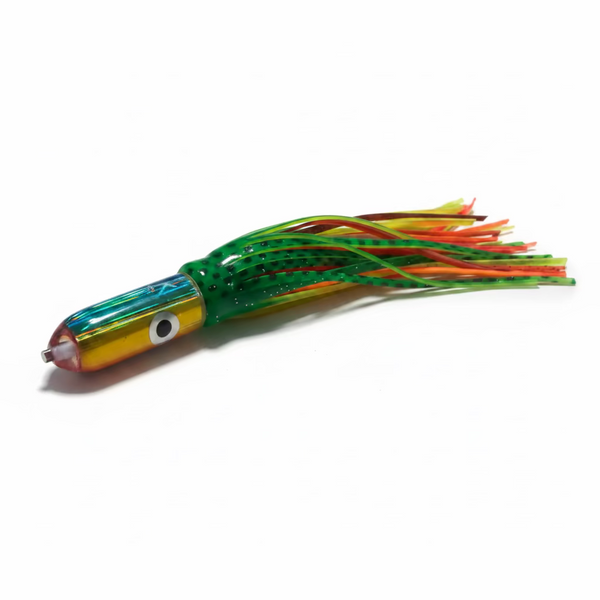
If you want to skip the guessing, start with four lanes of information. Run one blue and white lure, one black and purple lure, one pink or red-accent lure, and one high-flash silver or abalone-style pattern. That gives you natural profile, dark silhouette, reaction color, and flash.
From there, watch what gets looked at and what gets crushed. If your dark lure gets the first knockdown in flat light, lean into silhouette. If fish are climbing on the flashy baitfish pattern under bright sun, feed them more flash. If pink gets the only bite in a dead spread, do not argue with it.
The best offshore crews are not loyal to color for sentimental reasons. They are loyal to what converts.
Wahoo fishing rewards simple decisions made well. Pick colors that show up, run them on lures built to hold speed, and pay attention to the conditions instead of chasing tackle-shop myths. The fish will tell you quickly whether your spread looks right.
Build your wahoo spread: shop our wahoo trolling lures in blue/white, purple/black, pink, and abalone flash — handcrafted and rigged in the USA.