A good offshore trolling lure guide starts where most spreads fail - not with color, but with purpose. If you are pulling lures for tuna, marlin, wahoo, or mahi without matching head shape, size, and position to the water your boat creates, you are guessing. Offshore fish punish guessing. The right lure in the wrong lane often fishes worse than an average lure in the right one.
That is why serious anglers build from the boat back. Wake pattern, trolling speed, target species, and sea state all decide what should be swimming where. Once that is right, lure color and flash become force multipliers instead of wishful thinking.
How to use this offshore trolling lure guide
Think of your spread as a system, not a handful of individual baits. Every lure has a job. Some create commotion. Some run clean in white water. Some track straight in calmer lanes. Some are there to get noticed by a fish that already moved on a teaser or chain.
The biggest mistake offshore anglers make is buying lures one at a time based on isolated results. One bullet lure may be deadly at 8 knots on a flat day for yellowfin, but nearly useless if you stick it in a short corner lane full of broken water. Another larger resin head may come alive farther back where it can breathe, dive, and smoke properly. The lure matters, but placement matters just as much.
Start with species, then match the lure
Tuna, marlin, wahoo, and mahi will all eat from the same spread, but they do not always respond to the same profile. Tuna often reward consistency. They like a lure that tracks clean, holds speed, and gives off a tight, repeatable smoke trail. Bullet-style heads excel here because they stay planted and keep working in rougher conditions or at mixed trolling speeds.
Marlin are different. They often rise to the spread on presence as much as precision. Larger profile lures with more push, more face, and more visible flash can raise fish from deeper water. That does not mean every marlin lure should be oversized. It means your spread needs at least one or two pieces that command attention and look like a meal worth chasing.
Wahoo bring another layer. Speed matters, and durability matters more than many anglers admit. A lure that tracks perfectly at 7 knots can blow out or lose appeal when you bump into the higher speed range that often produces for wahoo. Leaner heads, tighter actions, and solid rigging win here. If your skirt fouls, your hook swings poorly, or the lure spins at speed, you are dragging hardware, not fishing.
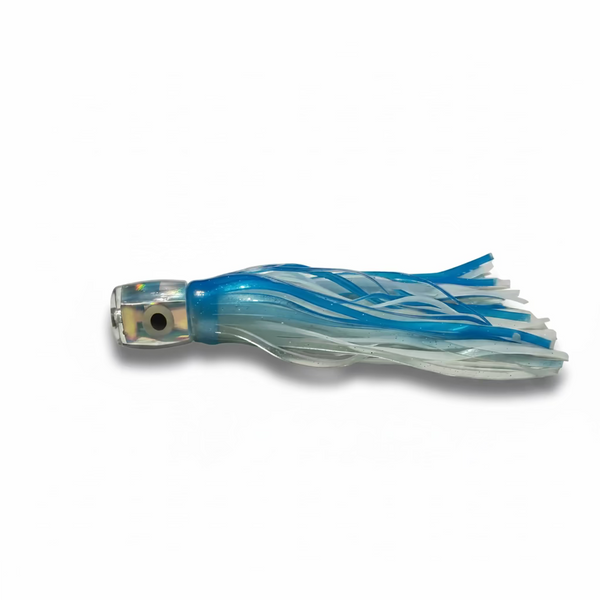
Mahi are the opportunists of the group. They will eat smaller, brighter, more active-looking offerings, especially when bait is scattered and fish are up. In a mixed-species spread, a smaller medium lure in a cleaner lane often becomes your mahi producer without costing you shots at tuna.
Head shape matters more than most anglers think
Not all offshore trolling lures work the same even when they are the same size. Head shape controls how a lure breathes, dives, smokes, and recovers. That action determines whether it looks alive or wrong.
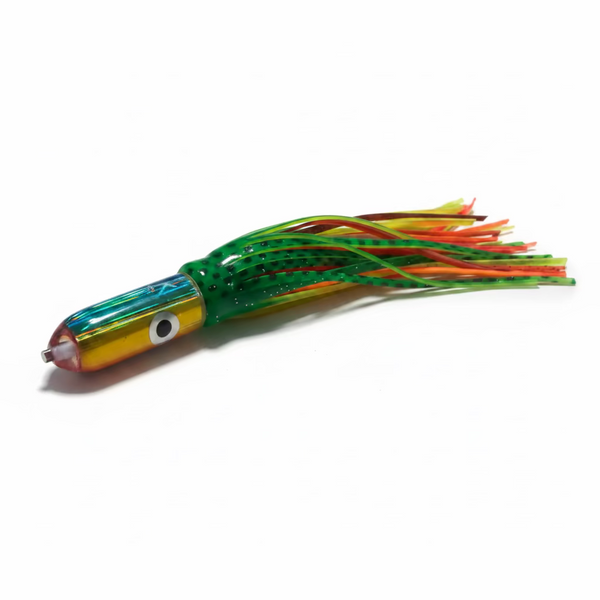
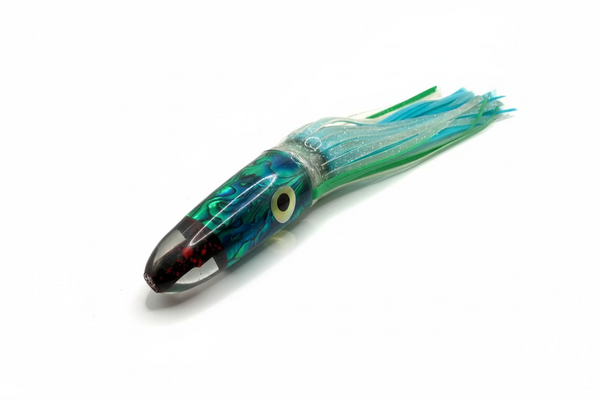
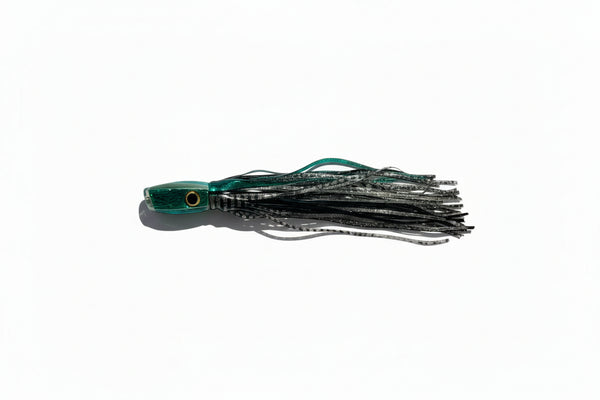
Bullet heads are built for clean tracking and speed. They are dependable on long rigger or shotgun positions, especially when you want a lure to stay in the water and keep a narrow, consistent bubble trail. They are excellent tuna lures and strong options for wahoo when rigged right.
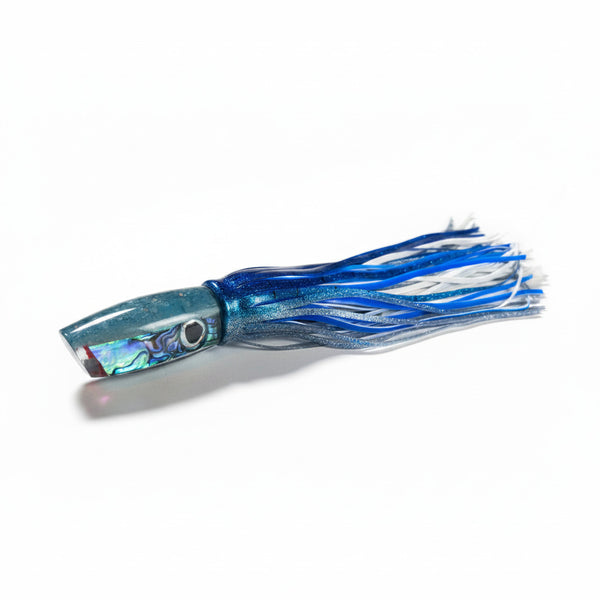
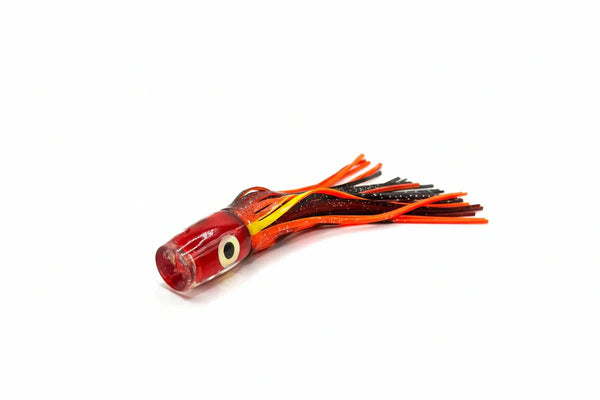
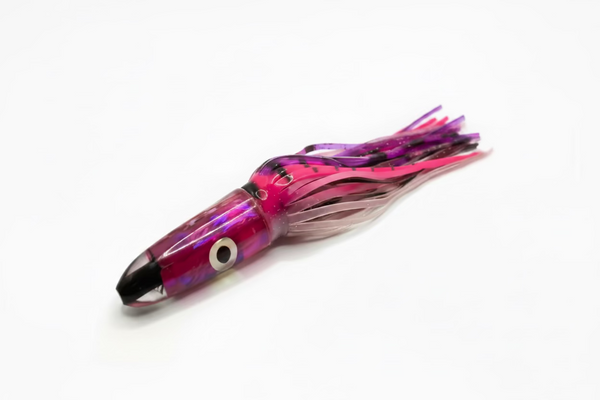
More aggressive slant or angled faces create a stronger cycle of grab, dive, and surface smoke. These can be excellent in short and mid positions where the lure gets enough pressure to work but still has room to breathe. They add presence to a spread and help trigger reaction bites from marlin and larger tuna.
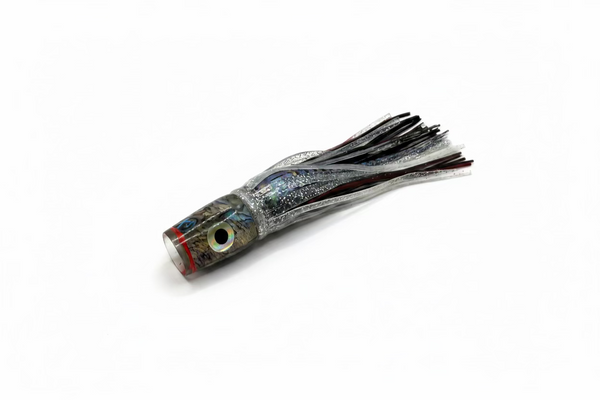
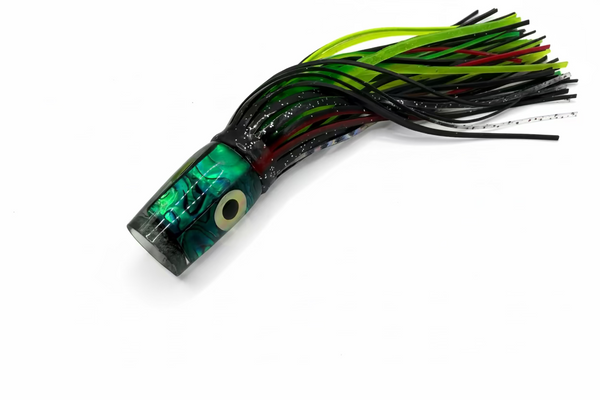
Larger resin-coated heads offer another edge when they are built correctly. Weight helps them hold position, and quality head design gives them a steady cadence instead of random blowout. Add a strong flash profile and you get a lure that remains visible and attractive even in broken water.
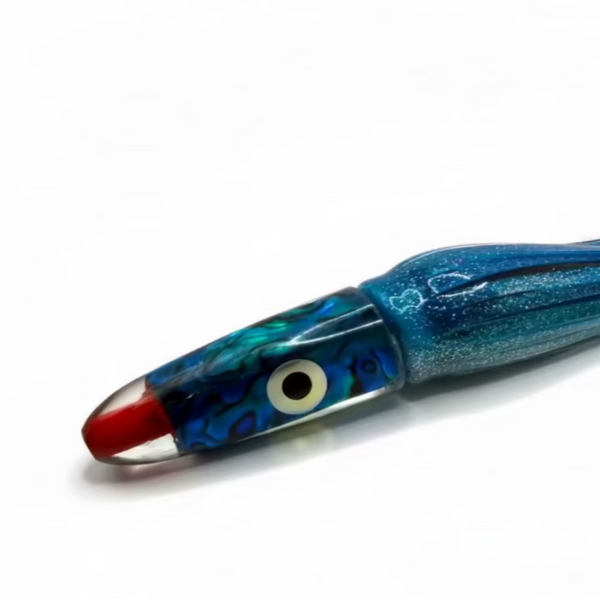
That is where finish matters. Abalone resin flash is not cosmetic when it is integrated into a proven trolling head. It throws a natural, changing light signature that can separate a lure in clear blue water, especially when fish are tracking from below. Done right, it adds visibility without making the lure look unnatural.
Build the spread around water pressure
Your spread positions should follow the water, not a fixed chart. Still, the basic jobs stay the same.
The short corner is heavy water. You want a lure with enough mass and face to stay engaged without tumbling. This is a good place for a larger lure that pushes water and announces itself. It is often a marlin lane, but it can also produce tuna when the lure runs with authority instead of chaos.
The long corner usually offers a little cleaner water and a little more room for a lure to complete its cycle. This lane often suits medium to large aggressive heads that dive and smoke well. If a lure is too timid here, it disappears. If it is too wild, it spends half the day blowing out.
Short rigger positions are productive because they sit in cleaner water while still staying close enough to the main wake to get attention. This is where many medium lures shine. They can run with a crisp, visible action and become your most consistent bite producer across mixed species.
Long rigger lanes are ideal for cleaner-running heads, especially bullets and streamlined profiles. Tuna love lures here because they can lock in on a bait that is behaving properly. If the day is rough, this may become your highest-conversion position because the lure is still fishing when the rest of the spread is getting sloppy.
The shotgun is not mandatory, but when it is right, it is a fish finder. It can pick off wary tuna, add a clean trailing target behind teasers, or give you one more bait in undisturbed water. It also exposes weak lure design fast. If a lure cannot track well back there, it does not belong in that lane.
Size is a tool, not a rule
A common mistake is assuming bigger lures mean bigger fish. Offshore fish are not always that simple. Match size to conditions, forage, and spread role.
Smaller to medium lures often get bit more consistently, especially on school tuna, mahi, and pressured fish. They also let you keep a spread lively without overwhelming the pattern. Medium and large lures earn their keep when bait is bigger, water is rougher, or you need stronger visual pull for marlin.
If you are building a six-lure spread, a balanced mix usually outfishes a row of clones. Give the fish different targets, but keep the spread coherent. One or two larger attention-getters, a few medium producers, and a cleaner trailing lure is often a stronger setup than six random favorites.
Speed changes everything
Lure performance exists inside a speed window. Even great lures have a range where they are at their best. Push beyond it and they can spin, skip, or lose their smoke trail. Troll too slow and they may just drag.
For many mixed offshore spreads, the productive range lands around standard lure speeds, but the exact sweet spot depends on sea state, current, and head design. Bullet styles tolerate speed changes better. More active heads need enough pressure to work but not so much that they get unstable. This is why anglers who tune their spread during the day usually outfish anglers who set it once and leave it.
Watch every lure. If one is blowing out every few cycles, fix it. If another looks dead, move it or swap it. Offshore trolling is not set-and-forget fishing when results matter.
Rigging quality is not optional
A lure can have the right size, shape, and color and still underperform because the rigging is wrong. Hook alignment, leader stiffness, lure balance, and skirt fit all affect tracking and hookup ratio.
Poorly rigged lures often look acceptable at first glance, then fail under real load or at speed. Serious anglers know the difference between a lure that swims in calm marina water and one that stays true in offshore chop with quartering seas. Premium USA-rigged construction matters because consistency matters. If the hook rides wrong or the leader overpowers the head, action suffers before the bite ever happens.
This is also why spread components matter. Birds, squid chains, teasers, and dredges should support the lures, not clutter the pattern. Used well, they raise fish and create competition. Used badly, they turn your wake into noise.
What actually changes from day to day
No offshore trolling lure guide should pretend there is one fixed answer. Water color changes. Bait changes. Light angle changes. Some days fish want tight, subtle, clean swimmers. Other days they crush the loudest lure in the prop wash.
The goal is not to carry every lure ever made. It is to own a curated lineup that covers the real jobs in a spread. A few dependable bullets, a few medium and large resin heads with proven action, and the right teaser support will cover far more ground than a tackle bag full of untested extras. That is the difference between collecting lures and building an offshore system.
When you stop asking which lure is best and start asking what job this lure needs to do, your spread gets sharper fast. Skip the guessing, fish lures built to get strikes, and let the water tell you what to change next.