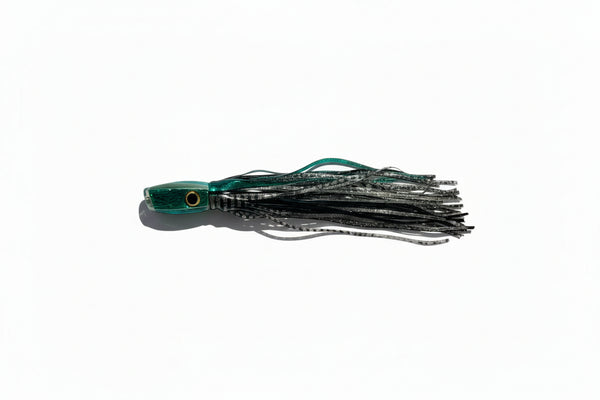
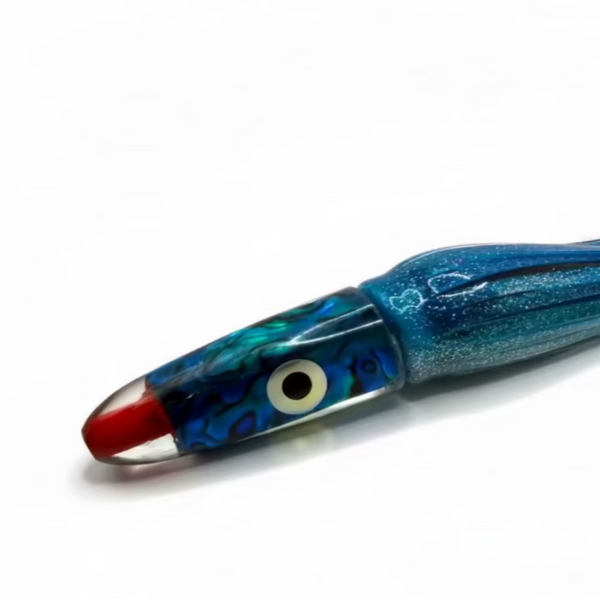
At trolling speed, a lure head either does a job or wastes a position in the spread. That is why offshore lure head shapes matter more than color arguments, brand hype, or whatever got talked up at the dock last weekend. Head shape controls how a lure breathes, how hard it digs, when it pops, how clean it tracks, and whether it stays effective when the water gets rough or the boat speed changes.
For serious bluewater anglers, the point is simple. If you understand what each head shape is built to do, you can stop guessing and start placing lures with intent. That means better lure action, a cleaner pattern, and more bites from the species you are actually targeting.
Why offshore lure head shapes matter in the spread
The head is the engine of a trolling lure. Skirt material, flash, and rigging all matter, but the head shape determines the lure's basic behavior. It decides how much water the lure grabs, whether it runs straight or wanders, how much surface commotion it creates, and how aggressively it cycles.
That becomes critical when you are building an offshore spread with different jobs assigned to different positions. A long rigger lure usually does not need to act like a short corner lure. A shotgun lure meant for tuna often needs a cleaner, lower-drag track than a lure designed to call up marlin in the prop wash. If every lure in the spread has the same head shape and the same rhythm, you are giving fish one look over and over.
The best spreads mix actions without becoming chaotic. That is where head shape selection pays off.
The main offshore lure head shapes and what they do
There are plenty of niche variations, but most offshore lure head shapes fall into a few proven categories. Understanding the basic behavior of each one will cover most real-world trolling situations.
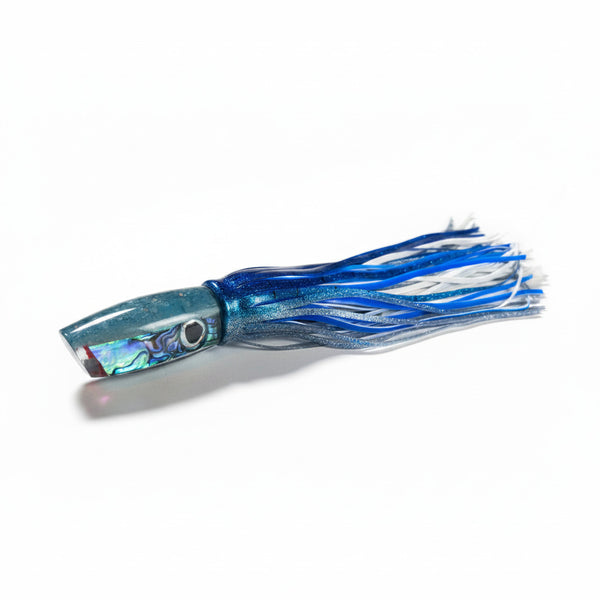
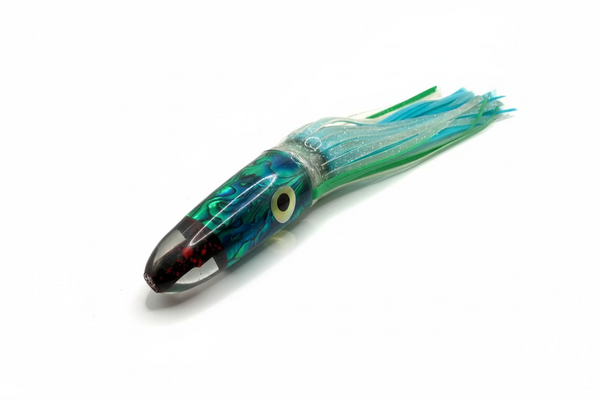
Bullet heads
Bullet heads are built for speed, clean tracking, and minimal drama. They are streamlined, narrow, and efficient through the water. A good bullet does not blow out easily, which makes it a strong choice for high-speed work, rough water, and long positions where you want a lure to stay planted and keep swimming.
That makes bullet heads especially effective for tuna and wahoo. They are also strong in the shotgun position where a lure needs to run true far back, often in cleaner water with less turbulence. If you want a lure that holds shape and keeps working when the pace picks up, the bullet head earns its place.
The trade-off is obvious. Bullet heads generally create less surface commotion than more aggressive heads. They do not have the same face-driven smoke trail or hard pop that can raise curious fish from down deep. If your goal is maximum splash and noise in close, a bullet may be too restrained.
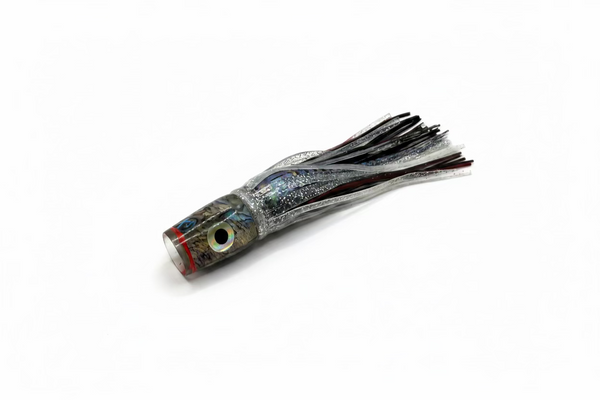
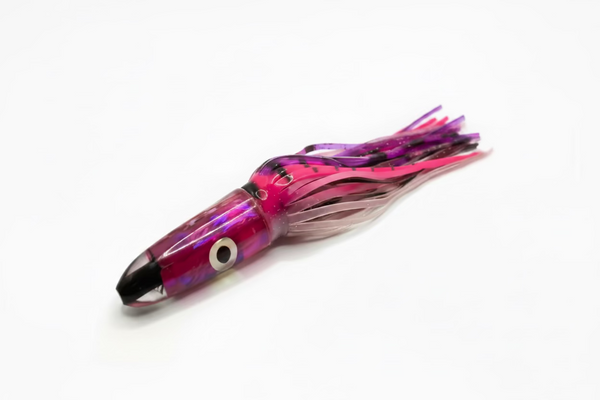
Slant heads
Slant heads are among the most versatile offshore options because they blend speed with aggression. The angled face grabs water, throws spray, and produces a strong dive-and-pop cycle without becoming uncontrollable when built correctly. That makes them a favorite for targeting marlin, mahi, and tuna depending on size, rigging, and placement.
A slant head can run with enough commotion to get noticed, but still track with purpose if matched to the right position. They often shine on riggers and corners where you want visible action and a lure that announces itself. In moderate conditions, a well-tuned slant can be one of the easiest ways to put life into a spread.
The variable here is how aggressive the slant is. A steeper face can create a harder pop and more smoke, but may also become less forgiving in heavy chop or when trolling speed fluctuates. A more moderate slant often gives you a better all-around lure.
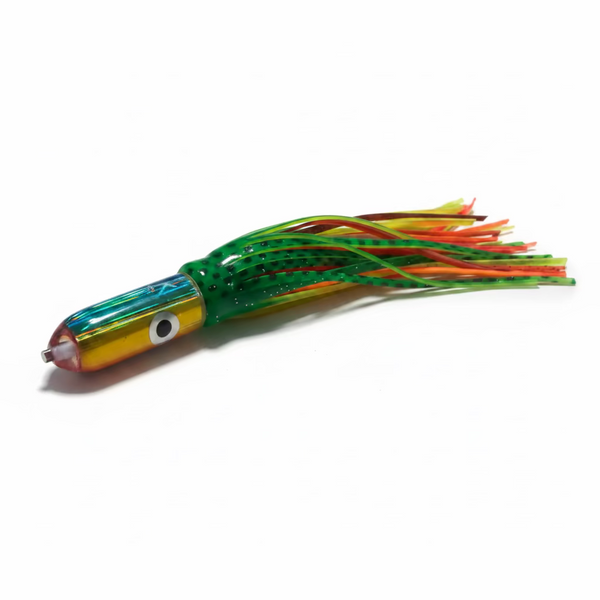
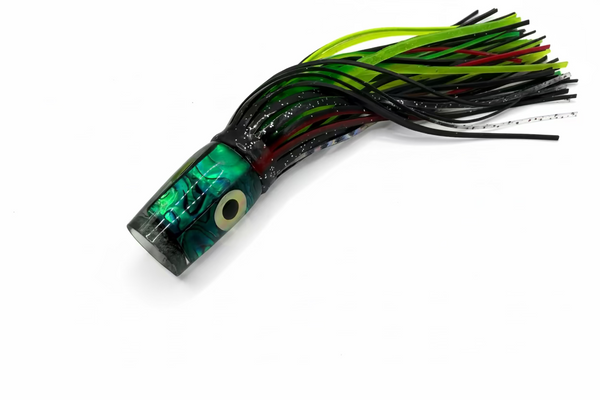
Scoop and cupped faces
Scoop heads and cupped faces are made to move water. They dig, breathe, and leave a visible smoke trail when they are dialed in. These are the heads anglers reach for when they want a lure to grab attention in the short positions, especially around whitewater where subtle action gets lost.
These shapes can be deadly for marlin and aggressive mahi because they create a big target with a strong cycle. They also work well when sea conditions are stable enough for the lure to keep repeating its pattern instead of skipping unpredictably.
But more face means more drag. That affects trolling speed, position, and how much strain the lure puts on the leader and hookset geometry. A large cupped lure that looks great in flat water may become too busy in a steep chop. This is one of the clearest examples of why there is no perfect head shape, only the right tool for the job.
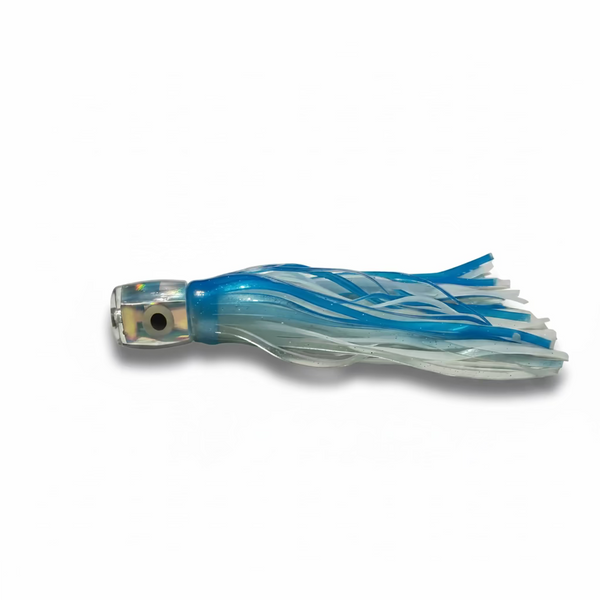
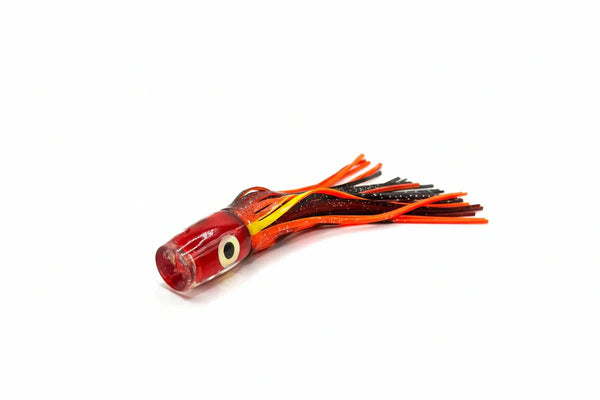
Chuggers and flat faces
Flat-faced and chugger-style heads are all about noise and disruption. They push a lot of water, throw a hard surface signature, and can be excellent teasers or strike lures in close positions. When fish are fired up, a loud lure can pull attention fast.
These heads are commonly used when anglers want a lure that really works in the prop wash and creates a strong visual cue. They can be productive on marlin and mahi, particularly when fish are reacting to commotion.
The drawback is efficiency. Flat-faced heads are not usually the first choice for high-speed trolling or far-back positions where clean tracking matters most. They also tend to be less subtle, which can be a negative when fish are pressured or feeding on smaller, tighter bait profiles.
Matching head shape to species
Species preference is never absolute, but patterns show up for a reason. Tuna often respond well to bullet heads and cleaner-running slants because those lures stay consistent at speed and imitate fleeing bait without overworking. Wahoo are similar, especially when trolling faster, where a lure that stays straight and does not blow out becomes non-negotiable.
Marlin give you more room to play with aggression. Slants, scoops, and cupped faces can all be productive because marlin often react to smoke, splash, and an obvious cycle. That said, marlin fishing is not just about the biggest, loudest lure in the box. If the sea state is ugly or the spread is too busy, a slightly cleaner-running head may actually hold better and convert more bites.
Mahi tend to reward visible, active lures, especially when they are up and competing. Slants and moderate cupped heads are often strong fits. They give enough presence without becoming clumsy.
Position matters as much as shape
A good head shape in the wrong place is still a bad spread decision. Short corner lures usually need enough face and stability to work in rougher water close to the boat. That often favors slants, scoops, and more aggressive heads that can keep cycling in disturbed water.
Long rigger positions often let a lure show off cleaner action. This is where many slants and medium-faced heads really shine. You get enough clean water for the lure to breathe, dive, and leave a proper smoke trail.
The shotgun is usually bullet country. A lure way back needs to track clean, stay in the lane, and keep working when the boat surges or sea conditions change. If it blows out back there, it is not helping.
This is also why experienced crews do not judge a lure only in their hand. A head shape has to be evaluated where it will actually fish.
What anglers get wrong about lure action
One of the biggest mistakes is chasing maximum action instead of repeatable action. A lure that looks wild for ten seconds and then cartwheels is not fishy. Offshore trolling rewards consistency. You want a lure that enters its cycle, breathes, smokes, and returns without losing shape.
Another mistake is ignoring speed range. Some offshore lure head shapes stay effective across a wide trolling window. Others are far more narrow. If you regularly fish mixed-species days where the boat speed changes, it makes sense to favor heads with a little tolerance built in.
Rigging also changes how a head behaves. Hook weight, leader stiffness, skirt length, and overall lure balance all affect tracking. A well-designed head can still perform poorly if the rigging is sloppy. Serious anglers know this already, but it is worth repeating because bad rigging gets blamed on head shape all the time.
How to choose the right offshore lure head shapes
Start with the species, then the position, then the sea state. That order keeps your spread practical. If you are pulling for wahoo at speed, clean bullets and stable slants should be near the top of the list. If you are setting a marlin spread in decent water, mixing a couple of more aggressive heads with cleaner followers usually gives a better overall picture.
Next, think about contrast. A spread works better when different lures show different signatures. One lure might dig and smoke hard. Another might run tighter and cleaner. That variation helps imitate a more natural bait group instead of a row of identical machines.
Finally, buy for construction, not just profile. The best offshore head shapes still need premium rigging, durable finish, and balance that holds up under real trolling pressure. That is where quality tackle separates itself from shelf filler. K2Fishing builds around that idea - lure action that is meant to perform in the spread, not just look good in a product photo.
The best lure head is the one that keeps doing its job when the water gets nasty, the speed creeps up, and a big fish finally shows. Fish enough days offshore and that becomes the only standard that matters.