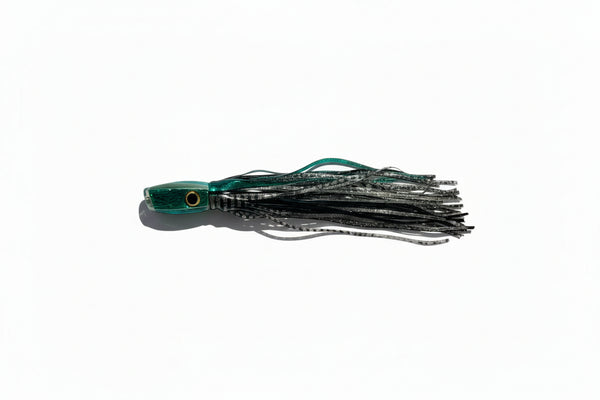
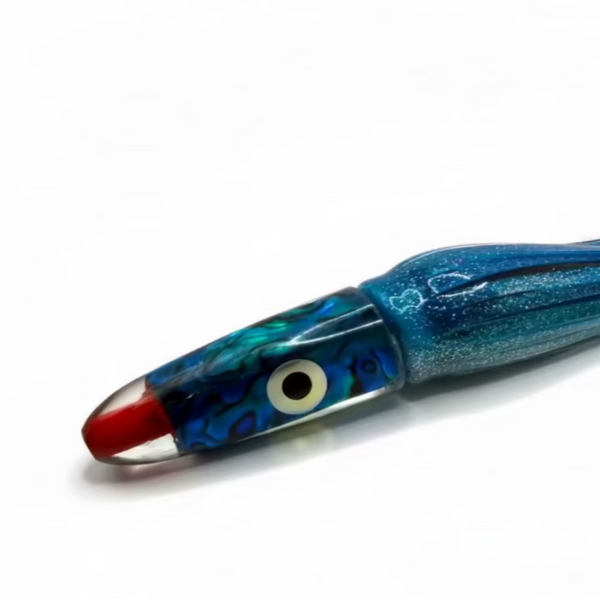
Mahi fishing lures do not need to be complicated, but they do need to run right. When a school lights up behind the boat, you do not get extra points for fancy theory. You get bit when your lure has the right profile, enough flash, clean tracking at speed, and rigging that holds together when a good fish piles on.
That is where a lot of anglers waste time and money. They buy lures that look good in a tackle tray, then wonder why they blow out in the spread, spin at trolling speed, or miss fish that should have stuck. Mahi are aggressive, but they are not careless. If your presentation looks injured, fast, and easy to kill, they will climb all over it. If it looks wrong, they will fade just as fast.
What makes mahi fishing lures work
Mahi are visual predators. They hunt by sight, react to speed, and often key on smaller baitfish, flying fish, squid, and juvenile tuna-sized forage depending on where you fish. That means your lure has to do three things well: show color, throw flash, and stay stable in the water column you are targeting.
For trolling, that usually points to medium-profile lures with active but controlled movement. You want a lure that smokes, tracks straight, and occasionally pops or darts without rolling over. Too much action can be just as bad as too little. A lure that constantly spins looks unnatural and twists leaders. A lure with no life at all can get ignored unless the bite is wide open.
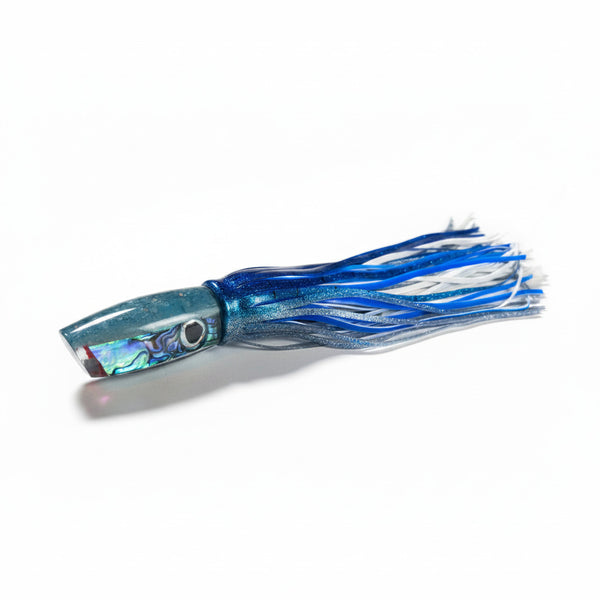
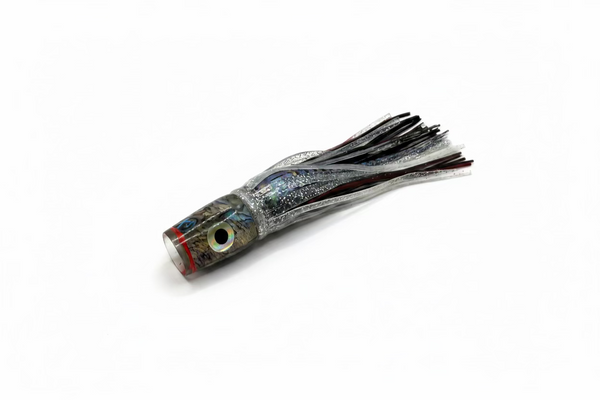
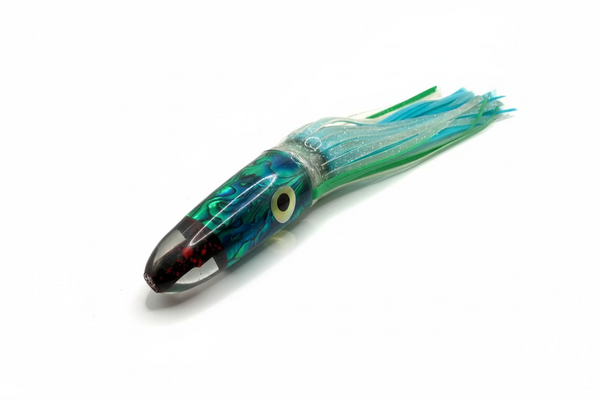
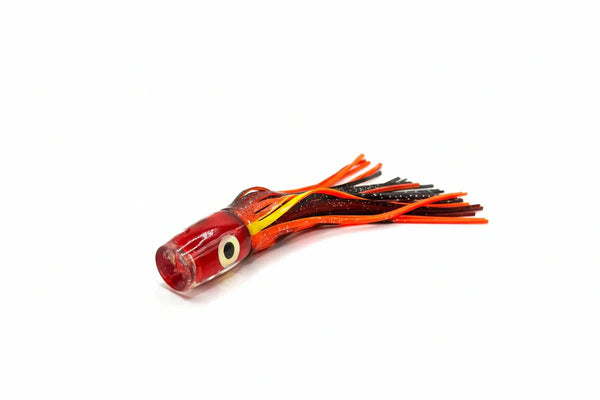
Head shape matters more than many anglers admit. Bullet-style heads are dependable in cleaner water and higher-speed applications because they hold their line and stay in the water well. Slightly more aggressive shapes can raise more commotion and work when fish are fired up, but they also demand better positioning in the spread. The trade-off is simple - more action can get more attention, but only if the lure still tracks clean.
Best lure sizes for mahi
Mahi will eat a surprising range of offerings, from small feathers to larger resin heads, but most of the time the sweet spot is not oversized. In many offshore spreads, the best mahi fishing lures fall in the small to medium class. That profile matches the bait they commonly chase and keeps the presentation easy to inhale.
A lure in the 5 to 8 inch range is hard to argue with for general mahi trolling. It is large enough to hold presence in a wash and small enough to get inhaled cleanly by school fish and better bulls. If you are fishing areas with larger bait or want a lure that can also raise tuna, stepping up slightly can make sense. If fish are feeding on tiny rain bait or halfbeaks, downsizing often gets more bites.
This is one of those areas where conditions decide a lot. In rough water, a slightly heavier and more stable head can stay effective when a lighter lure skips too wildly. In calm blue water with plenty of visibility, a smaller lure with sharp color contrast can be all you need.
Colors that consistently produce
Color matters with mahi, but not in the way tackle marketing usually sells it. You do not need ten nearly identical shades of green-yellow. You need a handful of proven color families that show up well in the conditions you fish.
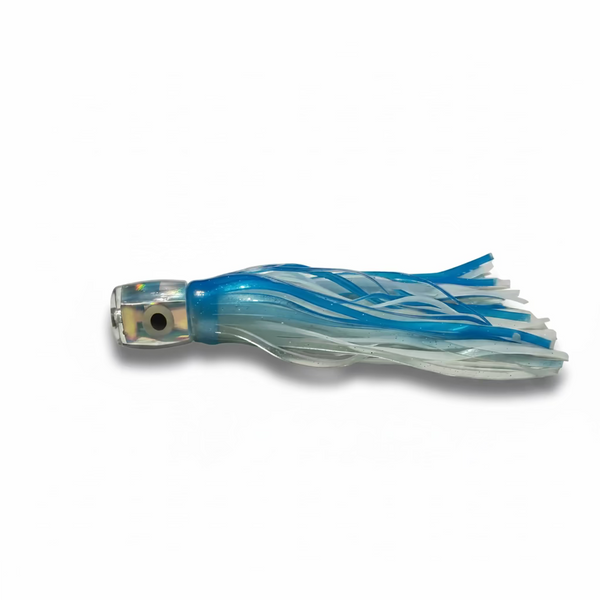
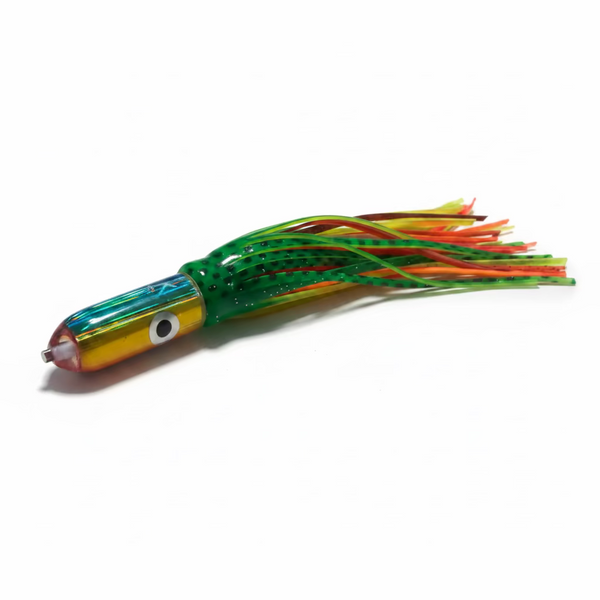
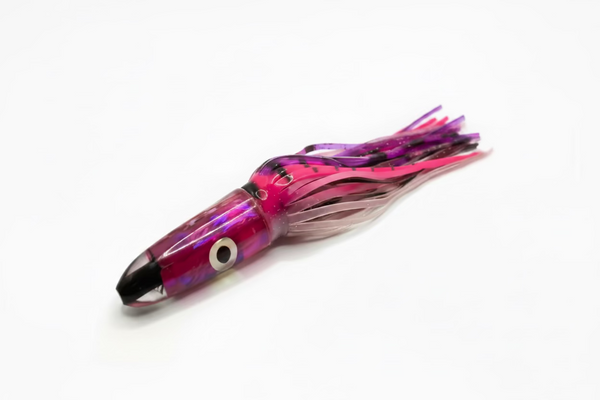
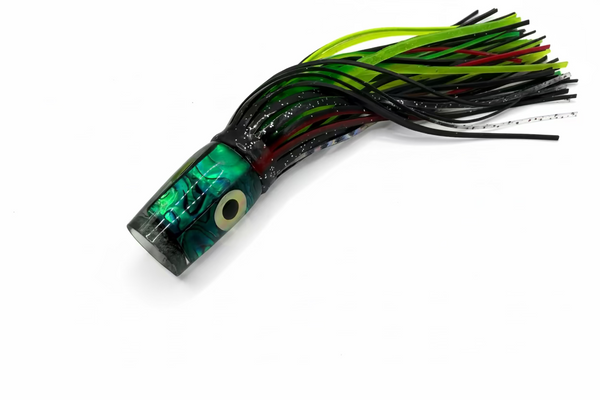
Green and yellow remain staples because they match the species' own flash and stand out around weed lines and bluewater edges. Blue and white are strong when bait is small and the water is clear. Pink, purple, and black can be excellent contrast colors, especially when the sky is bright and the spread needs one lure that shows a different silhouette. Lures with abalone-style flash or resin finishes that kick changing light angles can be especially effective because mahi often rush a bait from below or behind.
If you want a practical approach, run one natural bait-tone lure, one high-contrast lure, and one lure with extra flash. That gives you a cleaner read on what fish want that day than loading the spread with slight color variations that all do the same thing.
Where to run mahi fishing lures in the spread
Mahi can show up anywhere in a trolling spread, but certain positions produce more consistently because they match how these fish track and attack. Short corners are usually too violent for many smaller mahi lures unless the sea is calm and the head shape is stable. Long corners and short riggers are often productive because the lure gets enough clean water to work while still staying close to the boat's commotion.
Long riggers and shotgun positions can also be strong, especially when fish are pressured or hanging back. A bullet-style lure in one of those cleaner positions is a smart way to cover water. If you are pulling a mixed pelagic spread for tuna, wahoo, and mahi, this matters even more. A lure that is ideal for one species in one lane may not be the best mahi bait in another.
There is no fixed rule that mahi must eat the farthest lure or the brightest one. Some days they crash the short bait in white water. Other days they slide into the clean lane and pick off the smallest target. The best spread is the one where every lure has a job and every position matches the lure's design.
Speed matters more than most anglers think
One of the biggest reasons good-looking lures stop producing is simple - they are being trolled at the wrong speed. Mahi will attack fast-moving presentations, but your lure still has to swim correctly. If the lure spends half its time blowing out, it is not fishing.
Most mahi trolling happens in a speed range where small and medium resin heads, bullets, and skirted trolling lures can stay consistent. The exact number depends on sea state, lure head shape, leader stiffness, and position in the spread. A lure that looks excellent at 6.5 knots may lose its action at 8, while another comes alive once the boat settles into a faster pattern.
That is why water testing matters. Put the lure in the lane you plan to fish, watch it closely, and adjust before you send the whole spread. You want a repeated cycle - dig, smoke, surface, then recover cleanly. Skip the guessing. If the lure is spinning, blowing out, or running dead, fix it before it costs you fish.
Rigging quality is not optional
Mahi are not giant blue marlin, but poor rigging still loses fish. Cheap hooks, weak crimps, soft skirts, and inconsistent leader lengths all create problems that show up at the worst time. A lure that gets strikes but does not convert them is not doing its job.
For mahi, many anglers prefer a single-hook setup that tracks straight and reduces tangles. A properly sized hook with clean point exposure is usually the most dependable option for school fish and solid bulls alike. Double hooks have their place, but they can stiffen the lure, increase fouling, and do more harm than good if they are oversized for the head.
Leader strength depends on your broader spread and what else might eat the lure. If you are specifically targeting mahi, there is no need to overbuild to the point that the lure loses action. If wahoo or tuna are realistic bycatch, you may choose a heavier system and accept some trade-off in finesse. That is offshore fishing. There is always a balance between durability, action, and versatility.
Matching lures to real offshore scenarios
If you are working weed lines, floating debris, temperature breaks, or current edges, mahi are often opportunistic and competitive. In those situations, brighter medium lures with active flash can be excellent search tools. You are trying to get noticed first.
If you are on pressured fish around high boat traffic, a cleaner, less aggressive lure can outperform the loudest bait in the pattern. Smaller profile bullets or streamlined resin heads often get more consistent bites because they look easy and familiar.
When flying fish are present, a lure that tracks just under the surface with a sharp smoke trail can be deadly. When squid are thick, skirt texture and softer pulsing movement can matter more than head color alone. The point is not to overcomplicate it. It is to choose lures that match the forage signal fish are already seeing.
Serious offshore anglers tend to do best with a tight rotation of proven performers rather than a giant collection of random tackle. A few well-built lures with dependable action will outfish a box full of guesswork. That is the difference between buying for appearance and buying for spread performance.
K2Fishing builds trolling lures around that exact idea - durable, premium offshore tackle designed to run correctly, hold up under pressure, and get strikes in real bluewater conditions.
The best mahi fishing lures are the ones you trust enough to leave in the spread when the water finally looks right. Pick lures that track clean, match the conditions, and are rigged to finish the job. When the school shows up lit green and angry behind the transom, that is not the time to wonder if your tackle is ready.