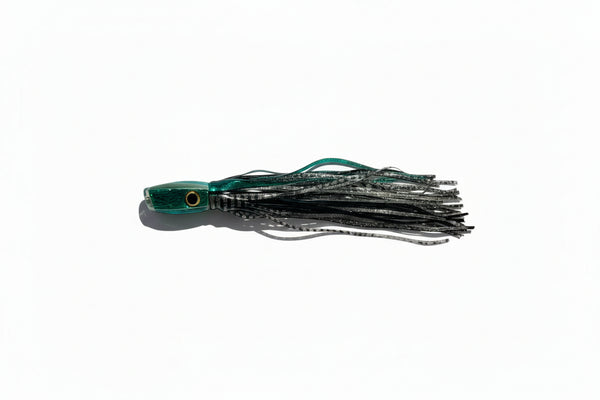
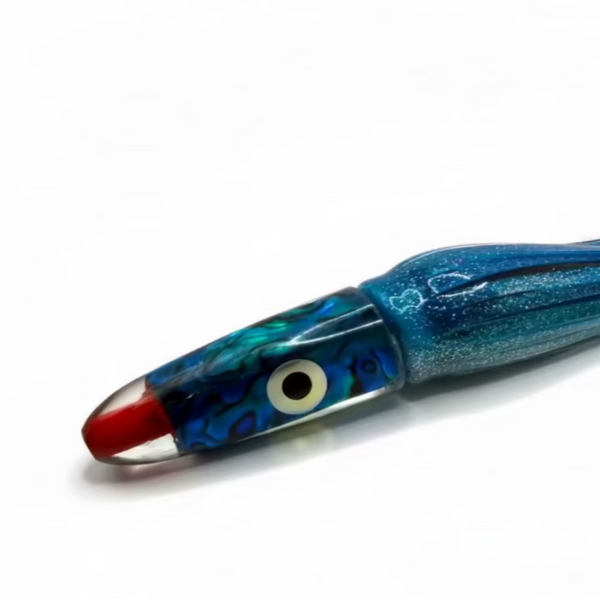
A good resin head trolling lure review starts where most offshore lure failures show up - not in the package, but in the wake. Plenty of resin heads look clean on the rack, then blow out, spin, or lose their smoke trail once you put them in real water at real trolling speeds. If you fish for tuna, marlin, wahoo, or mahi, the only review that matters is how the lure tracks, holds, flashes, and converts when the spread gets busy.
What matters in a resin head trolling lure review
The first thing to judge is not color. It is head design. A resin head lure lives or dies by how it pushes water, how it breathes, and whether it stays consistent in changing sea conditions. Straight runners matter because a lure that hunts too wide in calm water often gets worse once the chop builds. A head that tracks clean at 6.5 knots but washes out at 8.5 is not versatile enough for many offshore crews.
Good resin heads create a repeatable cycle. They dig, pop, smoke, and return without rolling over. That rhythm is what keeps them in the strike zone. Pelagic fish do not need a perfect-looking bait. They need a target that looks alive, vulnerable, and easy to kill in the lane where they are feeding.
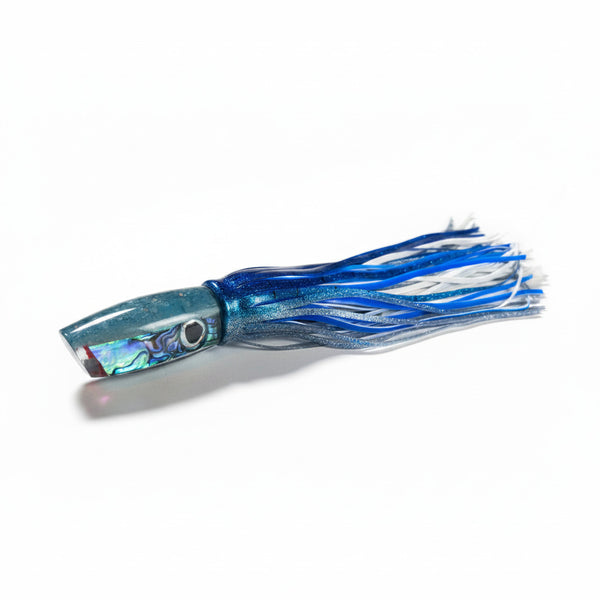
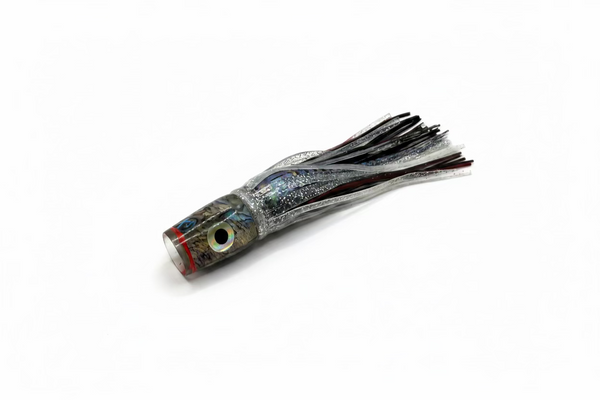
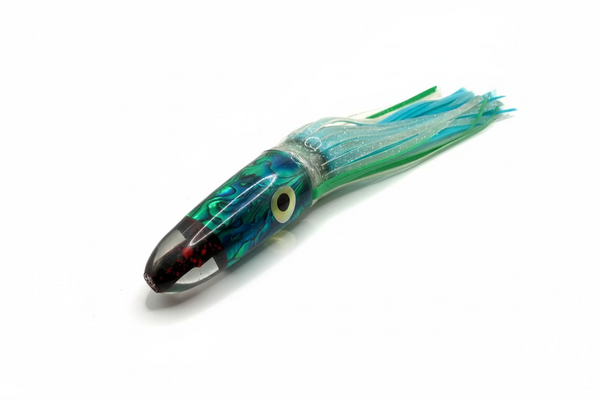
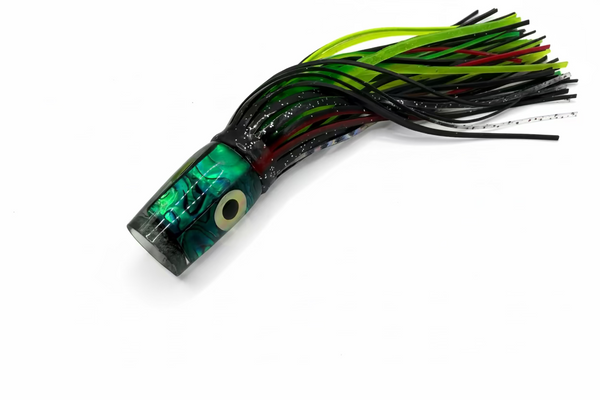
The second factor is flash. This is where resin has a real advantage over many basic lure heads. A well-built resin head can carry depth, clarity, and internal reflectivity that painted heads often cannot match. Add abalone or other high-contrast inserts, and the lure throws light differently as it surfaces and fades. That flash is not decoration. In clean blue water, it helps the lure stay visible from a distance. In overcast conditions, it gives the head a pulse instead of a flat, dead look.
Head shape changes the whole presentation
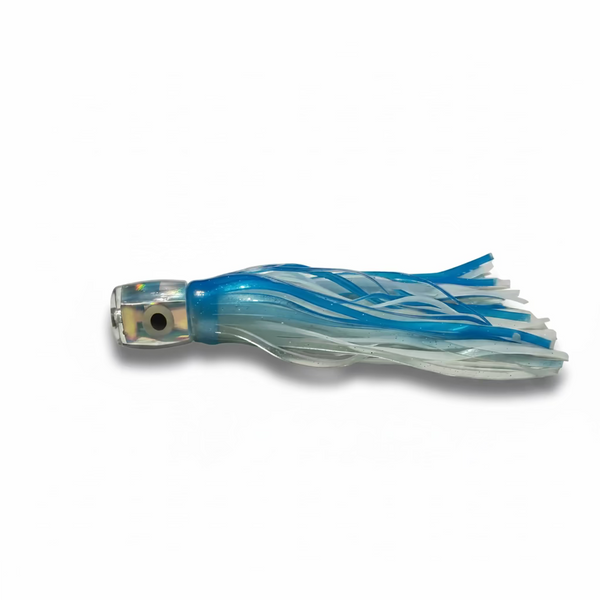
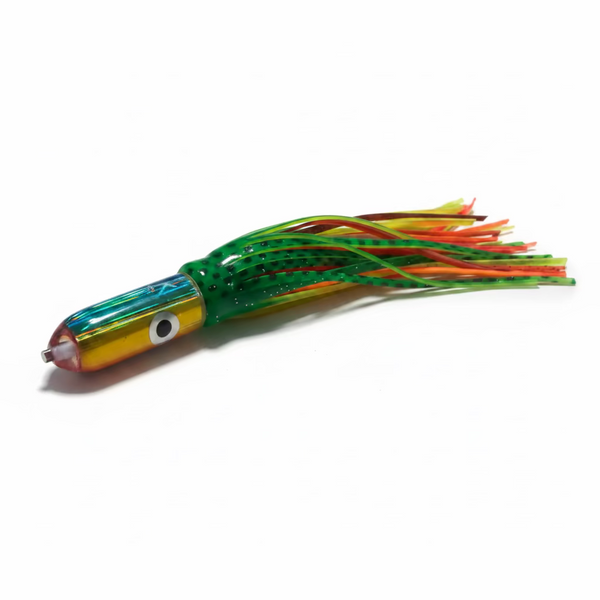
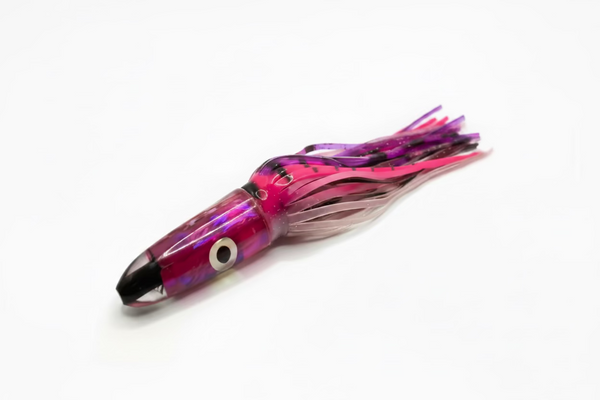
Bullet-style resin heads are built for speed and clean tracking. They are a strong choice for wahoo, tuna, and any spread position where you want a lure to stay in the water and keep running true. They do not create the most dramatic surface action, but that is often the point. Less wandering, less blowout, more consistency.
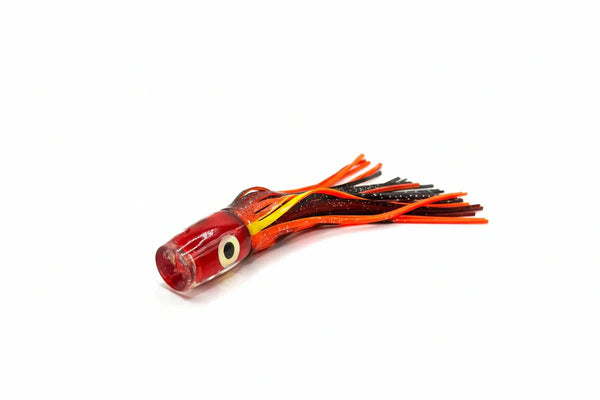
More aggressive slant or angled heads create a louder surface signature. When they are right, they leave a strong smoke trail and a sharper pop. That can be deadly for marlin and aggressive tuna, especially when you want a lure to show itself higher in the pattern. The trade-off is that these heads are less forgiving. Placement, leader stiffness, hook drag, and sea state all matter more.
If you are reading any resin head trolling lure review, pay close attention to whether the lure was tested in flat water only. Many lures behave well in ideal conditions. Fewer keep working when quartering seas, crosswinds, and short-period chop start pushing the spread around.
Material quality is not a small detail
Cheap resin looks fine until it does not. Offshore tackle gets punished by UV, heat, repeated strikes, and hours of pressure in the spread. Better resin heads stay clear, resist cracking, and hold their finish after real use. Poorer ones haze up, chip, or show stress around the leader tube and hook set.
This matters for two reasons. First, durability affects cost over time. A lure that survives multiple trips, toothy fish, and hard washdown cycles is cheaper than replacing bargain lures every few runs. Second, material quality affects action. Once a head starts deforming, cracking, or taking on small structural damage, tracking can change.
Skirt quality matters too. The best head in the world cannot save a lure with stiff, lifeless skirts or material that mats together after one day in the spread. Good skirts pulse at speed. They taper correctly behind the head and support the lure's movement instead of fighting it.
Rigging quality separates serious lures from tackle-box filler
Rigging is where many offshore anglers get burned. A resin head may be molded well, but if the leader, hook set, and overall rigging geometry are off, the lure will never fish the way it should. Hook alignment, leader size, crimp quality, and hook position all affect tracking and hookup ratio.
For tuna and mahi, a slightly lighter, cleaner rig can help the lure stay active and easy to eat. For marlin and wahoo, durability and hook security become more critical. There is no universal setup that fits every species, speed, and sea condition. That is why species-specific rigging matters.
USA-rigged lures with consistent build quality tend to justify the money because they remove guesswork. Serious crews do not want to buy a lure head and then wonder if they need to rebuild the whole thing before it ever sees water.
How resin heads perform by target species
Tuna are usually the best test of whether a resin head is doing its job. They expose lures that look flashy but lack stable action. A good tuna lure holds the lane, smokes hard, and stays believable at the speeds your spread is already running. Smaller to medium resin heads with bullet or slightly angled faces often excel here because they stay clean and do not need perfect conditions to fish right.
Marlin give more room for larger, louder resin heads, especially in long rigger or shotgun positions. They will rise on a lure with strong flash and a defined surface cycle. Still, marlin lures cannot just be noisy. If the head blows out too often or spends too much time out of the water, your window for a committed bite gets smaller.
Wahoo reward speed, stability, and toughness. Resin bullets are a natural fit because they can stay down, stay straight, and keep producing at higher trolling speeds. Heavy abuse is part of the wahoo game, so this is where build quality really shows.
Mahi are less demanding about perfection, but they still respond to active, visible lures that do not spin. Resin heads with bright flash and compact profiles work well because they stay noticeable without overpowering the spread.
Where a resin head lure earns its place in the spread
A lot depends on position. A lure that shines in the short corner may be average on the long rigger. Larger resin heads with more aggressive faces often belong closer, where they can grab water and throw a bigger signature. Cleaner-running bullet heads tend to fit better farther back or in high-speed lanes where stability matters more than splash.
That is why broad claims about a lure being great everywhere usually do not hold up. Offshore trolling is a system. Every lure has a job. The best resin heads are not necessarily the loudest or most expensive. They are the ones that solve a specific spread problem and keep doing it trip after trip.
What separates premium resin heads from average ones
Premium lures are usually more disciplined in the details. The head shape is intentional. The insert work adds flash without making the lure gaudy. The resin stays clear. The skirts match the head size. The rigging is built around actual offshore use, not just shelf appeal.
That does not mean every expensive lure is worth it. Some are priced for looks more than performance. But in the resin category, quality tends to show quickly on the water. Better lures run cleaner, stay intact longer, and keep their action across a wider speed range.
Brands that focus on bluewater trolling systems instead of generic tackle usually get this right more often. K2Fishing fits that lane because the product design clearly centers on offshore performance, flash, and rigging quality instead of trying to be everything to every angler.
Final take on this resin head trolling lure review
If you want a straight answer, resin head trolling lures are worth serious attention when they are built with the right head shape, quality materials, and proper rigging. They bring real advantages in flash, durability, and species-specific presentation. But they are not automatic fish catchers, and not every resin head deserves a spot in your spread.
Judge them by wake behavior first, construction second, and results over time last. If a lure tracks true, smokes clean, holds together, and keeps getting bit in the positions you need to fill, that is the one to keep rigged and ready. Skip the guessing, watch the water behind the boat, and let the spread tell you what belongs there.