Frequently Asked Questions: Wahoo Fishing in the Florida Keys
What is the best depth for wahoo fishing in the Florida Keys?
The most consistent depth range for wahoo in the Florida Keys is 100–300 feet, with 220 feet being a particularly productive sweet spot. Wider passes around wrecks and structure in the 100–450 foot range also produce well.
How fast should you troll for wahoo?
High-speed trolling for wahoo is typically done at 12–16+ knots (13–18 mph). Wahoo are capable of reaching speeds over 50 knots, so a fast-moving lure triggers reaction strikes rather than giving fish time to inspect the bait.
What is the best time of year for wahoo fishing in the Florida Keys?
Wahoo are present year-round in the Florida Keys, but the peak season runs from October through February during the cooler months. During this time, fish are most concentrated and aggressive.
What size lure is best for wahoo?
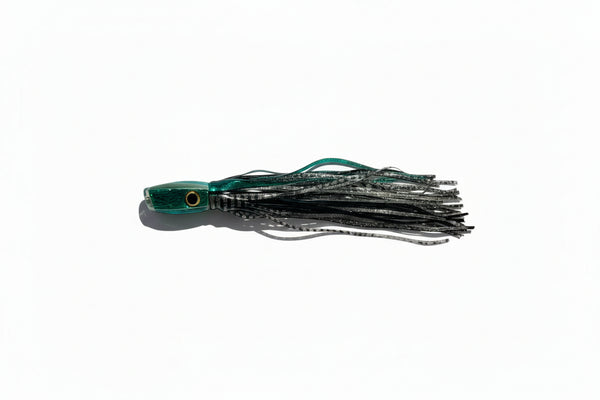
For high-speed wahoo trolling, larger lures (15-inch Strikers with 4 lb inline lead) work best on the deep position. Mid-column baits should use natural colors with 3 lb lead, while a surface long-line lure is critical for triggering schooling wahoo. For mixed species spreads, 7-inch lures produce reliable wahoo strikes.
Do you need a shock leader for wahoo fishing?
Yes — shock leaders are essential for wahoo fishing. A 200–300 lb shock leader approximately 20 feet long absorbs the explosive impact of a high-speed strike, preventing line snap-offs, especially when using low-stretch braided main line.
What is the best trolling spread for wahoo?
A proven wahoo spread uses three rods: a port rod with a 4 lb inline trolling lead (deep, purple or pink lure), a starboard rod with a 3 lb lead (mid-column, natural color), and a center stern rod with no weight (surface long-line lure). Staggering depth and distance ensures full water column coverage and dramatically increases hookup ratios.
Florida keys wahoo fishing
By K2fishing.com

The Florida Keys are known as the Fishing Capital of the World and for good reason. From hard-fighting blackfin tuna to blistering-fast wahoo, these waters are packed with life. But any seasoned angler knows that abundance doesn’t mean easy. These fish can humble you fast. Starting out, I had more than a few trips where I ran miles, watched perfect conditions unfold… and came back to the dock empty-handed. Over time, things improved, but not by accident. It came from years of practice, adjustments, and obsessing over the smallest details. One of the biggest lessons I’ve learned? You can troll the exact same stretch of water as another boat and watch them hook up time after time while your spread swims untouched behind you. Same depth. Same general area. Completely different results.
Why?
Because in offshore fishing, the smallest details matter. A single strand of Seaweed fouling your lure. A half-knot difference in trolling speed. Leader length. Lure placement in the spread. Every tiny factor adds up. Below, I’ll break down some of those key details so you can fine-tune your approach and turn more passes into more hook-ups.
Where to find wahoo
At first, figuring out where to find wahoo can feel overwhelming. But after years and hundreds of hours of trolling, I’ve realized the answer is actually pretty simple once you narrow it down.
The most consistent starting point is the reef edge, from about 100 to 300 feet of water especially if you’re high-speed trolling or flying live bait on a kite. My personal sweet spot has always been 220 feet, zig-zagging out to about 285. That depth change alone can trigger bites.
If I’m looking to mix in other species of fish like like larger mahi or blackfin tuna, I’ll slide a little deeper into the 300–350 foot range. During warmer months, the weed line often sets up around 350 feet and can be very productive. That said, during peak wahoo season (October through February), I’ve found it’s usually better to commit to targeting wahoo specifically rather than splitting focus.
Structure is another key factor. Wahoo are drawn to wrecks and bottom features in the 100–450 foot range. They’re not always sitting directly on top of the wreck, so it’s important to make wide trolling passes around it. I’ve had days where it took three or four passes before getting a strike. Don’t abandon a good piece of structure after just one troll.
And then there’s floating debris. Some of my most memorable fish have come off unexpected structure in open water. My biggest wahoo was caught in late April while trolling beneath a school of mahi that were stacked up on a long floating rope in about 700 feet of water, roughly two miles from the Islamorada Hump. He crushed one of my smaller natural K2 lures. The lure wasn’t oversized, but I’ve found that when mahi are fired up, a natural-looking bait can trigger a reaction bite from a wahoo lurking below.
Speed kills
When it comes to wahoo fishing, speed isn’t just important—it’s everything. If you’re picking up nonstop barracuda bites or trolling for hours without a touch, your trolling speed is often the culprit.
High-speed trolling typically means pulling your lures at 12–16+ knots (13–18 mph). That may feel excessive, but remember: wahoo are capable of reaching speeds over 50 knots (nearly 60 mph). A lure moving at 14 knots isn’t intimidating to them—it’s an easy meal. Don’t be afraid to push the throttles forward and let your spread work at true high speed to trigger reaction strikes.
In my experience, if you’re running thicker wire or cable leaders, faster is usually better. Wahoo generally aren’t leader shy, especially when a bait is moving quickly. A fast-moving target gives them less time to inspect and more reason to react.
If you’re targeting wahoo specifically and not interested in hooking other species, increase your speed—especially if barracuda are tearing up your skirts. Barracuda bites tend to happen more frequently in shallower water. If maintaining higher speeds isn’t an option, consider sliding deeper to get away from them and keep your lures clean.
On the other hand, if you’re trying to mix in mahi or tuna while still keeping a shot at wahoo, adjust accordingly. Head toward the weed line and slow down to around 9 knots (10 mph). That speed is ideal for triggering mahi and blackfin tuna while still keeping your spread attractive to an opportunistic wahoo.
Keeping your lures in the strike zone
Wahoo tend to operate in a key strike zone—typically 30 to 60 feet down in the water column—though they’ll explode on the surface when actively chasing bait. Because of that, running all your lures at the same depth is a missed opportunity.
A well-balanced spread that covers multiple levels of the water column dramatically increases your chances of getting bit. By staggering your baits—some deeper, some mid-column, and one on the surface—you can dial in where the fish are feeding that day and adjust accordingly.
Here’s the setup I like to run:
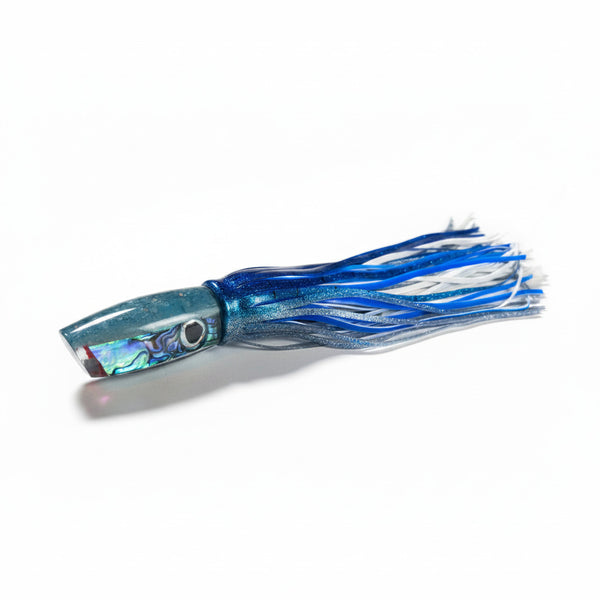
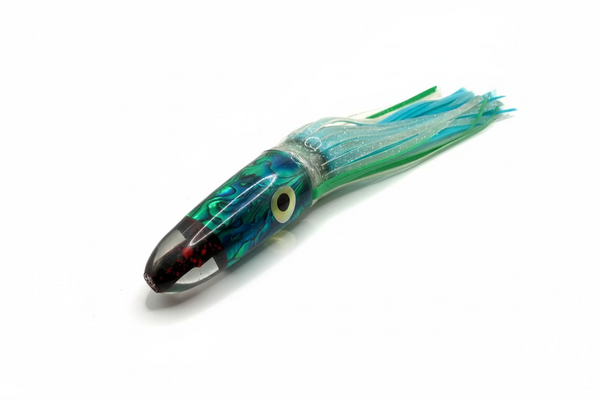
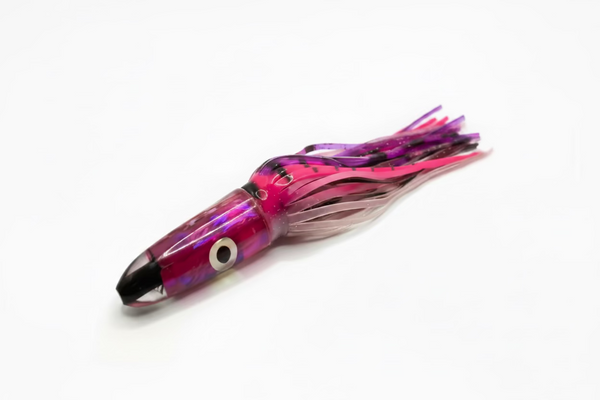
Port rod: 4 lb trolling lead – K2 highspeed Large lure deepest lure on a shorter line

• This lure should be your deepest-running option. I prefer purple or pink, as these colors have been producing the best results for wahoo lately. These larger lures are visible to wahoo from up to 100 feet away, and the bright colors help them lock ontothe fast-moving bait with ease.
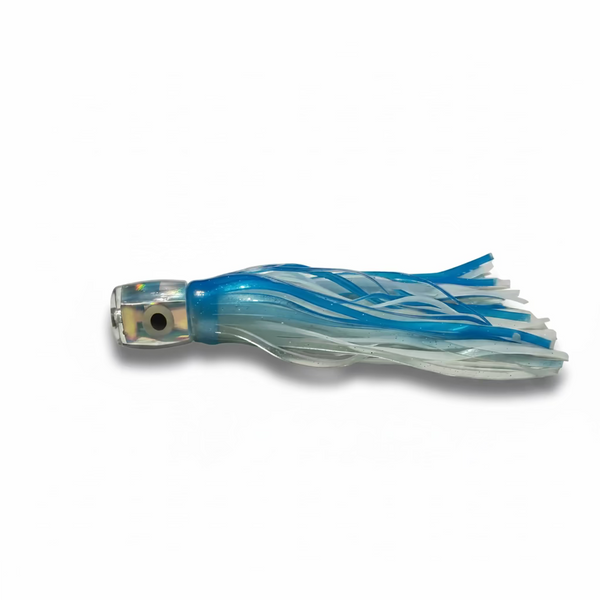
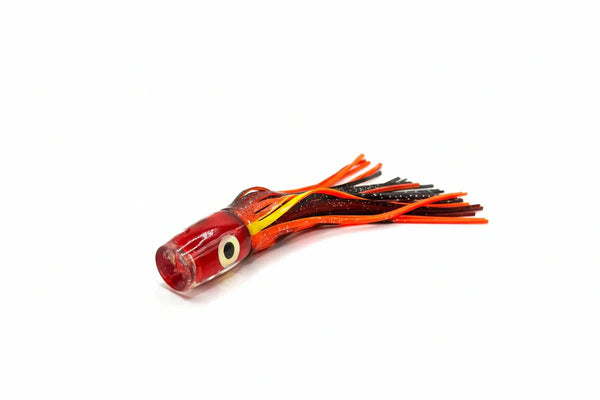
Starboard Rod: 3 lb trolling lead – K2 highspeed natural lure shallow middle line (further out than port side lure)
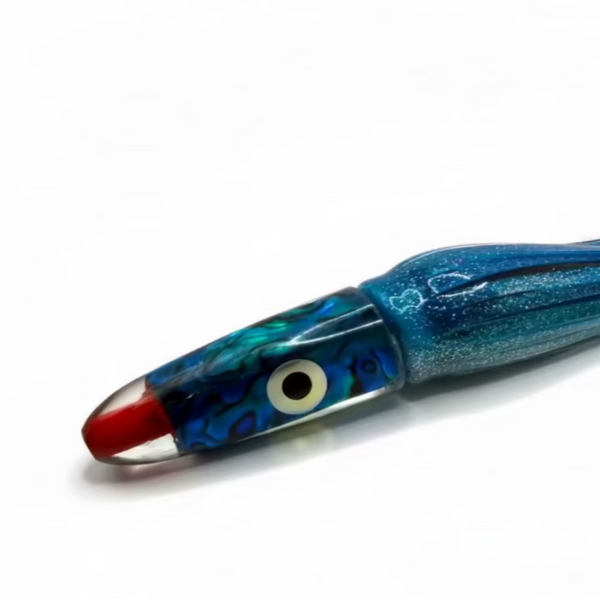
• For the mid-positioned lure, I prefer more natural colors, like blue or green. These tend to get noticed after the wahoo strike at the brighter, more aggressive lures. Wahoo can sometimes be cautious or selective, and having a natural-colored lure trailing about 50 feet behind a bright lure often entices them to turn and bite. Running this setup can significantly increase your hookup success.

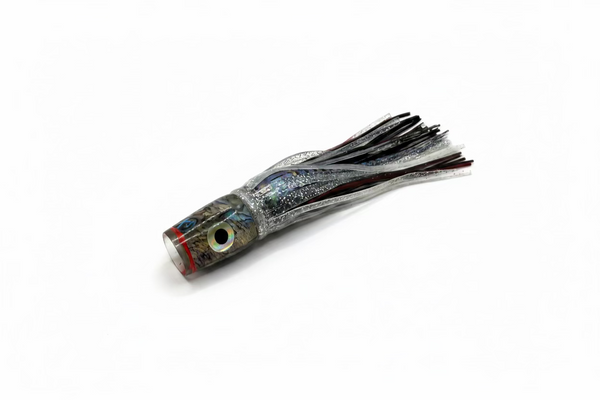
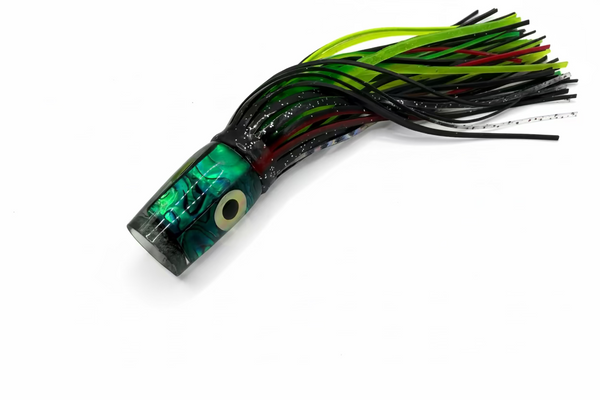
Middle stern Rod: No weight on surface bait – K2 striker – long line lure further back behind the boat.
• The stern long-line lure is, in my opinion, the most important lure in your spread. It not only attracts hungry wahoo cruising near the surface, but it can hook an additional schooling fish if you’ve already hooked one on a shorter line. Wahoo often travel in schools, and a trailing lure can trigger multiple strikes. I can’t stress enough how critical this lure is. Color choice depends on conditions: in clearer, blue water, I stick with natural bait hues, while on cloudy days or in sea grass, brighter colors like pink tend to be more effective. I’ve had success with everything from natural tones to bold, vivid patterns.

I’ve mentioned my favorite lures for a reason—they consistently produce. The natural abalone inlay gives them a flash that stands out without looking unnatural, and that subtle shine has triggered countless bites for me. Just as important, they’re designed to run clean on a high-speed inline trolling lead, allowing you to comfortably fish at true wahoo speeds.
Plenty of trolling plugs claim they can handle high-speed applications. In my experience, many of them start blowing out, tracking sideways, or constantly fouling with grass once you really push the throttle. There’s nothing more frustrating than trolling mile after mile only to reel in a lure wrapped in seaweed.
That frustration is exactly why I developed the K2 fishing lures. I wanted something that would track straight, hold its action at speed, and shed grass better than traditional plugs. The difference has been night and day.
And then there are the hooks. I’ve lost more wahoo to factory plug hooks than I care to admit. Swapping them out helps—but only to a point. I wanted a complete system built for high-speed strikes, not something that needed constant modification. That’s why I stick with my K2 fishing lures—they’re built for how we actually fish for wahoo.
Fishing for wahoo and bycatch
First, what is bycatch? Bycatch refers to the unintentional hooking of fish that aren’t your target species. When fishing for wahoo, this most often includes Blackfin tuna and mahi-mahi. Targeting wahoo is challenging, and some anglers may see bycatch as an opportunity to put more fish in the boat while still chasing that prized wahoo strike.

Wahoo are present in the Florida Keys year-round, though they’re far more consistent during the cooler months. While loading the box with mahi will definitely turn heads at the dock, sliding a big wahoo onto the deck is what really stops people in their tracks. So how do you adjust your approach if you want a legitimate shot at wahoo while still picking up mahi and tuna along the way? It comes down to modifying your spread. A few smart adjustments in lure size, color, and depth can keep you in the game for multiple species—without sacrificing your chances at that wahoo jackpot.
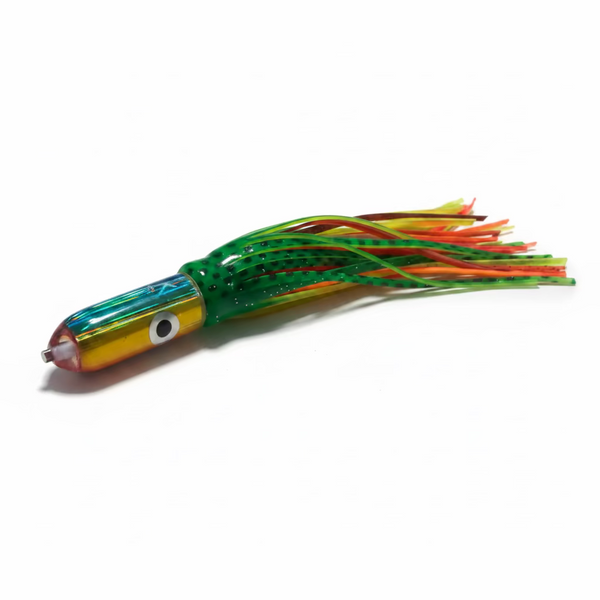
Port Rod: (can use outrigger) Natural color with Strip Bait on K2 7 Inch Lure
• This lure can be trolled off an outrigger, but if that’s not an option, running it on the port side works just fine. I like pairing it with a strip bait on the surface, which adds a lot of action and the natural abalone pattern often triggers strikes almost instantly. While these lures are on the smaller side, they’ve consistently produced wahoo hookups for me. Anything smaller than 7 inches , however, doesn’t seem to grab a wahoo’s attention as effectively.

Starboard Rod: Bright color Purple or Red 7 inch K2 lure (small inline weight (10-15 oz)
• I’ve found this lure works best just below the surface, around 5–10 feet deep. Using a small inline weight helps keep it running properly and maintains the right depth. These are 7 inch lures, but don’t underestimate them—they can still trigger explosive wahoo strikes.

Middle Stern rod: Shortest line K2 Striker (2lb trolling lead)
• The striker is still a fairly large lure, so smaller tuna might have trouble getting it fully in their mouths. That said, when a wahoo hits, this is the lure they go for every time. I’ve even hooked my biggest Blackfin tuna (around 30 lbs) on this lure in the middle of nowhere on a rainy day, so it’s not impossible—but smaller, football-sized tuna will likely struggle with it. Mahi, on the other hand, can slurp this lure down effortlessly, and even the smaller ones seem unfazed by its size. My personal favorites are the pilchard green and Blue patterns—they just seem to get the most attention.

Shock leader and other important items when high-speed trolling
• Shock leaders are essential when trolling for wahoo. At K2 fishing, our Strikers and 15” lures are rigged with 200–300 lb shock leaders that connect directly from the lure or cable. These leaders are typically around 20 feet long, providing critical stretch and shock absorption when a wahoo strikes at speed. When that hit comes, the shock leader cushions the explosive impact, reducing stress on your main line and terminal connections. Using a leader that’s too short, especially with braided line, which has very little stretch can result in an immediate snap-off. A properly sized shock leader gives you the durability and protection needed to stay connected and land the fish
• Bungee rod clips are another must-have when high-speed trolling for wahoo. The sheer force of a strike at those speeds is unbelievable—if you’ve ever seen it firsthand, you know a rod can literally launch out of the holder in an instant. If there’s any failure in your drag, rod holder, or terminal gear, that explosive hit can send a $1,000+ wahoo setup straight overboard. For a small investment, bungee rod clips secure your reel to the boat and give you peace of mind. It’s simple insurance that can save you from losing valuable gear in a split second.

• It’s also wise to have a good pair of gloves on board. When using non-detachable inline weights, you’ll often need to handline the wahoo along the remaining length of the leader. With a typical 20-foot shock leader, this means you’ll be handling a significant stretch of line under tension—gloves make it safer and more manageable.
Details Make the Difference
Wahoo fishing in the Florida Keys isn’t about luck, it’s about intention. It’s about paying attention to speed, depth, structure, current, water color, and even the smallest strand of grass on your lure. The anglers who consistently put wahoo on the deck aren’t doing one big thing differently. They’re doing a dozen small things better.
There will still be tough days. There will still be long runs and quiet reels. That’s part of chasing one of the fastest, most powerful fish in these waters. But when it all comes together—when the reel dumps line at high speed and a silver missile explodes behind the boat—every adjustment and every lesson becomes worth it.
Dial in your spread. Run your lures clean. Commit to the right speed. Trust your gear.
The Florida Keys will reward preparation.
And when that big wahoo hits the deck, you’ll know it wasn’t luck, it was the details.