

For apex marine predators, vision is the primary sense for long-range target acquisition. This biological fact is the foundation upon which high-performance abalone resin lures are engineered, leveraging advanced physics and material science to create an irresistible visual trigger.
The Visual Science of Abalone Resin Lures
The effectiveness of a trolling lure begins with its ability to be seen and identified as prey from a distance. The design of abalone resin lures is a calculated response to the visual hunting strategies of pelagic species. Every element, from material composition to physical shape, is optimized to project the signature of a vulnerable food source.
The Physics of Iridescence and Light Reflection
The core visual attractant is the genuine abalone shell inlay. Its crystalline structure creates a phenomenon known as iridescence, where light is scattered and reflected across multiple wavelengths. This produces a high-intensity, multi-colored flash that closely mimics the scales of distressed baitfish like mackerel, bonito, or sardines. Unlike single-color foils, this dynamic reflection provides a lifelike shimmer that signals an easy meal, a key differentiator for high-performance offshore trolling lures.
Strategic Advantage in Bluewater Environments
This intense, multi-spectrum flash provides a significant tactical advantage in the open ocean. The exceptional lure flash and visibility remain potent across diverse conditions, from the bright glare of a high sun to the diffused light of an overcast day. As the lure moves through the water column, the abalone continues to capture and reflect ambient light, ensuring it remains a conspicuous target even at greater depths. This allows predators to detect and track the lure from farther away, increasing the effective range of your spread.
The Role of Hydrodynamic Design
Visual appeal must be paired with authentic movement. The resin body of the lure is engineered for hydrodynamic stability, ensuring a consistent and lifelike swimming action at various trolling speeds. This predictable, non-erratic movement, combined with the powerful visual flash, presents a compelling target that triggers the predatory instincts of billfish and tuna. Our range of large resin lures demonstrates how varied designs are engineered to deliver this stability and performance, making them essential tools for serious anglers using big game fishing lures.
Beyond the Flash: The Role of Chemoreception
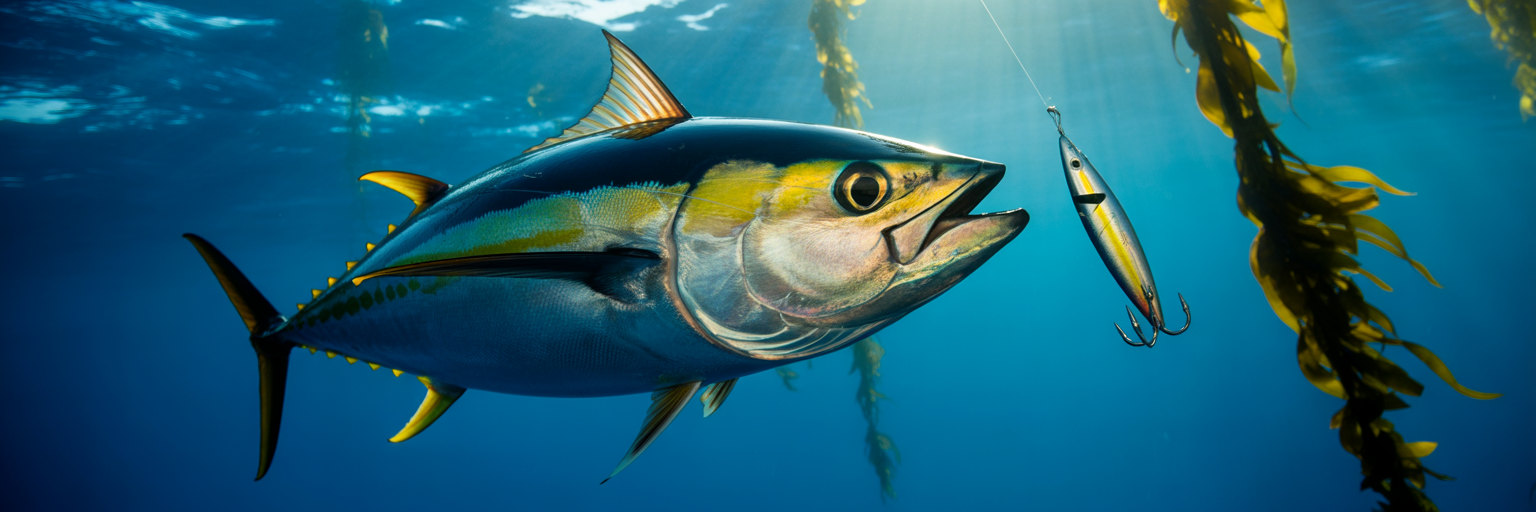
While the intense flash of an abalone resin lure initiates the chase, the engagement is not always complete. Apex predators like tuna and marlin rely on a sequence of sensory inputs to confirm a target before committing to a strike. After visual detection, their highly developed chemical senses play a decisive role.
Understanding Chemoreception in Predatory Fish
Chemoreception, the ability to detect dissolved chemicals through smell and taste, is a critical final verification step for many pelagic species. These predators possess extremely sensitive olfactory systems tuned to identify specific amino acids released by prey. These chemical signals are instinctual triggers, confirming that the visual target is indeed a viable food source. Understanding how fish attractants work is fundamental to converting follows into strikes, and targeting specific species requires a deep knowledge of their unique feeding behaviors.
The Chemical Inertness of Abalone Resin
A significant factor to consider is the material composition of the lure itself. Both the resin and the abalone shell are non-porous and chemically inert. This means that while they offer unparalleled visual attraction, they do not naturally release any scent into the water. This can create a common and frustrating scenario for anglers: a large fish is drawn in by the powerful flash of one of the tuna and marlin lures, circles it closely, but ultimately hesitates and turns away. The fish is gathering more sensory data, and in the absence of a chemical trail, it may deem the target suspicious. This sensory gap must be bridged to secure a strike.
Maximizing Strikes with Scent Application
Bridging the sensory gap between visual attraction and a committed strike requires a scientific approach to scent. By pairing a high-visibility lure with a correctly formulated attractant, an angler can engage both the visual and olfactory systems of a predator, significantly increasing the probability of a hookup.
Targeting Olfactory Triggers with Amino Acids
The most effective fish attractants are not generic food scents but are instead formulated with the specific compounds that predators are biologically programmed to detect. Scientific studies, such as research published in Aquaculture Science, have confirmed that amino acids like glycine and proline are powerful feeding stimulants for many marine predators. Applying a scent formula rich in these compounds adds a layer of authenticity that a visual-only presentation lacks, providing the chemical confirmation a predator seeks before striking.
Water-Soluble vs. Oil-Based Formulas: A Performance Comparison
Not all scent attractants perform equally, especially in trolling applications. The delivery system is as important as the chemical formula. Water-soluble gels are engineered to create a uniform, expanding scent plume that perfectly mimics the trail of a fleeing or wounded baitfish. Oil-based formulas, by contrast, tend to separate from the water and can congeal in colder temperatures, resulting in an inconsistent and less effective scent trail.
| Factor | Water-Soluble Gels | Oil-Based Formulas |
|---|---|---|
| Scent Dispersal | Creates a uniform, expanding plume | Separates and floats, inconsistent trail |
| Temperature Stability | Effective in both warm and cold water | Can congeal and thicken in cold water |
| Adhesion to Lure | Designed to stick to non-porous surfaces | Washes off quickly, requires frequent reapplication |
| Biological Mimicry | Effectively mimics natural amino acid trails | Less effective at replicating natural scent signatures |
This table compares key performance metrics based on the chemical properties of scent attractants. Water-soluble formulas are engineered for superior dispersal and adhesion in trolling applications.
For optimal scent dispersal, follow these steps:
- Ensure the lure is clean and dry before application.
- Apply a small amount of water-soluble gel directly onto the lure head. When applying gel to a lure like our Blue Abalone Lure, focus on the area just in front of the skirt.
- Spread a thin, even coat over the lure head and down into the top of the skirt material.
- Add a small amount to the leader approximately one to two feet ahead of the lure to enhance the scent trail.
Integrating Lures into a Complete Trolling System
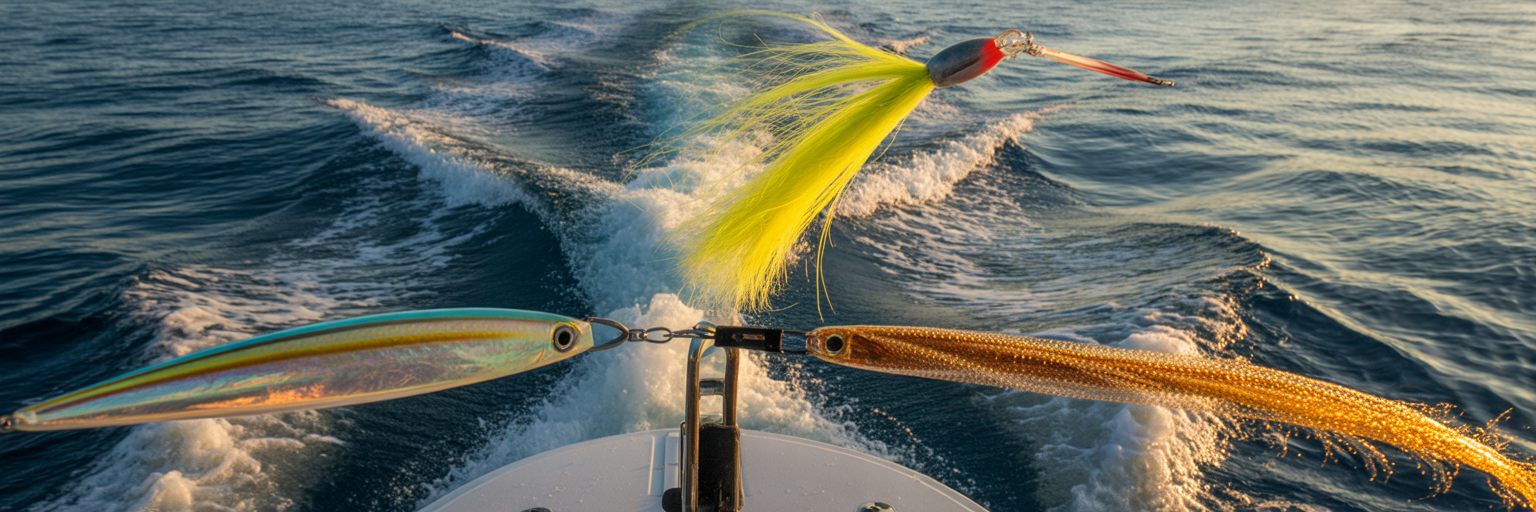
An optimized lure is a critical component, but its performance is amplified when integrated into a complete trolling system. The most successful offshore anglers think beyond a single lure and construct a comprehensive presentation designed to simulate the chaos and opportunity of a natural feeding event.
Simulating a Bait School with Teasers and Dredges
The primary goal of a trolling spread is to create a large-scale disturbance that raises fish from the depths and draws them into striking range. Teasers, dredges, and squid chains work in concert to simulate a panicked school of baitfish. This commotion acts as a powerful visual and vibrational beacon, signaling a feeding opportunity to any nearby predators. This system-based approach is essential for consistently raising big game fishing lures in competitive bluewater environments.
Positioning the Hook Lure as the Primary Target
Within this simulated bait school, the hook lure must be positioned as the most appealing target. The abalone resin lure, with its superior flash and added scent trail, should be placed strategically as a "vulnerable" straggler. By positioning it behind or to the side of the main group of teasers, you present it as an isolated, easy meal. A predator drawn in by the larger commotion will instinctively single out this lagging target, resulting in a more aggressive and committed strike.
Ultimately, peak offshore performance is achieved by combining a multi-sensory lure with a system-based presentation. This strategy exploits multiple predatory instincts simultaneously, leading to a demonstrably higher hookup ratio. Ensuring you have a full range of trolling lures and accessories is essential for building these effective, high-performance spreads and maximizing your success on the water.