

Foundations of a Performance Rig
The explosive moment of a strike is the culmination of all your preparation. In that instant, the single most critical component determining success or failure is your rig. Proper rigging is not just about attaching a hook. It is a science of hydrodynamics, focused on making a lure swim with the lifelike action of distressed prey, which is the primary trigger for predatory game fish.
A professionally assembled big game fishing lure setup runs true, maximizes hook-up ratios, and is built to withstand the violent forces of a marlin or tuna strike. The core principle is simple yet crucial: the hook, leader, and connections must be in perfect harmony with the lure head's design. Even a single mismatched component can kill a lure's action, causing it to spin or tumble instead of swimming enticingly through the water.
This attention to detail is what separates anglers who get lucky from those who consistently land trophy fish. Mastering these fundamentals ensures that when a fish of a lifetime appears in your spread, your gear is ready to perform flawlessly.
Choosing Your Terminal Tackle Components
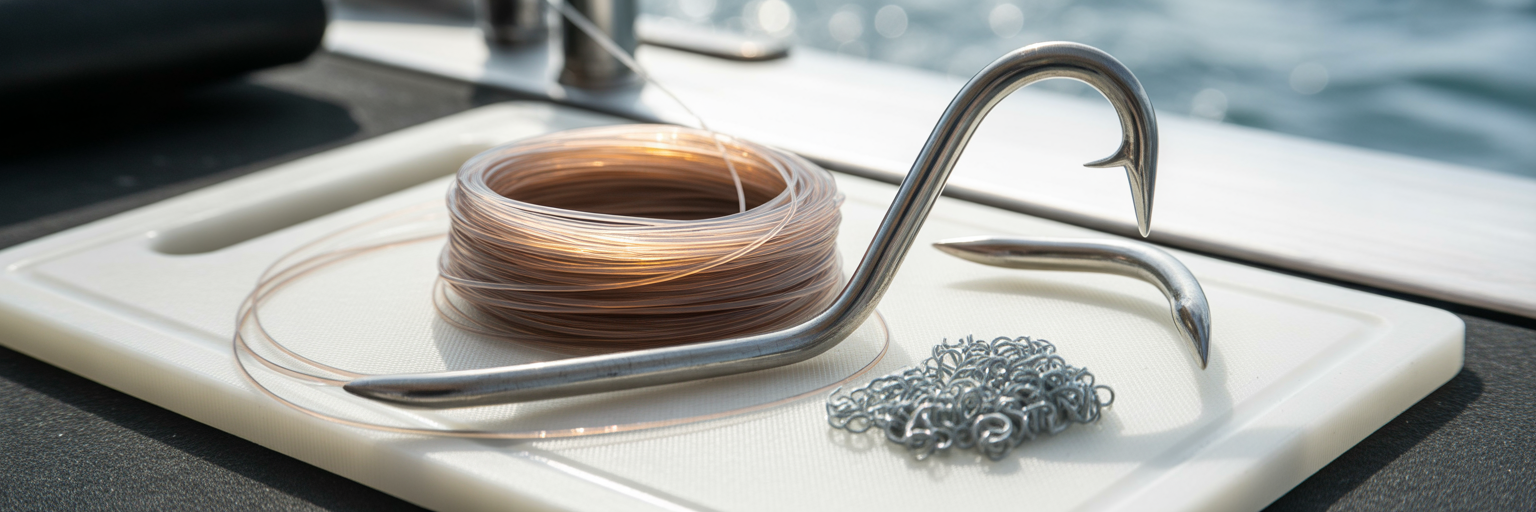
With the foundational principles understood, selecting the right hardware is the next critical step. Your choice of leader and hook directly influences the lure's presentation and its ability to withstand a grueling fight. Each component must be chosen with the target species and water conditions in mind.
Leader Material Selection
The right leader for trolling lures acts as the invisible link between you and the fish. Monofilament is the workhorse for most offshore trolling. Its inherent stretch provides excellent shock absorption, creating a vital cushion during long, intense fights with powerful fish like marlin and sailfish. In contrast, fluorocarbon’s main advantage is its near-invisibility in the water. This makes it essential when targeting line-shy species like yellowfin tuna in clear bluewater conditions. For toothy predators like wahoo and kingfish, a wire leader is non-negotiable to prevent bite-offs, though you trade stealth for durability.
| Leader Material | Key Advantage | Primary Target Species | Visibility |
|---|---|---|---|
| Monofilament | Shock Absorption & Stretch | Marlin, Sailfish, Mahi-Mahi | Moderate |
| Fluorocarbon | Near-Invisibility | Tuna, Line-Shy Pelagics | Very Low |
| Single-Strand Wire | Bite-Proof Durability | Wahoo, King Mackerel | High |
| Cable (Multi-Strand) | Flexibility & Kink Resistance | Sharks, Barracuda | High |
This table provides a quick-reference guide for selecting the appropriate leader material based on its core properties and the target species. The choice directly impacts lure presentation and fight success.
Hook Sizing and Style
The professional standard for hook selection is straightforward: the gape of the hook should match the diameter of the lure's head. This rule ensures the lure's action is not impeded and that the hook point is optimally exposed for a solid connection. This rule is especially important for lures with significant head designs, like those found in our collection of large resin lures, where balance is key to performance. We strongly advocate for single hook rigs over double hooks. A single hook provides a more stable and natural swimming action, results in fewer tangles with the leader, and is significantly safer for both the angler and the fish, which is critical for a quick and healthy release.
The Art of Perfect Hook Placement
Once you have your components, the next step is precise assembly. The optimal trolling lure hook placement is a non-negotiable detail for achieving a lifelike presentation. The goal is to position the hook in the "sweet spot" where the bend of the hook aligns perfectly with the trailing edge of the lure's skirt. This placement balances maximum hook exposure with uninhibited skirt action, creating a pulsating, breathing movement that big fish cannot resist.
Incorrect placement will sabotage your efforts before the lure even hits the water. The consequences are predictable:
- Hook Too Far Forward: The lure may swim perfectly, but you will suffer frustrating short strikes from fish that bite the back of the skirt without finding the hook.
- Hook Too Far Back: The hook can tangle in the leader during an aggressive strike or, worse, impede the natural movement of the skirt, killing the lure's action entirely.
To prevent the hook from spinning or fouling, use rigging sleeves or small plastic beads to lock it firmly in the upright position. While this alignment is a universal starting point, expert anglers may make micro-adjustments based on the lure head style. This is especially true for slant-face designs, where the lure's side-to-side motion is critical. A perfectly rigged Blue Abalone Lure will have its hook set to complement this action, not hinder it.
Executing a Fail-Proof Connection
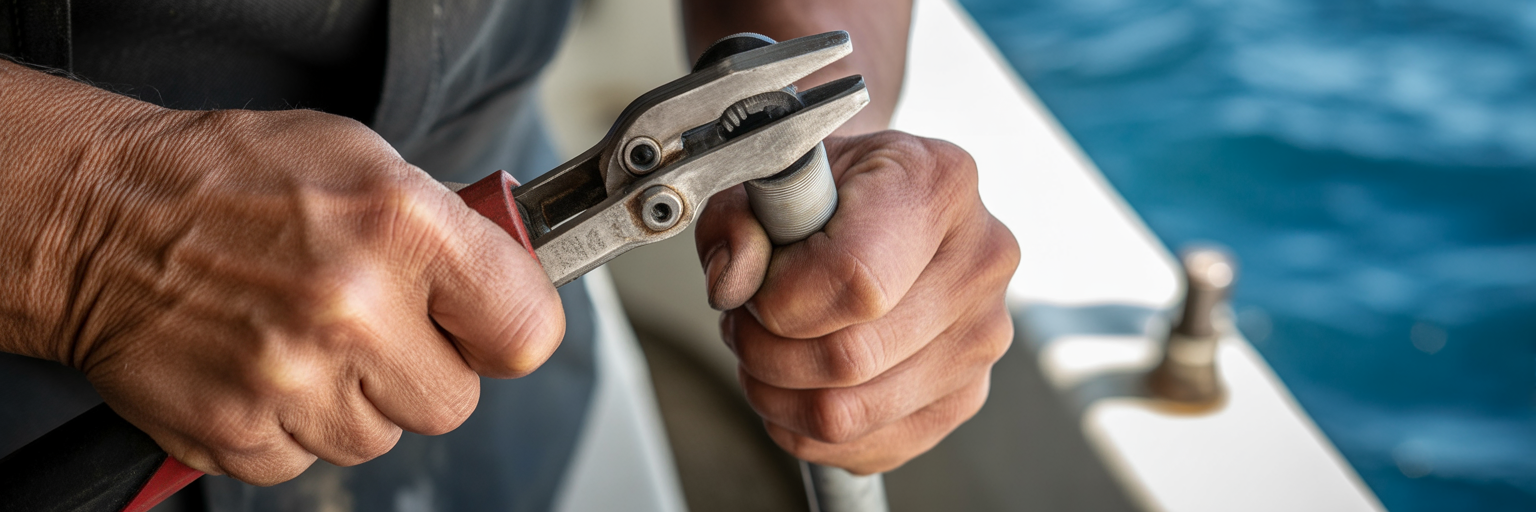
A lure is only as strong as its weakest link. This practical offshore lure rigging guide will help you create connections that will not fail under pressure. For heavy monofilament and fluorocarbon, a dedicated crimping tool is mandatory; pliers will not suffice. Follow these steps for a perfect crimp:
- Select the correct aluminum or copper sleeve for your leader diameter.
- Slide the sleeve onto the leader, followed by a chafe guard.
- Pass the leader through the hook eye and back through the sleeve.
- Pull the tag end to create a tight loop, ensuring the leader lines do not cross inside the sleeve.
- Place the sleeve in the correct jaw of the crimping tool and apply firm, steady pressure to create a rounded, secure connection.
For single-strand wire, mastering the haywire twist is an essential skill when learning how to rig trolling lures for toothy fish. The process involves tight initial wraps followed by looser "barrel" wraps. According to Salt Water Sportsman, this technique is fundamental for creating a strong, clean connection. Crucially, the tag end must be broken off by rocking it back and forth, never cut, to avoid leaving a sharp burr. In all rigs, always use a chafe guard inside the loop to protect the leader from friction. Mastering these connections allows you to properly rig any lure in your arsenal. You can explore our full range of handcrafted lures to see what best fits your needs.
Common Rigging Mistakes and How to Fix Them
Even experienced anglers can make errors. Knowing how to spot and fix these common trolling rigging mistakes is what defines an expert. Here are the most frequent issues and their solutions:
- Mismatched System: Using a leader that is too stiff or a hook that is too heavy will kill a lure's natural action. The fix is simple: always match the hook gape to the lure head diameter and select a leader appropriate for the lure's size and weight.
- Improper Crimping: Under-crimping leads to slippage and lost fish, while over-crimping crushes the leader and creates a dangerous weak point. The solution is to use a quality tool and practice on spare leader material until you can achieve a perfect, rounded crimp every time.
- Spinning or Tumbling Lure: This is almost always caused by poor alignment. Either the hook is not straight, or the leader is exiting the lure head at an angle. The only fix is to re-rig, ensuring every component is perfectly in line.
The ultimate pro tip is to always test your rig. Before deploying a lure, pull it alongside the boat at trolling speed. If it isn't swimming perfectly, it won't attract the right kind of attention. Ensuring your rig is perfect is the first step to successfully targeting specific fish. This five-second check is the final quality control step that can turn a fruitless day into a memorable one.