

The migration of apex predators like marlin, tuna, and wahoo is not a random occurrence. It is a predictable event driven by powerful oceanographic forces and underwater geography. Understanding these factors is what separates successful offshore anglers from the rest. The world’s premier offshore fishing destinations are defined by more than just catch reports. They are complex ecosystems where conditions align to consistently produce exceptional results for those prepared to meet the challenge.
A world-class destination is characterized by a specific set of criteria:
- Trophy Potential: The consistent presence of exceptionally large fish, offering anglers a genuine opportunity for a record-class catch.
- Bite Consistency: Reliable action based on predictable seasonal patterns, allowing for strategic trip planning.
- Ecosystem Richness: The influence of underwater structures like seamounts, canyons, and current edges that concentrate baitfish and, consequently, predators.
This guide provides a definitive analysis of the most productive global fisheries for pelagic species, examined through the lens of season, geography, and strategic opportunity.
Panama: The Pacific's Big-Game Proving Ground
Panama's Pacific coast, particularly the Gulf of Chiriquí, stands as a benchmark for high-performance big game fishing travel. The legendary Hannibal Bank and Isla Montuosa are not just names on a chart; they are proven grounds where world-record yellowfin tuna and black marlin have been caught. The region's productivity is a direct result of its unique oceanographic positioning, which supports a dense and diverse food web throughout the year.
Seasonal Opportunities at Hannibal Bank
The fishery operates on two distinct and highly productive seasons. The dry season, from December to April, is prime time for targeting large black and blue marlin that patrol the bank's edges. As the seasons shift, the green season from May to November brings massive schools of yellowfin tuna, often exceeding 200 pounds, alongside formidable wahoo. This dual-season appeal provides anglers with exceptional strategic versatility.
The Role of the Humboldt Current
The area's incredible biomass is fueled by the Humboldt Current. This powerful oceanographic feature drives nutrient-rich upwellings to the surface, creating an explosion of life that aggregates massive schools of baitfish, squid, and smaller predators. As noted by PescaYa, the Gulf of Chiriquí is renowned for this abundance, attracting apex predators in significant numbers and making it a premier location for anglers seeking consistent, high-stakes action.
Costa Rica: Year-Round Pelagic Consistency
While many destinations are defined by sharp seasonal peaks, Costa Rica's Pacific coast offers unparalleled consistency. Fisheries operating out of Los Sueños and Quepos provide reliable access to pelagic species throughout the year, making it an ideal choice for serious anglers with demanding schedules. The country's commitment to conservation and its unique underwater geography create a stable and highly productive marine environment.
The primary season for blue marlin runs from May to October, but the action rarely stops. Yellowfin tuna, sailfish, and wahoo are available year-round, providing consistent opportunities. This reliability is enhanced by a network of FADs (Fish Aggregating Devices) and natural volcanic reefs that hold bait and predators. These structures act as permanent oases in the open ocean, ensuring that even outside of peak migration, the fishery remains active. For anglers seeking the best marlin fishing spots with dependable results, Costa Rica is a top contender. Capitalizing on these opportunities requires equipment built for performance. Having the right gear, like the proven designs found in our collection of large resin lures, is critical for converting strikes from powerful marlin and tuna into successful catches.
Cabo San Lucas: The Striped Marlin Capital
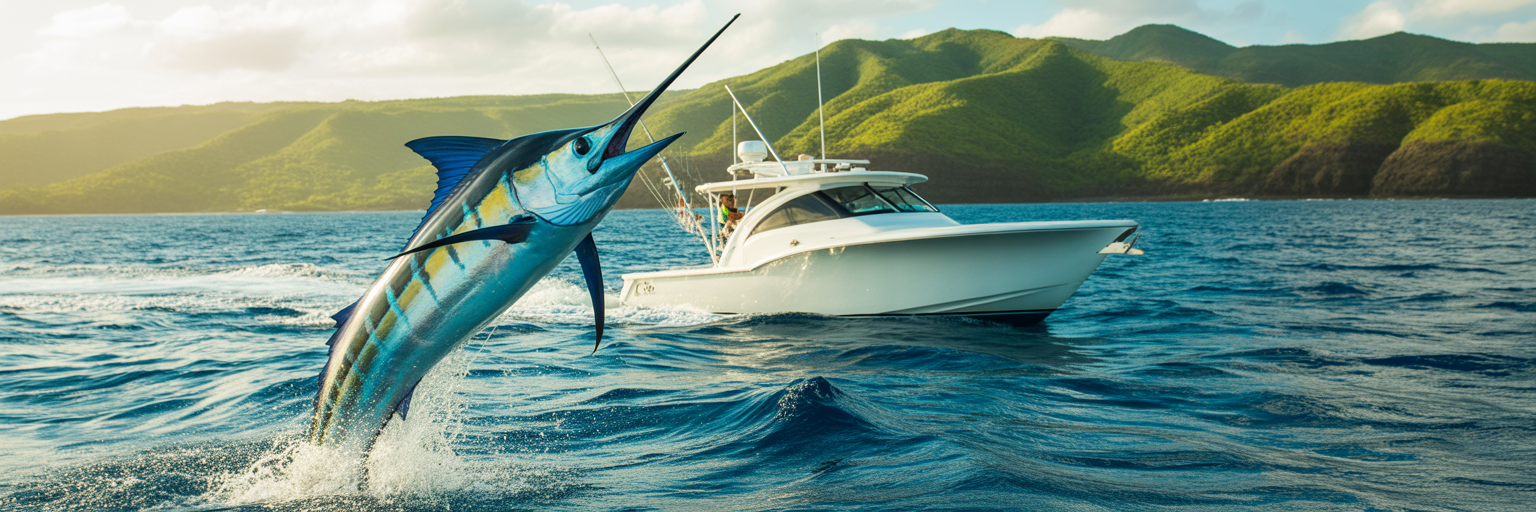
Cabo San Lucas has earned its reputation as a high-volume, action-oriented fishery. Its strategic location at the confluence of the Pacific Ocean and the Sea of Cortez creates an immensely biodiverse environment that attracts pelagic species in staggering numbers. For anglers seeking consistent action, particularly with striped marlin, few places compare.
The peak season, from November to March, is defined by massive aggregations of striped marlin on fishing grounds like the Golden Gate Bank and Finger Bank. During these months, it is not uncommon for boats to raise double-digit numbers of marlin in a single day. As the water warms in the summer months from June to October, the fishery shifts its focus. Larger blue and black marlin migrate into the area, offering anglers a chance at a true trophy. This makes Cabo one of the best marlin fishing spots for both volume and size, depending on the season. The fast-paced nature of this fishery demands lures engineered for performance at speed. A lure like our Flamingo Abalone Bullet Lure is specifically designed for the fast-trolling techniques required to trigger aggressive strikes from these predators.
Atlantic Hotspots: Bermuda and the Dominican Republic
In the Atlantic, Bermuda and the Dominican Republic represent two distinct but equally productive fishery models. Bermuda is a structure-based fishery, while the Dominican Republic is defined by a major migratory corridor. Understanding this difference is key to strategic success.
Bermuda's legendary Challenger and Argus Banks are massive volcanic seamounts that rise from the deep, acting as magnets for baitfish and the predators that hunt them. The peak blue marlin season runs from May to October. The island is also one of the world's premier wahoo fishing hotspots, with trophy-sized fish caught in the cooler months. In contrast, the Dominican Republic's fishery is concentrated around the Mona Passage, a critical migratory route for Atlantic blue marlin. The action here is intense but compressed, with a peak from mid-June to July when fish move through in high densities. When targeting the variety of species in these hotspots, anglers can explore options tailored to each predator by viewing lures organized by fish species.
| Factor | Bermuda | Dominican Republic |
|---|---|---|
| Primary Fishery Type | Structure-Based (Seamounts) | Migration-Based (Corridor) |
| Key Geographic Feature | Challenger & Argus Banks | Mona Passage |
| Peak Blue Marlin Season | May - October | June - July (High Density) |
| Secondary Target | Trophy Wahoo (Cooler Months) | Sailfish & White Marlin |
Vanuatu: A Remote and Productive Pacific Fishery

For the serious angler who values time on the water above all else, Vanuatu offers a compelling advantage: efficiency. The archipelago's unique island geography means that extremely deep water is located exceptionally close to shore. This drastically reduces travel time from the dock to the fishing grounds, maximizing the hours spent with lines in the water.
This South Pacific destination provides a year-round fishery for blue marlin, yellowfin tuna, and wahoo. The bite sharpens during the cooler, drier months from June to August, offering a prime window for targeting trophy-class fish. Vanuatu's appeal lies in its combination of productivity and reduced fishing pressure. It is an efficient, high-impact fishery that remains one of the premier international fishing destinations for discerning anglers. The opportunity to target powerful pelagics in a remote and pristine environment makes it a truly world-class experience.
Strategic Planning for Peak Offshore Performance
Consistent success in offshore fishing is the direct result of meticulous planning, not luck. The world’s top anglers understand that integrating destination, timing, and equipment into a unified strategy is essential for achieving peak performance. The destinations detailed in this guide each present a unique set of variables, and mastering them requires a data-driven approach.
The pillars of a successful offshore strategy are clear:
- Timing is Everything: Align your travel with peak migratory and feeding patterns for your target species. Arriving during a destination's prime season fundamentally increases your probability of success.
- Geography is Key: Understand the core drivers of the fishery. Whether it is a seamount, a current break, or a migratory corridor, your trolling patterns and approach must be adapted to the local underwater geography.
- Gear Must Match the Mission: Your equipment is the final link in the chain. Lure selection is critical and must be tailored to the location, species, and conditions. In the clear waters of the top tuna fishing locations, for example, the unmatched flash of a high-performance abalone resin lure can be the deciding factor.
The most accomplished anglers leave nothing to chance. They synthesize destination intelligence, seasonal timing, and proven equipment to create a comprehensive plan. For those ready to equip themselves for their next expedition, exploring our complete collection of handcrafted lures provides the tools necessary to execute that strategy with confidence.