

Apex predators are wired to exploit weakness, instinctively targeting the easiest meal. A professionally configured trolling spread leverages this behavior by creating a compelling illusion of a disorganized, fleeing school of baitfish. This presentation is not a matter of chance but a calculated strategy designed to trigger an aggressive feeding response from pelagic game fish. Understanding how to set up a trolling spread is fundamental to consistent success in offshore environments.
Foundational Principles of an Effective Trolling Spread
The primary objective of a trolling spread is to imitate a natural bait school in distress. This is achieved through the precise, staggered placement of lures at varying distances and positions behind the boat. A correctly executed spread maximizes water coverage, presents multiple targets, and critically, prevents tangles that can disable your entire presentation. For many offshore trolling setups, a standard five-line pattern serves as a proven and effective baseline.
This configuration typically includes two short flat lines set just beyond the prop wash, approximately 30 to 50 feet back. Further out, two outrigger lines are positioned between 50 and 75 yards. The final lure, known as the 'shotgun', is run far back in the center, often 75 to 100 yards or more. This staggered arrangement creates a wide, deep field of offerings that appears as a scattered group of prey.
It is essential to recognize that this is a foundational template. True optimization requires adapting the spread to your vessel’s specific wake characteristics, prevailing sea conditions, and the behavior of your target species. The ultimate goal is always to position your lures in the cleanest water possible, where their action is unimpeded and their visibility is highest. A well-rounded presentation incorporates a variety of lure profiles, and a complete arsenal of our proven big game fishing lures will ensure you have the right tools to cover every position effectively.
Mastering Lure Placement and Teaser Integration
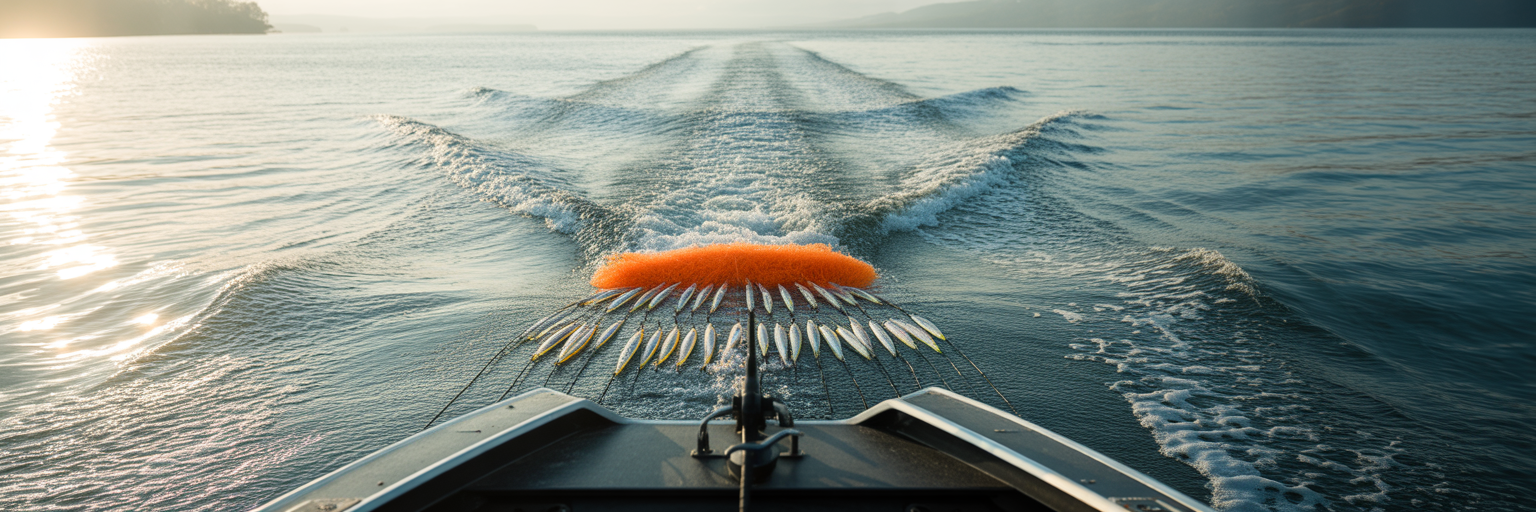
Moving beyond the basic pattern requires an understanding of the visual dynamics within your boat’s wake. The turbulent, aerated water directly behind the propellers, known as prop wash, offers poor visibility. The key is to identify the clear, blue water ‘alleys’ that form on either side and between the wash. Lures run in these clean zones perform with optimal action and are significantly more visible to predators hunting from below or the sides.
To amplify the spread’s visual footprint, hookless teasers are indispensable. Large-profile teasers like spreader bars and daisy chains create the illusion of a dense bait ball, generating large-scale commotion that draws fish into the spread from a greater distance. They act as the initial attractant, pulling curious predators in for a closer look at the individual lures trailing behind. This tactic transforms your spread from a simple line of lures into a dynamic, multi-layered ecosystem.
Strategic lure selection for each position further refines the presentation. Heavier, straight-running lures or jet heads perform reliably on the short flat lines where the water is more turbulent. Lures with more dynamic, erratic action are best suited for the clean water off the outriggers, where their movement can be fully appreciated. Over time, you will identify a ‘hot spot’ in your spread, a single position that consistently draws more strikes. This prime position is often reserved for a lure with exceptional visual appeal, like the K2Fishing Blue Large Resin Abalone lure, whose handcrafted design delivers unmatched flash. The unique light-refracting properties of abalone shell are well-documented; as noted in an analysis by Cocomii, its iridescence is prized for its ability to catch light from multiple angles, a quality that makes it exceptionally effective in high-performance fishing gear.
The Critical Role of Speed and Lure Selection
Trolling speed is arguably the single most critical variable in determining success. The correct speed is not arbitrary; it is the specific velocity required to activate a lure’s designed hydrodynamic action, making it swim, dive, or splash in a manner that perfectly mimics live prey. Each lure is engineered to perform within a specific speed range, and deviating from it renders the lure ineffective. Finding the optimal tuna trolling speed, for example, is essential for triggering strikes from these powerful predators.
The relationship between speed and lure design is direct and absolute. High-speed trolling for wahoo, which often occurs at 10 knots or more, demands heavy, bullet-shaped jet heads or weighted lures that remain stable and run true. Attempting to pull a light, slant-face marlin lure at these speeds would cause it to skip, spin, and fail. The table below provides proven starting points for several key species.
| Target Species | Optimal Trolling Speed (Knots) | Recommended Lure Type |
|---|---|---|
| Tuna (Yellowfin/Bluefin) | 5-7 knots | Resin Head Lures, Green Machines, Spreader Bars |
| Marlin (Blue/Black/Striped) | 7-9 knots | Large Slant-Face Lures, Plungers, Chuggers |
| Wahoo | 8-12+ knots | Heavy Jet Heads, Bullet Lures, High-Speed Trolling Weights |
| Mahi-Mahi (Dorado) | 6-8 knots | Small Skirted Lures, Feathers, Daisy Chains |
Note: These speeds are proven starting points. Always adjust based on sea conditions and observe lure action to ensure optimal performance. The goal is to find the speed where lures swim naturally without skipping or spinning.
As experts from Florida Sportsman note, subtle adjustments can make all the difference. A sudden change in speed, such as increasing or decreasing by 2-3 knots for a short period, can provoke a reaction strike. This tactic makes the lures appear to panic or falter, presenting an opportunity that a hesitant predator cannot resist. For high-speed applications, specialized gear like our K2Fishing Blackfin Bullet series becomes essential, as these lures are engineered to track perfectly at the velocities required.
Advanced Rigging and In-Water Adjustments
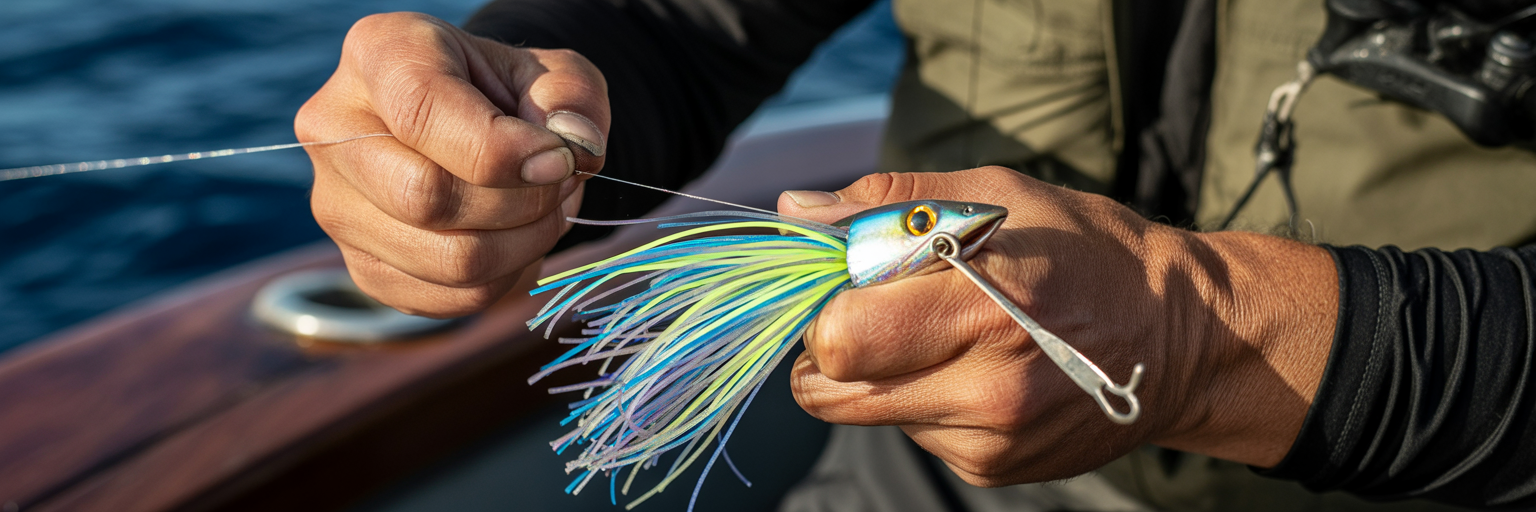
The final layer of optimization lies in meticulous rigging and disciplined in-water management. Consistency across your spread is paramount. Using mismatched leader materials, diameters, or hook sizes can introduce subtle variations that impair a lure’s intended action. Identical rigging ensures every lure performs exactly as designed, creating a uniform and predictable presentation that is more attractive to game fish.
For highly pressured or wary species like tuna in clear water conditions, downsizing leader and hook size is an effective advanced tactic. A lighter, less visible fluorocarbon leader and a correspondingly smaller hook can significantly increase your hookup ratio by creating a stealthier presentation. Fine-tuning your approach for specific targets is a hallmark of an expert angler. For detailed strategies on how to set up a trolling spread for various species, you can explore our dedicated species guides.
Success, however, is not just about the initial setup. It requires constant vigilance. Adhering to a professional maintenance schedule ensures every lure is fishing at 100% capacity throughout the day.
- Every 15-20 minutes, systematically check each line for weeds or debris, starting from the closest lure and working back.
- Confirm each lure is swimming with its intended action. A lure that is spinning or tracking improperly is not fishing effectively.
- Scan leaders for any signs of abrasion or nicks, especially after a strike or when fishing in areas with other predators.
- Ensure all connections, from the snap swivel to the hook, remain secure and have not been compromised.
Finally, executing the correct procedure after a strike is crucial. A common mistake is to stop the boat immediately. Instead, maintain forward momentum for a short period. This keeps the remaining lures swimming and often incites follow-up strikes from other fish in the school, turning a single hookup into a multiple. This disciplined approach separates proficient anglers from the rest.