

The difference between a day of fishing and a day of catching often lies in the precise geometry of the trolling spread. For serious offshore anglers, mastering this configuration is not a matter of luck but of applied science. A well-managed presentation transforms a random assortment of lures into a coordinated attack that triggers predatory responses from the ocean’s most sought-after game fish.
Fundamentals of the Offshore Trolling Spread
The foundation of any successful trolling effort begins with understanding the water behind your vessel. The undisturbed water just outside the turbulent prop wash is known as the ‘clean-water lane’. This is where predators hunt with the clearest visibility, and presenting a lure here is paramount for a natural appearance. A correctly configured offshore trolling spread positions lures in these optimal zones, maximizing their effectiveness.
Every vessel’s hull and propulsion system creates a unique wake signature. Understanding this pattern is not optional; it dictates all subsequent lure placements. The prop wash can cause lures to spin, tumble, or ‘blow out,’ rendering them completely ineffective to wary game fish. Observe your wake at various speeds to identify where the clean lanes form and where the turbulence subsides.
Staggering lure distances is a critical requirement for operational integrity. This practice prevents catastrophic tangles during turns and allows the spread to function as a single, cohesive unit. By positioning each lure at a different distance from the transom, you also maximize the area of water being covered, effectively creating a wider net for passing fish. This systematic approach ensures every lure has its own space to perform as designed.
Finally, a spread is a living system that demands constant observation. It is not a static setup. Watch how each lure is swimming and be prepared to make micro-adjustments to boat speed or lure position. Converting a following fish into a committed strike often comes down to these subtle changes. Having a versatile selection of lures is essential for making these on-the-fly adjustments, and our full range of performance-tested gear provides the options needed for any condition.
Species-Specific Spread Configurations
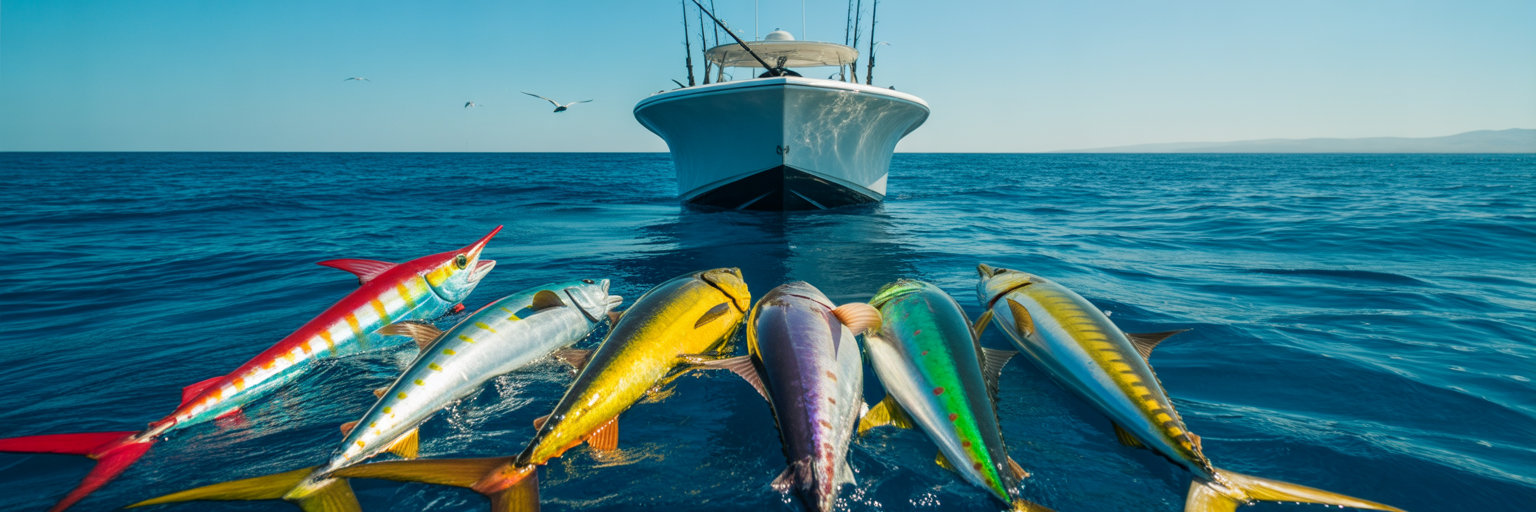
With the foundational principles established, the next step is to tailor the spread to the specific hunting behaviours of your target. The strategies for marlin and tuna differ significantly, and applying the correct configuration is essential for consistent results. One approach prioritizes broad coverage, while the other focuses on concentrated imitation.
Marlin Spread: Wide and Aggressive
Targeting marlin requires creating a large, enticing profile that covers a wide area to attract these roaming apex predators. The goal is to present a pattern that a solitary hunter cannot ignore. The outrigger spread for marlin is designed to be expansive. These are some of the most effective marlin trolling techniques:
- Outrigger Angle: Set your outriggers at a wide angle, between 60 and 75 degrees from the hull, to create maximum separation between lures.
- Lure Distance: Position lures further back in the wake, typically between 80 and 150 feet, to intersect with marlin that may be investigating from a distance.
- Lure Placement: Run large, commotion-creating lures like chuggers on the short corners to draw attention. In the clean water off the long riggers, place straight-running lures with superior flash, like our Blue Large Resin Abalone lure, to maximize visibility and trigger aggressive strikes.
Tuna Spread: Tight and Cohesive
In contrast, an effective tuna trolling spread setup aims to simulate a tight, panicked bait ball. Tuna often hunt in schools, and a concentrated presentation is more effective at triggering a competitive feeding response. This requires a more compact and organized approach.
- Outrigger Angle: Use a narrower outrigger angle of 45 to 55 degrees to keep the lures closer together.
- Lure Distance: Position lures closer to the boat, generally 60 to 100 feet back, to present a dense school of "bait."
- Lure Selection: Employ a mix of big game fishing lures such as squid chains and spreader bars to create the illusion of a bait school. Medium-sized resin heads are ideal for this application, and you can explore high-performance options in our collection of medium resin lures.
Teasers and dredges act as force multipliers in both spreads. They create the illusion of a much larger bait presence, drawing fish into the spread and directing their attention toward your hooked baits.
| Parameter | Marlin Configuration | Tuna Configuration | Strategic Rationale |
|---|---|---|---|
| Primary Objective | Cover maximum water; present a large target | Simulate a tight, panicked bait ball | Matches the hunting style of the target species |
| Outrigger Angle | 60-75 degrees (Wide) | 45-55 degrees (Narrow) | Creates a broad vs. concentrated lure pattern |
| Lure Distance | 80-150 feet | 60-100 feet | Presents lures to roaming marlin vs. schooling tuna |
| Typical Lure Types | Large chuggers, plugs, high-flash resin heads | Squid chains, spreader bars, smaller bullets | Generates commotion vs. mimics a cohesive school |
Mastering Trolling Speed and Conditions
Perfecting lure placement is only half the battle. The dynamic elements of speed and environmental adaptation are what bring a spread to life. Trolling speed is not a "set and forget" variable but a critical tool for optimizing lure action and responding to changing conditions on the water.
Establishing a baseline is the first step. For marlin, a speed of approximately 8.5 knots is standard when pulling skirted lures, allowing them to swim with the intended action. In contrast, the ideal trolling speed for tuna is typically a slower 6 to 7 knots. As noted by experts in Sport Fishing Magazine, this reduced speed helps maintain a cleaner wake, which is crucial for fooling these notoriously line-shy fish. From these baselines, you can make informed adjustments.
High-speed trolling, between 11 and 15 knots, is an advanced technique used to cover ground quickly and target aggressive species like wahoo and bluefin tuna. This method requires specialized equipment. Heavy-duty hardware and bibless minnows designed to withstand extreme forces are not optional but essential for success and gear longevity.
Adapting to the sea state is mandatory for maintaining performance. In rough seas, slowing down is necessary to prevent lures from launching out of the water and tumbling, which ruins their presentation. Conversely, in calm conditions, a slight increase in speed can help trigger reaction strikes from less aggressive fish and allows you to cover more territory efficiently.
The physical demands of managing a spread, especially in challenging seas, should not be underestimated. Maintaining peak physical condition is part of the total performance equation for any serious angler. For those looking to optimize recovery after long days offshore, exploring techniques like cold therapy can be beneficial. You can find a practical guide on this topic to help maintain your edge.
Advanced Hardware and Subsurface Tactics
The final layer of optimization lies in professional-grade equipment and advanced strategies that target fish beyond the surface. In big-game fishing, gear failure is not an option. Investing in reliable hardware and mastering subsurface presentations separates proficient anglers from the elite.
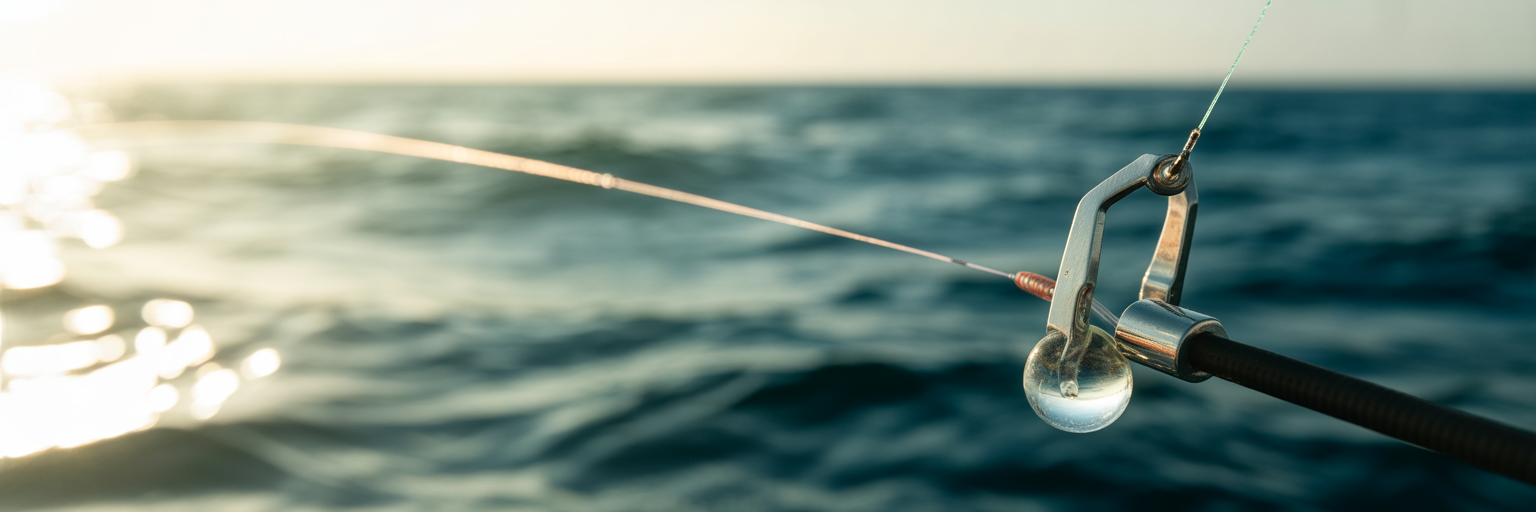
Start with your release clips. Thru-wire release clips with adjustable tension are a significant upgrade over simple rubber bands. They provide clean, consistent releases for solid hooksets and eliminate the unreliability that can lead to missed opportunities. This precision ensures the hook is set at the exact moment of a committed strike.
Shock absorption systems, such as glass snubbers, are another critical component. Their purpose is to absorb the jarring shock from waves and boat movement. This prevents premature clip releases and ensures lures remain perfectly set in the water, maintaining their intended action even in challenging sea states. A stable lure presentation is a more effective one.
When there is no visible surface activity, the most successful anglers pivot to subsurface tactics. This should be treated as a primary strategy, not an afterthought. Deploying presentations that target fish holding deeper in the water column allows you to find action when other boats come up empty.
Your subsurface toolkit should include several key items:
- Diving Planers: These tools are used to take standard surface lures down to predetermined depths with high precision, allowing you to target specific zones in the water column.
- Heavy Trolling Leads: This is a straightforward and effective method for getting baits deep, particularly when targeting fish marked on the sounder.
- Deep-Diving Crankbaits: These lures are self-contained solutions for reaching specific depths without requiring additional planers or weights, offering a simple yet effective subsurface presentation.
Mastering these advanced hardware and tactical elements is what leads to consistent success offshore. To find the right gear for your next trip, you can explore our lure collections organized by target on our Fish by Species page.