

Among the many variables an angler must manage, none is more critical to lure performance than velocity. The correct trolling speeds dictate whether a lure presents as an irresistible meal or an unnatural object, and adjustments as small as 0.2 knots can be the difference between a quiet day and a successful trip. Mastering speed control is a technical skill founded on understanding the physics of water flow and lure design. It is the foundation for consistently attracting and landing high-performance pelagic species.
The Physics of Effective Trolling Speeds
Effective trolling begins with a clear understanding of two distinct metrics: Speed Over Ground (SOG) and Speed Through Water (STW). While your GPS provides SOG, it is the STW that governs a lure's action. A lure responds only to the water flowing past it, not how fast the vessel moves over the seabed. Think of a swimmer in a river. Their effort and speed relative to the water change dramatically depending on whether they are swimming with or against the current, even if their speed relative to the riverbank remains constant. The same principle applies to your boat; engine RPM must be adjusted to maintain a consistent STW when encountering currents.
Every high-performance lure is engineered to operate within a specific velocity window, known as its sweet spot. Within this range, the lure achieves its designed action, whether it is a tight wobble, an erratic dart, or a lifelike swimming motion. This is the key to optimizing lure action. Pushing a lure beyond this range causes it to "wash out," where it skips erratically across the surface with no effective presentation. Conversely, trolling too slowly causes the lure to "drag," resulting in a dead, unappealing motion that fails to attract predators.
Controlling this variable requires constant attention. Sea conditions, current direction, and even the position of the lure in the spread can alter the STW. Therefore, successful offshore angling depends not on guesswork but on a disciplined approach to monitoring and adjusting speed to ensure every lure in the water is performing at its peak potential. This foundational knowledge separates proficient anglers from the rest.
Calibrating Speed for High-Performance Pelagics

Once the principles of speed control are understood, they can be applied to target specific species. Different pelagics have distinct predatory behaviors that are triggered by different presentation speeds. The following guidelines represent established best practices for serious anglers targeting premier game fish.
- Wahoo: The best trolling speed for wahoo is typically in the high-velocity range of 12 to 18 knots. This rapid pace triggers an aggressive reaction strike from these famously fast predators. To keep lures subsurface at these speeds, heavier lures or the use of trolling weights is essential to prevent them from washing out.
- Tuna: The optimal trolling for tuna speed falls between 5 and 9 knots. This moderate pace effectively mimics the movement of fleeing baitfish schools, which are a primary food source for both yellowfin and bluefin tuna. This speed range is ideal for running resin head lures and squid chains that simulate a panicked group of prey.
- Marlin and Sailfish: Learning how to troll for marlin and other billfish involves a slightly slower approach, generally between 6 and 9 knots. These visual hunters often inspect a spread before committing to a strike. A more measured pace gives them time to assess complex presentations involving large teasers, dredges, and big resin lures.
- Mahi-Mahi: As opportunistic feeders, mahi-mahi are often caught within the same 5 to 9 knot range used for tuna. They readily attack versatile presentations, including smaller skirted lures and resin heads, making them a frequent and welcome catch in a mixed-species spread.
For the dedicated angler, having a selection of purpose-built lures is critical for adapting to these different speeds and targets. You can explore a comprehensive range of options in our collections of high-performance trolling lures to ensure you are prepared for any scenario.
| Target Species | Optimal Speed Range (Knots) | Key Lure Types & Presentation |
|---|---|---|
| Wahoo | 12 – 18 knots | Heavy, high-speed lures; trolling weights to keep lures subsurface. |
| Tuna (Yellowfin/Bluefin) | 5 – 9 knots | Resin heads, squid chains, and spreader bars that mimic bait schools. |
| Marlin & Sailfish | 6 – 9 knots | Large resin lures, teasers, and dredges requiring slower inspection. |
| Mahi-Mahi (Dorado) | 5 – 9 knots | Versatile lures like smaller resin heads and skirted lures; often caught in tuna spreads. |
Note: These speed ranges are proven starting points. Anglers must adjust based on sea conditions, current, and observed lure action to find the precise 'sweet spot' for the day.
Advanced Speed Control for Triggering Strikes
Moving beyond static speeds into dynamic adjustments is a hallmark of expert offshore trolling techniques. These maneuvers create erratic lure actions that can convert a following fish into a committed strike. Mastering these methods requires practice and a keen eye for lure performance.
- The 'S-Turn' Maneuver: Executing a gentle S-turn causes the lures on the inside of the turn to slow down and sink slightly, while the lures on the outside accelerate and rise. This sudden change in speed and depth mimics a disoriented or fleeing baitfish, often triggering an instinctual predatory response from a fish that was previously hesitant to strike.
- Adapting to Sea State: Rough seas demand speed adjustments. Trolling too fast in heavy chop can cause lures to launch out of the water as the boat crests a wave, completely disrupting the presentation. Slowing down allows the lures to maintain better contact with the water, ensuring they continue to swim correctly despite the challenging conditions.
- Reading Lure Action: A proficient angler learns to "read" the visual cues of each lure in the spread. A perfectly swimming lure leaves a consistent smoke trail and exhibits its intended action. A lure that is "blown out" will be skipping on the surface, while a "dead" lure shows no action at all. Constant observation allows for immediate correction.
- Leveraging Lure Design: A lure's construction directly impacts its performance envelope. Heavier, hydrodynamically engineered lures, such as our Blue Abalone Lure, are designed to maintain stable, effective action across a wider range of speeds and in more varied conditions than lighter, less robust options.
These dynamic adjustments are not just theory. As noted in an authoritative guide by Tackle Room, such speed variations are a well-documented and highly effective method for improving hookup ratios. Integrating these techniques into your trolling program is a significant step toward achieving consistent results.
Documenting Data to Refine Your Strategy
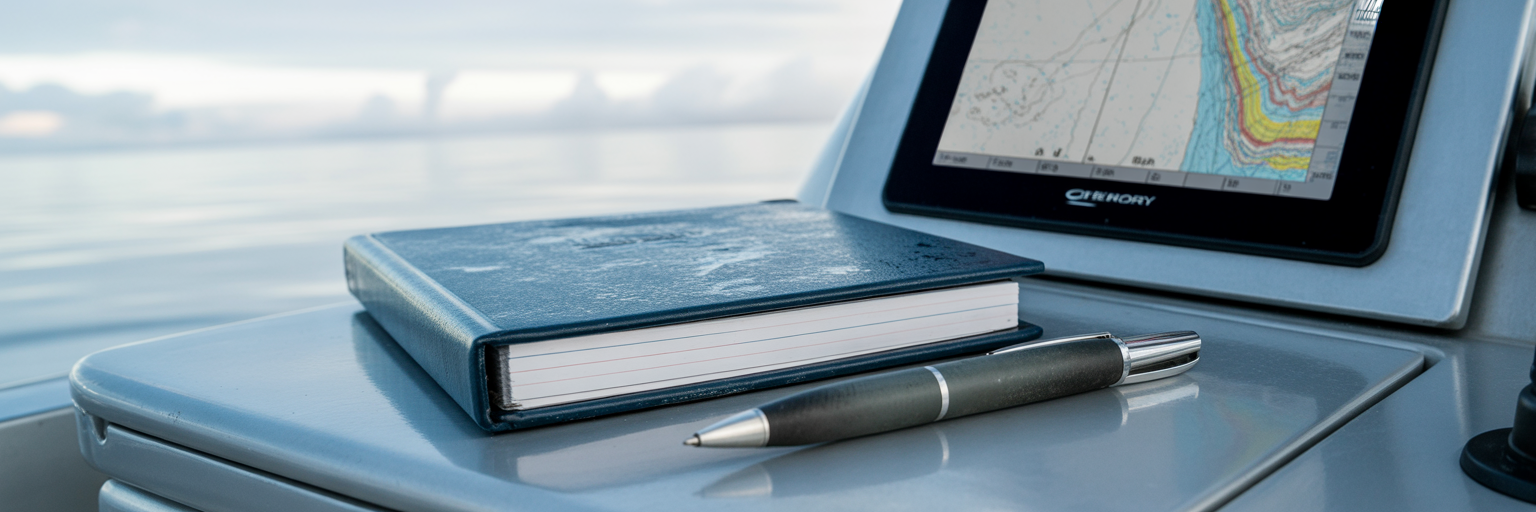
The final element of mastering trolling speed is meticulous data logging. This practice is not a chore but the defining characteristic of a performance-oriented angler dedicated to replicating success. By systematically recording key variables, you transform anecdotal observations into actionable intelligence. Your trolling log should become a personalized playbook for your vessel and fishing grounds.
Essential data points to document on every trip include GPS speed, engine RPMs, lure type and position, sea conditions, current direction, water temperature, and the specific details of every strike. Over time, this log will reveal patterns that are otherwise impossible to discern. You might discover that a particular lure performs best at a specific RPM in a head sea or that strikes increase when you make a turn in a certain direction relative to the current.
Modern marine electronics can streamline this process, but the discipline of recording the outcomes remains crucial. This data-driven approach reinforces the core principle that optimal trolling speeds are dynamic, not static. Mastery is achieved by combining established knowledge with rigorous personal observation. To build a more complete picture, you can cross-reference your logs with detailed information on target species behavior, such as the insights we have compiled on how to fish by species, to refine your strategy even further.