

The margin between a successful day offshore and returning empty-handed often lies in fractions of a knot. For the serious angler, mastering the physics of water flow over a lure is a first principle of big-game success. Understanding and controlling trolling speeds is not just a preference, it is a fundamental requirement for consistent results. This precision transforms a hopeful pass into a calculated strike.
The Foundation of Effective Trolling Speeds
The most common error in offshore trolling is confusing speed over ground (SOG) with speed through water. Your GPS provides SOG, a valuable metric for navigation, but it is the speed of water flowing past your hull that dictates lure performance. This distinction is critical because only speed through water activates a lure’s designed action. Currents and wind can significantly alter this dynamic, making GPS speed an unreliable indicator for your spread.
Every high-performance lure is engineered to swim within a specific velocity window. Trolling too slowly fails to generate the necessary hydrodynamic forces, leaving the lure to drag lifelessly through the water. Conversely, excessive speed causes a lure to "blow out," where it either spins erratically on the surface or skips uncontrollably. Both outcomes present an unnatural profile that repels the very predators you seek to attract.
As a foundational baseline, most pelagic species are targeted within a 5 to 9-knot range. However, this is merely a starting point. The true art of trolling lies in adjusting from this baseline to account for your target species, lure selection, and the prevailing sea conditions. This initial range provides a reliable platform from which to begin the process of refinement.
Matching Speed to Your Target Species
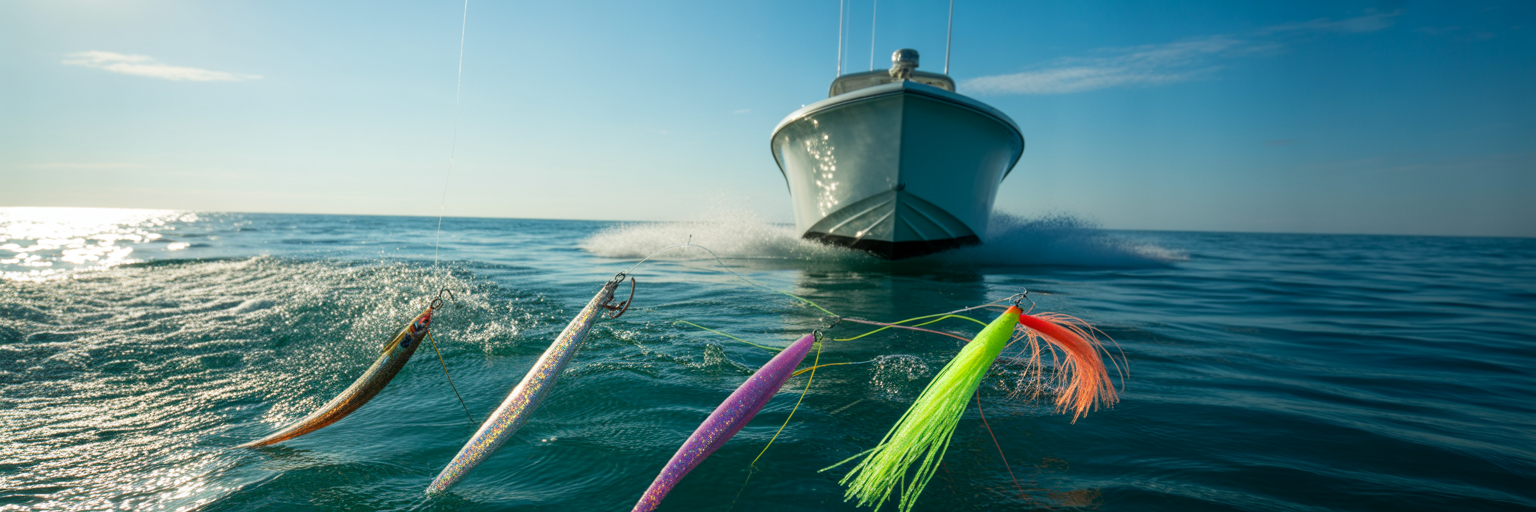
With a foundational understanding of speed through water, the next step is to tailor your pace to the specific behaviour of your target species. Different predators have distinct feeding habits and respond to different presentations, making speed a primary tool for selection. Adjusting your speed is crucial, but so is presenting the right profile, which you can explore further by looking at lures proven for specific targets.
Mixed-Bag Trolling: Tuna, Mahi-Mahi, and Sailfish
For general offshore trolling where multiple species like tuna, mahi-mahi, and sailfish are present, a speed of 6 to 9 knots is the standard. This range is a versatile sweet spot that activates the swimming action of most common lure types, from skirted resin heads to spreader bars. Maintaining a consistent trolling for tuna speed within this window ensures your entire spread is working effectively, increasing your chances of a strike from any of these opportunistic feeders.
High-Speed Trolling (HST) for Wahoo
Wahoo are notorious for their aggressive, high-velocity attacks. To target them effectively, anglers employ High-Speed Trolling (HST) at paces from 10 to 18 knots. The best speed for trolling wahoo requires specialized gear, including heavy, bullet-headed lures and wire leaders, designed to track straight and handle the immense forces at play. This technique is less about finesse and more about triggering a reaction strike from one of the fastest fish in the ocean.
Slow Trolling with Natural Bait
When using natural baits, either live or dead, the strategy shifts entirely. Here, the goal is a subtle, natural presentation. Speeds are reduced to a crawl, typically between 1 and 4 knots. This slow pace prevents the bait from spinning or washing out, allowing it to swim or skip as it would naturally. This is a highly effective method for wary predators and is a common approach when learning how to troll for marlin with rigged baits like mackerel or ballyhoo.
This offshore trolling speed chart provides a quick-reference guide for your next trip.
| Target Species | Common Speed Range (Knots) | Lure/Bait Type | Notes |
|---|---|---|---|
| Mixed Pelagics (Tuna, Mahi-Mahi) | 6 - 9 knots | Resin Heads, Skirted Lures, Spreader Bars | A versatile speed that activates most common lure types. |
| Wahoo | 10 - 18 knots | Bullet Heads, Jet Heads, Heavy Lures | Requires specialized gear to handle high velocity. |
| Marlin | 7 - 9.5 knots (Lures) / 1 - 4 knots (Bait) | Large Resin Heads, Live/Dead Bait Rigs | Speed depends entirely on lure vs. natural bait presentation. |
| Sailfish | 5 - 7 knots | Small Skirted Lures, Dredges, Natural Bait | Slower speeds allow for a more natural bait presentation. |
This table provides a baseline for trolling speeds based on common target species. These are starting points that must be adjusted based on sea conditions, current, and observed lure performance.
How Lure Type Dictates Your Trolling Pace
While target species provide a general speed range, the specific design of your lure dictates the precise pace required for optimal performance. Each lure shape interacts with water differently, creating distinct actions that are only effective within a certain velocity window. Understanding this relationship is key to unlocking a lure’s full potential.
Resin-head lures, for example, are engineered with a specific face angle to produce a side-to-side swimming or diving action. These lures have a "sweet spot," typically in the 6 to 9-knot range, where their movement is most lifelike and pronounced. The vibrant flash of a lure like the Blue Abalone Lure is most effective when trolled at the correct speed to maximize its designed wobble. In contrast, jet heads and other straight-running lures are built to create a bubble trail at higher velocities. For high-speed applications, purpose-built lures such as those in the Blackfin Bullet collection are engineered to track true and create commotion that draws aggressive strikes.
Non-hooked attractants like teasers, dredges, and squid chains also have speed limitations. Their purpose is to simulate a bait ball, and they must be trolled at a pace that creates maximum commotion just below the surface. If the speed is too high, they can break apart or generate unmanageable drag on the cleats.
- Slant Head Lures: Perform best between 6 and 9 knots, creating an aggressive swimming action that dives and surfaces.
- Bullet Head Lures: Designed for higher speeds of 10 knots and above, tracking straight with minimal action.
- Jet Head Lures: Effective across a wide range but excel at higher speeds, where their jets produce a heavy smoke trail.
Adapting Speed to Prevailing Sea Conditions
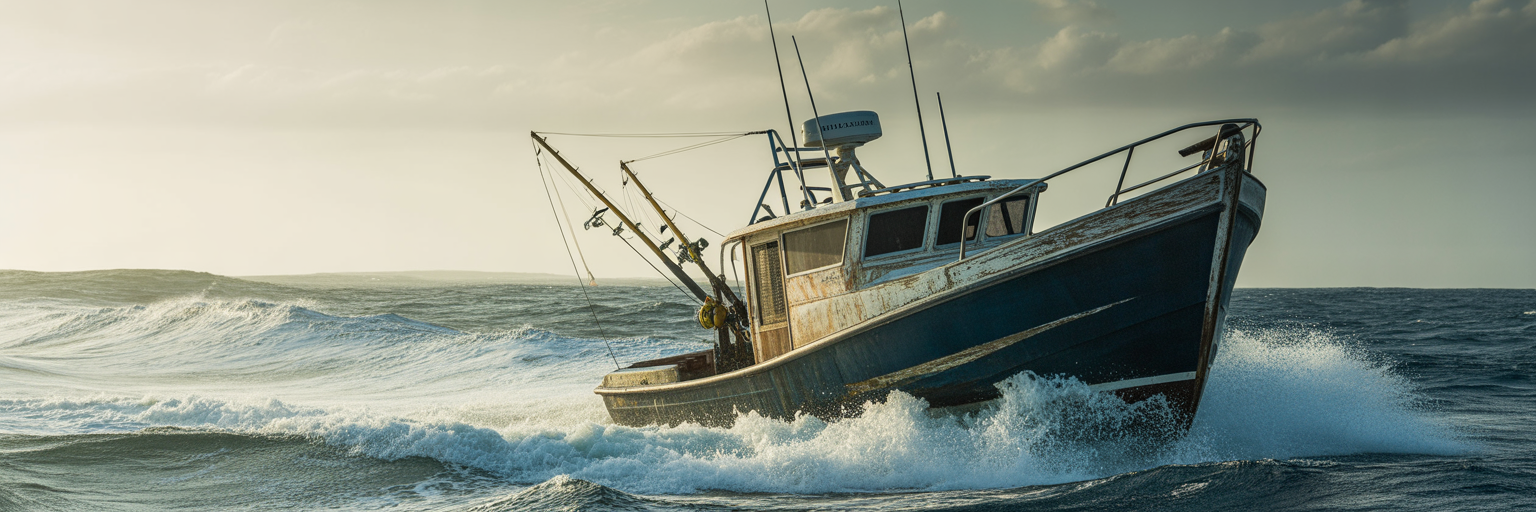
Even with the right lure and target speed, environmental factors demand constant adjustment. The most successful captains are those who can read the water and adapt their offshore fishing techniques in real time. Current and sea state are two of the most significant variables affecting your presentation.
A strong current has a profound impact on your speed through water. When trolling with a following current, you must increase engine RPMs to maintain the necessary water flow over your lures. Conversely, trolling into a head-on current may require you to reduce RPMs to prevent your lures from washing out or tumbling. Ignoring the current is a common mistake that leads to a lifeless or chaotic spread.
Rough seas also necessitate adjustments. In choppy conditions or large swells, a boat will surge down the face of waves, dramatically increasing lure speed for a moment. This can cause lures to pop out of the water and tangle. To counteract this, it is often necessary to reduce speed by 0.5 to 1 knot to maintain a more consistent presentation. This practice is widely endorsed; as Sport Fishing Magazine highlights, reducing speed in choppy water is essential to prevent lures from tumbling and tangling. The choice of trolling with, against, or across the sea also becomes a strategic decision, balancing presentation quality against crew comfort and fuel efficiency.
Refining Your Speed for Peak Performance
Moving from established guidelines to true mastery requires a systematic approach to refinement. The best anglers develop an intuitive feel for the right speed, but this intuition is built upon a foundation of careful observation and documentation. The following techniques will help you dial in the perfect pace for your specific vessel and conditions.
- Observe Each Lure Boat-Side: Before setting your full spread, deploy each lure individually next to the boat. Watch its action closely as you adjust the throttle. This allows you to find the exact speed where it "swims" best, confirming it is performing as designed before you send it back into position.
- Rely on RPMs, Not GPS Speed: Once you find the optimal speed, make a note of your engine RPMs. RPMs provide a more stable and repeatable measure of the force pushing your boat through the water. Unlike GPS speed, which fluctuates with wind and current, engine RPMs give you a consistent benchmark for setting your pace on future trips.
- Maintain a Detailed Fishing Log: The single most valuable tool for long-term success is a detailed log. Document the date, location, sea conditions, wind, current, engine RPMs, lure types, positions, and of course, every strike and catch. Over time, this data will reveal clear patterns, allowing you to systematically perfect your strategy and repeat your successes.
This disciplined process turns trolling from a game of chance into a science. Once you have identified the perfect speeds for your vessel, ensure you have the right tools for the job by exploring the complete collection of performance-tested lures.
Trolling Speed FAQs
What is the best trolling speed for offshore fishing?
For most offshore trolling with resin-head and skirted lures, the best trolling speed is 6 to 9 knots through the water. Start around 7.5 knots, watch every lure boat-side, then adjust half a knot at a time until the whole spread swims clean.
What trolling fishing speed works best for tuna?
Tuna usually bite best at a trolling fishing speed of 6 to 8 knots with medium resin lures, cedar plugs, and bullets. Straight-running bullets can be pulled a little faster when tuna are busting on the surface.
What trolling speed should I use for wahoo?
Wahoo are targeted with high-speed trolling at roughly 12 to 18 knots, using heavy bullet or jet-head lures on wire leaders so the lures stay in the water and survive the bite.
What trolling speed is best for marlin?
Marlin lures usually run best at 7 to 9.5 knots. When slow trolling live or rigged natural baits for marlin, drop to 1 to 4 knots.
Why does my GPS trolling speed look right but my lures will not swim?
GPS shows speed over ground, not speed through water. A following or head current can change your true trolling speed by a knot or more, so tune by lure action and engine RPM, not the GPS number. For a species-by-species reference, use our trolling lure speed chart.









