

Selecting the correct trolling lure for big-game species is a technical discipline grounded in science, not a decision based on simple preference. The success of any offshore pursuit is heavily influenced by understanding the hydrodynamic properties engineered into each lure. A lure’s head geometry, weight distribution, and overall design dictate its action in the water, determining its ability to mimic the specific movements of distressed prey. This calculated presentation is what triggers an instinctual, aggressive predatory response from apex predators.
An expert angler’s strategy is built upon a systematic evaluation of three critical variables. First is a deep understanding of the target species and its distinct feeding habits. Second is a continuous assessment of the prevailing sea conditions, which directly impact lure performance. Finally, one must consider the lure’s specific position within the trolling spread. Mastering these elements transforms lure selection from a game of chance into a predictable and effective methodology for consistent results.
The Science of Trolling Lure Selection
The performance of a trolling lure is not accidental; it is the direct result of its engineered design. The physics of hydrodynamics govern how a lure behaves at speed, creating a specific action and bubble trail that either attracts or deters target species. A lure's head geometry is the primary factor controlling this interaction with water. The shape dictates whether the lure will swim straight, dive erratically, or create surface commotion. The objective is to present an irresistible signal of a vulnerable meal.
This is not about aesthetics. It is about presenting a profile and action that aligns with the predatory instincts of a specific game fish. An angler must therefore think like an engineer, considering how each design element contributes to the lure's sub-surface behavior. The weight, balance point, and face angle all work in concert to produce a repeatable action. Understanding these principles is the foundation of moving from hopeful trolling to a calculated and successful hunt. The three critical variables an expert angler must evaluate are the target species' feeding habits, prevailing sea conditions, and the lure's position in the trolling spread.
Decoding Lure Head Geometry and Action
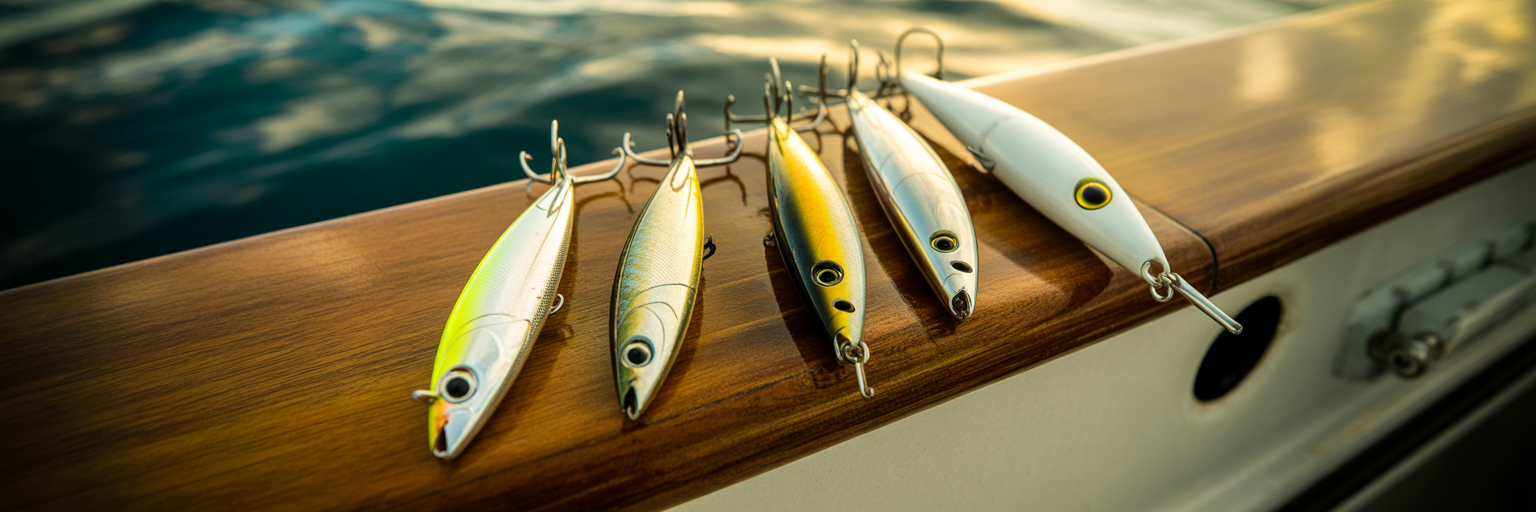
A lure's head shape is the single most important factor determining its action and effectiveness. Each geometry interacts with water differently, producing a unique combination of movement, vibration, and bubble trail. Understanding these designs allows an angler to build a versatile spread that performs optimally across various conditions and for different target species. The four primary head geometries each serve a distinct purpose.
- Cup-Faced Lures: The concave design of a cup-faced lure aggressively scoops water, creating significant surface commotion and a dense, aerated bubble trail. This high level of disturbance acts as a powerful attractor, drawing attention from a distance. They are most effective when run in short rigger or flat line positions, close to the transom's turbulence. However, their aggressive action can cause them to skip out of the water in rough seas, requiring careful speed adjustments.
- Flat-Headed Lures: Known for their stability and versatility, flat-headed lures are a cornerstone of many trolling spreads. Their design provides a consistent and rhythmic swimming action that performs reliably across a wide range of sea states. This dependability makes them a solid choice for multiple positions in the spread, capable of attracting a variety of pelagic species without requiring constant tuning.
- Slant-Headed Lures: These lures are engineered for a more aggressive, dynamic action. The angled face causes the lure to dig into the water, then dart erratically from side to side before resurfacing to breathe. This unpredictable movement is highly effective at triggering reaction strikes from curious billfish like marlin. Their performance is optimal in calm to moderate seas where their action can be fully expressed without being overpowered by wave action.
- Bullet and Jet-Head Lures: The streamlined, hydrodynamic profile of bullet and jet-head lures is built for speed and precision. These designs ensure high-speed stability and a deep, straight tracking path with minimal surface action. Jets feature channels drilled through the head, which create a tight bubble trail that adds to the attraction. This type of trolling lure is essential for targeting fast-moving species like wahoo and tuna that often feed deeper in the water column.
A well-stocked tackle box should contain a variety of these designs, as a successful day on the water often requires adapting your presentation. Exploring our comprehensive collection of handcrafted lures provides options for every scenario an offshore angler might face.
Matching Lures to Target Species
Applying technical knowledge of lure mechanics to specific species is where strategy translates into results. The most effective big-game fishing lures are those that directly appeal to the distinct hunting behaviors of the target. Research confirms that visual contrast and movement patterns are primary triggers for pelagic predators. For instance, a 2019 study highlighted in Fisheries Research found that lure action and contrast are often more critical than exact color imitation. Therefore, selecting a lure is about matching its performance profile to the instincts of the fish.
Blue Marlin: The Aggressive Predator
Blue marlin are apex predators that respond to large, disruptive presentations simulating substantial prey like skipjack or small tuna. The ideal marlin trolling lures are large cup-faced or aggressive slant-headed models. These create maximum surface disturbance and a heavy smoke trail, signaling a significant meal worth pursuing. They are typically trolled at speeds of 7 to 9 knots to achieve their optimal action.
Tuna: The Speed-Driven Hunter
Yellowfin and bluefin tuna are powerful, visually oriented hunters that often track their prey from below. Effective tuna trolling lures are those that run straight and true, such as jet-heads, bullets, or smaller flat-faced lures. These designs maintain a consistent track deep in the water column, imitating the fleeing baitfish that tuna favor. Their stability at speeds from 6 to 10 knots makes them a reliable choice for the long rigger or shotgun positions.
Wahoo: The High-Speed Specialist
Wahoo are renowned for their blistering speed and toothy armament. Success requires lures that can perform at a high wahoo trolling speed, often between 12 and 18 knots. Streamlined bullet and jet-head lures, like those in our Blackfin Bullet series, are essential as they are engineered for stability at these velocities. Due to their sharp teeth, a wire or cable leader is non-negotiable to prevent bite-offs.
Dolphin (Mahi-Mahi) and Other Pelagics: The Opportunistic Feeders
Dolphin are aggressive and opportunistic, often attracted to the commotion of a spread. They respond well to smaller lures, daisy chains, and spreader bars that imitate a school of baitfish. Lures with high-flash materials, such as abalone inserts, are particularly effective at capturing their attention. The visual appeal of a well-chosen lure can make all the difference for these visual predators.
To simplify your selection process, you can explore lures specifically categorized to help you fish by species and build a more effective arsenal.
| Target Species | Recommended Lure Head | Trolling Speed | Key Tactic |
|---|---|---|---|
| Blue Marlin | Large Cup-Faced or Slant-Headed | 7-9 knots | Creates maximum surface disturbance to simulate large, distressed prey. |
| Yellowfin & Bluefin Tuna | Jet-Head, Bullet, or Small Flat-Head | 6-10 knots | Maintains a consistent, straight track deep in the water column. |
| Wahoo | Streamlined Bullet or Jet-Head | 12-18 knots | Ensures stability at high speeds; must be paired with a wire leader. |
| Dolphin (Mahi-Mahi) | Small Resin Heads, Daisy Chains | 5-8 knots | Imitates a school of small baitfish; bright colors and flash are key. |
This table provides a strategic baseline for lure selection. Speeds and tactics should be adjusted based on real-time sea conditions and fish behavior observed during the day.
Principles of Effective Spread Management
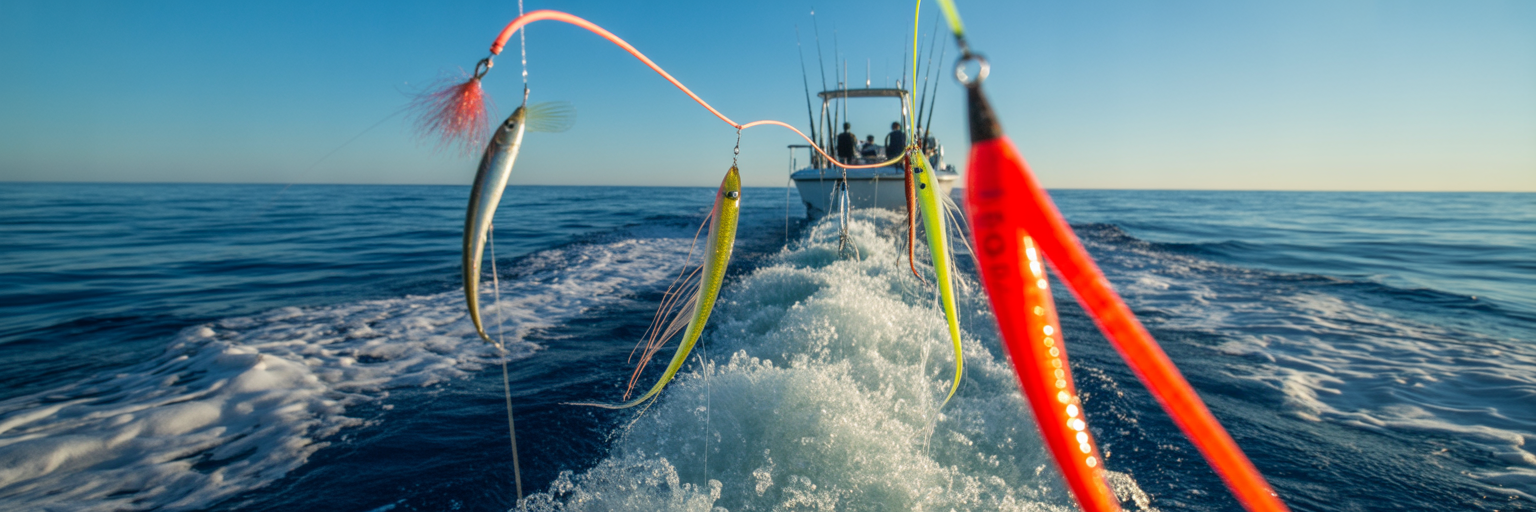
Arranging individual lures into a cohesive and productive spread is a critical component of professional offshore trolling techniques. A well-managed spread presents a dynamic and irresistible buffet that draws fish in and converts lookers into strikers. The most effective approach is the "gradient" theory of spread design, which organizes lures by action and position to create a layered presentation.
- Close Positions: Larger, more aggressive lures like cup-faced models are placed in the turbulent water close to the transom on the flat lines or short riggers. Their intense commotion acts as a teaser, drawing fish into the spread and creating a competitive feeding environment.
- Mid to Far Positions: Smaller, straight-tracking lures such as jets and bullets are positioned further back in the clean, undisturbed water of the long rigger and shotgun positions. Wary fish that might be hesitant to enter the chaotic wash near the boat are more likely to strike these subtle, deeper-running offerings.
An advanced technique is "swimming on the wave," which involves precisely adjusting a lure's distance from the boat to keep it on the front face of a pressure wave. This placement maximizes the lure's designed action, making it appear more lifelike. A static spread is an ineffective one. The serious angler must constantly observe lure performance and make dynamic adjustments to outrigger height, clip tension, and line distance in response to changing sea states. Building a versatile spread requires having the right tools, including a selection of high-performance large resin lures for every position.
Optimizing Performance for Sea Conditions
Adapting your lure selection and spread to environmental factors is a hallmark of an expert angler. Sea state dictates which lures will perform as designed and which will become ineffective. A failure to adjust for conditions is a common source of unproductive days on the water.
In calm conditions, the water surface is a blank canvas, making it the ideal time to deploy lures with aggressive, erratic actions. Large slant-heads and chuggers can perform their dynamic, side-to-side movements without being thrown from the water. This is the time to maximize action and surface disturbance to attract predators from afar.
Conversely, in rough seas, the priority shifts from action to stability. Aggressive lures may struggle to stay in the water, tumbling and tangling. In these conditions, heavier, center-weighted lures, flat-faced heads, or jet heads are superior choices. Their designs help them stay submerged and maintain a consistent, trackable action that fish can locate amidst the surface chaos.
Beyond lure choice, hook configuration also impacts performance. There is a definitive professional trend towards single-hook rigs. They offer a superior hook-up ratio compared to traditional double-hook setups, as a single point penetrates more effectively. Furthermore, single hooks facilitate safer and quicker releases, a critical aspect of conservation-minded angling. Matching the hook size to both the lure and the target species' jaw structure is a final, crucial detail for optimizing performance.
A Systematic Approach to Lure Mastery
Consistent success in big-game fishing is the direct result of a methodical, knowledge-based approach. It is achieved by mastering the core pillars of lure selection: understanding head geometry, tailoring choices to the target species, implementing strategic spread management, and adapting dynamically to sea conditions. Luck is not a strategy. The most accomplished anglers are those who constantly observe lure performance, analyze feedback from the water, and make continuous adjustments.
Building a versatile arsenal of high-performance lures and mastering their deployment is the definitive characteristic of a results-driven offshore angler. This commitment to excellence is what separates the best from the rest. At K2Fishing, we provide the tools for anglers dedicated to this level of performance.