

A successful day offshore is the product of precision and system design, not chance. Elite anglers understand that a correctly configured offshore trolling setup is engineered to mimic a distressed bait school, provoking aggressive predatory responses from target species. Every effective spread is governed by three core variables: lure placement, trolling speed, and lure selection. The objective is to create a cohesive, dynamic pattern in the water that appears both natural and irresistible to game fish like marlin, tuna, and wahoo.
Mastering these elements requires a strategic approach. It is not enough to simply deploy lines behind the boat. You must consider how each lure interacts with the others and how the entire presentation appears from below. Adaptability is a fundamental tenet of this discipline. A proficient angler constantly adjusts these variables in response to changing sea states, water clarity, and observed fish behavior. This article details the principles and tactics required to build and maintain a high-performance trolling spread for any condition.
Core Principles of an Offshore Trolling Setup
The foundation of effective trolling lies in creating an illusion of life and vulnerability. Your spread should not be a random assortment of lures but a calculated system designed to cover multiple depths and distances from the boat. The turbulence from the propwash, the clean water on the outside of the wake, and the far, undisturbed water each represent distinct zones that attract different types of predators. The goal is to present an opportunity that a game fish cannot refuse.
This system is built on the interplay between lure placement, both in depth and distance, the trolling speed that dictates lure action, and the specific lure selection tailored to your target. A well-designed spread appears as a coordinated group of baitfish, with some appearing injured and lagging behind while others swim erratically. This visual chaos is a powerful trigger for strikes. Understanding how to manipulate these factors allows an angler to move from simply dragging lures to actively hunting. The most successful anglers are those who can read the conditions and adjust their entire system to present the most compelling offering.
Strategic Lure Positioning in a 5-Line Spread
A standard 5-line spread is a proven foundation for covering the water column effectively. Correct offshore fishing lure placement is critical for maximizing strikes and minimizing tangles, especially during turns. Each position serves a specific function within the overall presentation.
- The Flat Lines: These are the close-range positions, running just 30 to 50 yards behind the transom. Set low to the water, these lures operate in the turbulent propwash, simulating disoriented or injured baitfish. This is the ideal zone for lures with a stable, aggressive action that can handle chaotic water.
- The Outrigger Lines: Learning how to set outriggers for trolling is essential for achieving width in your spread. These lines are positioned in the cleaner water outside the wake, typically 50 to 75 yards back. This placement allows for a more natural lure presentation and is crucial for preventing lines from crossing during turns.
- The Shotgun Line: This is the trophy hunter of the spread. Set from the center rigger or a flat line clip on the t-top, this lure runs far behind the boat, often 75 to 100 yards or more. It sits in undisturbed water, tempting wary, larger fish that are hesitant to approach the boat's commotion.
This configuration creates a staggered, V-shaped pattern that covers a significant area and presents lures in different water conditions simultaneously. A well-rounded arsenal is key to success, and anglers can view a full range of our big game trolling lures to fill any gaps in their spread and optimize each position.
Lure Selection for Target Species and Conditions
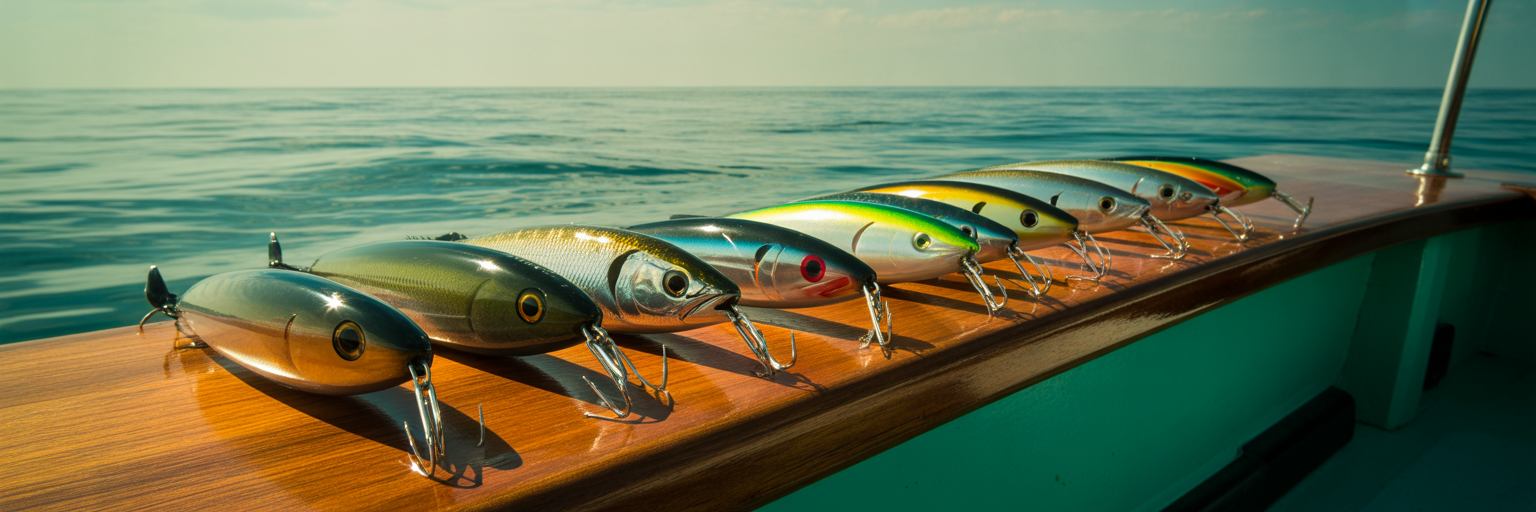
Choosing the right lure involves more than personal preference; it is a strategic decision based on water clarity, light conditions, and the behavior of your target species. A correctly chosen lure will not only attract fish but also perform optimally at the required speed and depth.
Matching Lure Color to Water Conditions
Lure color directly impacts visibility. In murky, stained, or low-light conditions, dark colors such as purple and black create a strong, defined silhouette that fish can easily track from below. Conversely, in clear, sunlit blue water, high-flash designs and natural colors are superior. Lures with reflective elements, like the unmatched flash of our abalone resin design, mimic the light glinting off baitfish scales. Natural patterns like blue, silver, and green are also highly effective in these conditions, closely matching the appearance of common prey.
Matching Lure Type to Target Species
Different species respond to different lure actions and profiles. For high-speed wahoo trolling techniques, jet heads and weighted bullet lures are essential as they are designed to run true without blowing out of the water. For a classic trolling spread for tuna and mahi-mahi at slower speeds, skirted lures with an enticing swimming action are a primary choice. As noted by seasoned anglers in FishTalk Magazine, deploying a variety of lure types and colors is one of the fastest ways to determine the daily preference of target species. For anglers looking to refine their spread, exploring our lures categorized by target species can provide a significant advantage.
| Target Species | Optimal Speed | Water Clarity | Recommended Lure Color | Recommended Lure Type |
|---|---|---|---|---|
| Wahoo | 11-15 Knots | Clear or Stained | Black/Purple, Red/Black, Bright Pink | Jet Head, Bibless Minnow, Bullet Lure |
| Tuna | 5-9 Knots | Clear | Green/Yellow, Blue/Silver, Abalone | Skirted Lure, Spreader Bar, Cedar Plug |
| Marlin | 7-10 Knots | Clear Blue | Blue/White, Mackerel, Pink/Blue | Large Slant-Face, Plunger, Chugger |
| Mahi-Mahi | 5-9 Knots | Clear or Weed Lines | Pink, Chartreuse, Blue/White | Small Skirted Lure, Bullet Lure, Rigged Ballyhoo |
Optimizing Trolling Speed and Presentation
Every lure is engineered to perform within a specific speed range. Exceeding or falling short of this range renders the lure ineffective, causing it to spin, dive too deep, or fail to produce its intended action. Standard guidelines suggest 5 to 9 knots for tuna and mahi-mahi, while the higher 11 to 15 knot range is necessary for effective wahoo trolling. It is critical to use a GPS for precise speed-over-ground readings, as boat tachometers can be misleading due to current and wind.
Beyond maintaining a constant speed, dynamic adjustments can trigger strikes. Executing a wide 'S-turn' is a proven tactic. As the boat turns, the lures on the outside of the turn accelerate and rise toward the surface, while the inside lures slow down and sink. This change in speed and depth breaks the monotony of the spread and mimics the erratic behavior of fleeing baitfish, often provoking a reaction from a following predator. After a hookup, it is vital to maintain forward momentum. This keeps the remaining lures swimming correctly and capitalizes on the opportunity for multiple strikes from a feeding school.
Maintaining Spread Integrity and Discipline
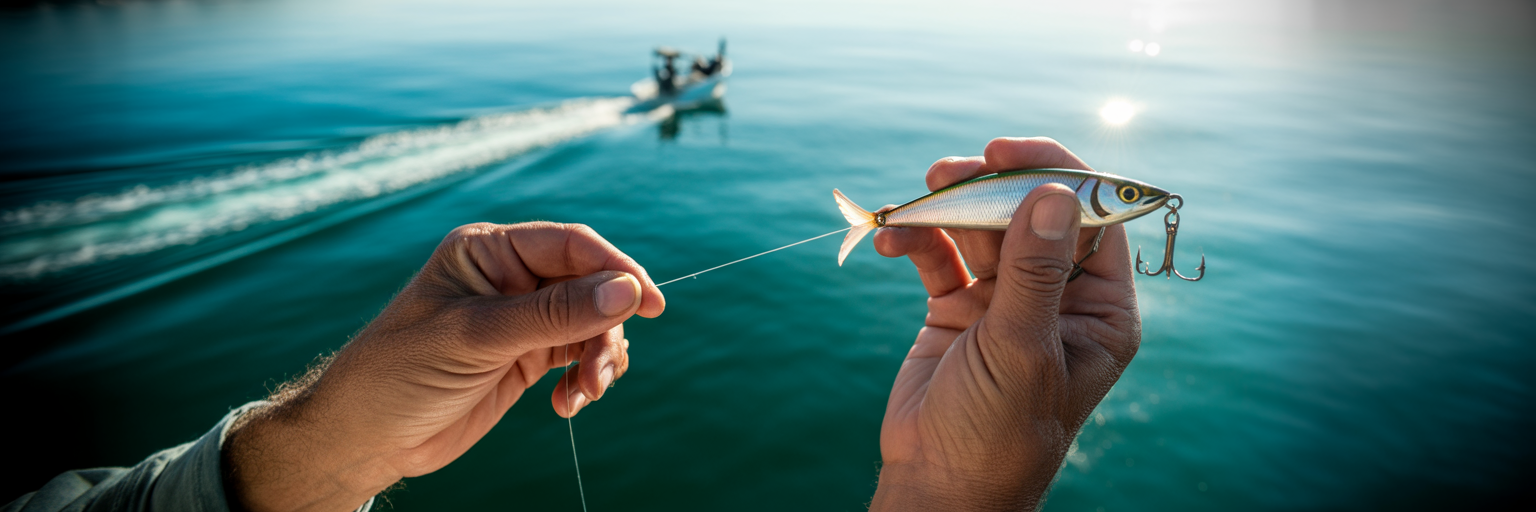
Spread maintenance is not a chore; it is a critical discipline that separates successful trips from frustrating ones. A 'set it and forget it' approach leads to fouled lures, tangled lines, and missed opportunities. Consistent monitoring ensures your presentation is always fishing at peak effectiveness.
- Meticulous Staggering: Precise line distances are paramount. Proper staggering is the single most important factor in executing turns without creating a tangled mess that requires you to reset the entire spread.
- Regular Lure Checks: Mandate pulling and inspecting each line every 15 to 20 minutes, or anytime you pass through a weed line. A lure fouled with even a small piece of sargassum is completely invisible to fish and is no longer working for you.
- Terminal Tackle Inspection: Snap swivels, leaders, and crimps are the most common points of failure in a big-game scenario. Investing in premium, high-quality components is not optional when targeting powerful fish. Success in big-game fishing often comes down to the quality of your equipment, which is why at K2Fishing we are committed to using only premium, USA-rigged materials in every handcrafted lure.
A consistently monitored and maintained spread will always outperform one left to chance. This operational discipline maximizes the time your lures are fishing effectively and ensures you are prepared when a trophy fish strikes.
Advanced Adjustments for High-Speed Trolling
High-speed trolling (HST) for species like wahoo is a specialized technique that demands specific adjustments to equipment and mindset. As detailed in technical guides like the one for targeting California bluefin, a properly configured spread is fundamental. First, strike drag must be pre-set at the dock to absorb a violent, high-speed strike without breaking the line or pulling hooks. Second, lure selection is critical. Avoid lures that spin or 'blow out' of the water at speed. Instead, use purpose-built HST lures, often paired with heavy trolling weights to keep them in the water. Lures like our Flamingo Abalone Bullet are engineered to run true and maintain their action at these demanding speeds. Finally, HST necessitates heavier tackle, from the rod and reel to shock leaders and terminal connections, to withstand the immense forces involved.