

The fundamental objective of a trolling spread is to create a compelling illusion of a scattered, distressed school of baitfish. This visual and hydrodynamic disturbance is precisely what triggers aggressive strikes from apex predators like marlin, tuna, and wahoo. A properly executed big-game trolling setup is not a matter of chance but a calculated presentation designed for maximum effect. The standard five-line spread serves as the foundational configuration for this strategy, providing comprehensive water coverage and multiple target points for predators.
This arrangement involves precise placement: two flat lines positioned close to the transom, two lines running from the outriggers to widen the presentation, and a single 'shotgun' line set far back in the center. This configuration presents lures at various depths and distances, effectively covering a wide swath of water and appealing to fish with different levels of aggression. The strategic importance of the 'prop wash', the turbulent water created by the propellers, cannot be overstated. This disturbance attracts curious fish and mimics the chaos of a feeding frenzy, making the flat lines positioned within this zone exceptionally productive. Mastering this foundation is the first step toward consistent offshore success.
Foundations of a High-Performance Trolling Setup
The core principle of a trolling spread is to create the illusion of a scattered, distressed school of baitfish. This visual and hydrodynamic disturbance is what triggers aggressive strikes from apex predators like marlin, tuna, and wahoo. A successful big-game trolling setup begins with the standard five-line spread as its foundational configuration. This setup is designed to present lures at various depths and distances, effectively covering a wide area of water and maximizing opportunities.
The precise placement includes two flat lines close to the transom, two lines running from the outriggers, and a single 'shotgun' line set far back in the center. This arrangement is not arbitrary. It is a calculated method for presenting a compelling target. The strategic importance of the 'prop wash', the turbulent water created by the propellers, is a key element. This disturbance attracts curious fish, making the flat lines positioned within this zone exceptionally productive. The combination of lures in the chaotic wash and the cleaner water outside creates a presentation that appeals to a broad range of predatory behaviors, from opportunistic strikes to more cautious approaches.
Strategic Line Positioning and Spacing
Building upon the foundational five-line spread, the precise geometry of your presentation is critical. Staggering line distances is not optional; it is essential for preventing catastrophic tangles, particularly when making turns. Effective offshore trolling techniques demand a disciplined approach to positioning each line. The flat lines should be run shortest, positioned just behind the prop wash where aggressive fish often strike first. The outrigger lines are set at staggered mid-range distances, widening the spread and placing lures in the calmer, 'clean' water on either side of the boat's wake.
The shotgun line is positioned longest and directly down the center, targeting cautious fish that may be hesitant to approach the boat. This layered formation presents lures in both the chaotic prop wash and the undisturbed water, appealing to varied feeding behaviors. For instance, some species are drawn to the commotion, while others prefer to ambush prey from the periphery. Understanding which setups work best for specific targets is key to tailoring your spread for maximum effectiveness. As a professional tip, develop a consistent method for setting distances, such as counting in seconds as the line pays out. This ensures the spread can be replicated with precision after landing a fish, allowing you to get back to productive fishing immediately.
Controlling Speed for Targeted Species

Trolling speed is a critical, dynamic variable that must be adjusted for target species and sea conditions. A single 'correct' speed does not exist. The general range for offshore trolling is typically 5 to 9 knots, a velocity that is effective for a mixed bag of species like tuna and marlin because it allows most lures to swim correctly and create an enticing action. However, targeting specific predators requires a more refined approach. For example, the optimal wahoo trolling speed ranges from 12 to 18 knots. This higher velocity is a key factor in isolating wahoo, as it triggers their explosive predatory instincts while often deterring other species.
The most important skill is learning to 'read' your lures. Anglers must watch how the lures are tracking in the water. They should swim naturally, diving and surfacing with a consistent rhythm, not tumbling or skipping excessively on the surface. The final adjustment should always be based on this visual feedback, not just the boat's GPS reading. Sea conditions, current, and lure design all influence the ideal speed. A lure that performs perfectly at 8 knots in calm seas may require a speed adjustment in a 3-foot chop to maintain its action. The following table provides a reliable starting point.
| Target Species | Typical Speed Range (Knots) | Key Considerations |
|---|---|---|
| Marlin (Blue & Black) | 7-9 knots | Speed allows lures to create smoke trails and swim correctly. |
| Tuna (Yellowfin & Bluefin) | 5-7 knots | Slower speeds are often needed to keep lures in the water. |
| Wahoo | 12-18 knots | High speed triggers aggressive strikes and helps avoid other species. |
| Dolphin (Mahi-Mahi) | 6-8 knots | Often found around floating debris; speed can be adjusted to conditions. |
Lure Selection and Terminal Tackle Integrity
The best trolling lure patterns are chosen based on a core principle: contrast. For overcast days or in stained water, dark or silhouette-heavy lures in black or purple create a more visible profile against the lighter surface. Conversely, for clear water and sunny conditions, natural and highly reflective patterns are superior. This is where the unmatched flash of abalone resin designs provides a distinct advantage. The natural iridescence of abalone, a quality valued in applications from jewelry to high-performance fishing gear, mimics the shimmer of baitfish scales with unparalleled realism. This visual appeal is not aesthetic; its unique light-reflecting properties are a proven attractant for pelagic predators. Our Blue Large Resin Abalone lure exemplifies this performance-driven design.
Just as critical is the non-negotiable importance of high-quality terminal tackle, an area where many setups fail under pressure. As detailed by rigging experts at InTheSpread, every component must withstand extreme forces. Your investment in a premium lure is wasted if the connection fails. Essential components include:
- Ball-bearing swivels to prevent line twist under heavy drag.
- Correctly sized hooks that ensure optimal lure action and solid hooksets.
- Appropriate leaders for the target species. Heavy wire leaders are essential for preventing bite-offs from wahoo, while fluorocarbon leaders offer low visibility for line-shy species like tuna.
Investing in premium terminal tackle is a direct investment in landing more fish.
Fine-Tuning Outrigger and Release Systems
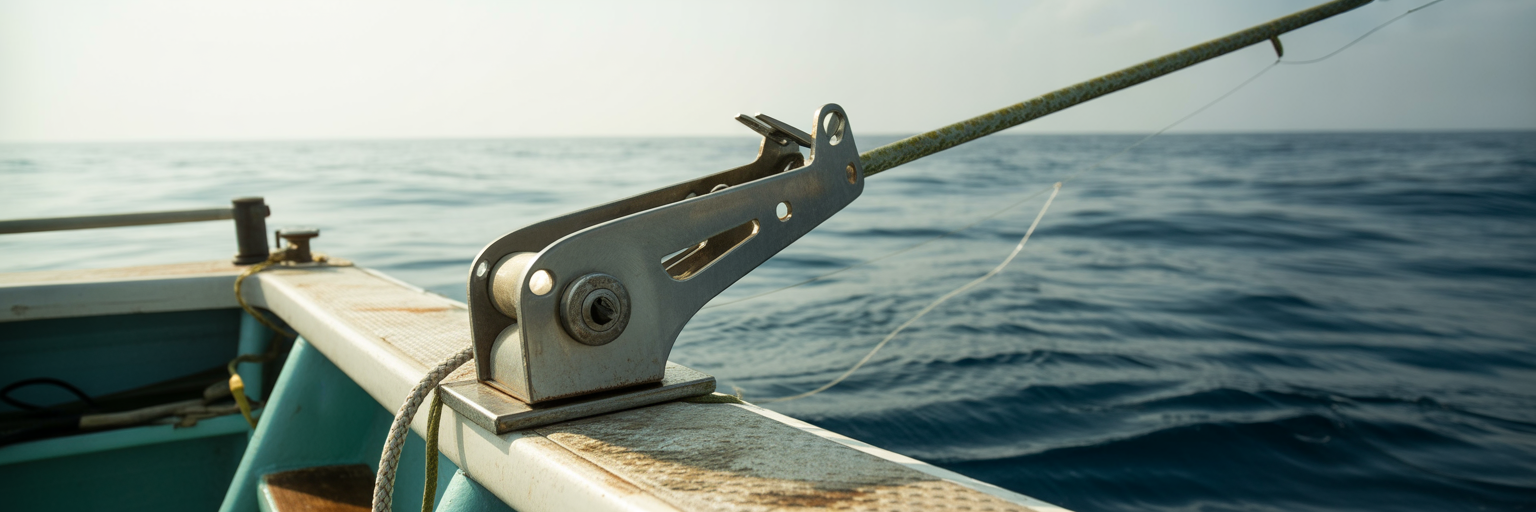
The outrigger system is a cornerstone of a professional trolling spread. Its primary function is to spread the trolling lines wider, creating a broader presentation and placing lures in the undisturbed 'clean' water outside the boat's wake. This is a key component of how to set up outriggers for trolling effectively. However, the performance of the entire system hinges on the release clip. Using high-quality clips that offer consistent tension and a clean, immediate release upon a strike is critical. This prevents both premature trips from wave action and, more importantly, failures to release that can result in lost fish or damaged gear.
To further refine the system, experienced anglers use snubbers or rubber shock absorbers between the halyard and the release clip. These components absorb the shock from wave action, which stops the lure from being jerked unnaturally through the water and significantly reduces false releases in rough seas. The final adjustment is setting the release clip tension. It must be tight enough to handle the lure's drag and the boat's motion, yet light enough to pop instantly when a fish strikes. This balance ensures your lures swim perfectly and your hookup ratio improves. Executing these strategies requires gear built to perform, and you can find a full range of high-performance equipment in our collections.
Documenting Patterns for Repeatable Success
Consistent success in offshore fishing is built on replicating proven patterns, not on luck. The most professional and successful captains are meticulous record-keepers who understand that data drives results. To move from occasional catches to predictable success, anglers must maintain a dedicated logbook or use a notes application to document key variables from every productive trip. Over time, this data will reveal powerful patterns, enabling you to build a personal playbook for specific locations, seasons, and conditions.
Essential data points to record include:
- GPS coordinates of strikes.
- Prevailing sea conditions, including wind and current.
- Trolling speed, noted by engine RPM for consistency.
- The specific lure type, color, and its position in the spread.
- The time of day of each strike.
This disciplined approach is how expertise is developed. By analyzing your own data, you transform observations into actionable intelligence, making success a repeatable process. To execute these professional strategies, equip yourself with the performance-tested gear available at K2Fishing.