

A successful trolling spread operates on a core principle: it mimics a scattered school of baitfish to trigger a predatory response. A well-orchestrated presentation is not merely about placing lures in the water. It is a calculated strategy designed to provoke competitive strikes from big-game species. Mastering professional offshore trolling setups is fundamental to converting time on the water into successful hook-ups with high-value targets. The standard spread covers multiple depths and distances from the boat, creating a comprehensive field of opportunity.
Fundamentals of Professional Offshore Trolling Setups
The effectiveness of a trolling spread is determined by its structure. Each lure position serves a distinct purpose, working together to create a compelling illusion of panicked bait. A standard professional layout includes the following positions:
- Flat Lines: Deployed closest to the transom, these lures run low to the water in the thickest part of the prop wash, simulating an easy, lagging target.
- Short Riggers: Positioned on the first or second wave of the boat’s wake, this lure appears as a stray from the main school, attracting aggressive strikes.
- Long Riggers: Placed further back and outside the primary prop wash, these lures run in clearer water, appealing to more cautious fish.
- Shotgun: This is the longest line, set deep in the center of the spread. It targets wary, high-value predators like marlin that often hang back to assess the commotion before committing.
Central to creating these effective trolling lure patterns are outriggers. Understanding how to set up outriggers for trolling is essential for any serious angler. Their primary function is to widen the spread, moving lures into the undisturbed water outside the boat's wake. This separation prevents tangles during turns and presents a broader, more realistic bait school profile. This staggered formation, combined with the variety of lures from our handcrafted collection, covers a wide area and multiple depths, dramatically increasing the probability of a successful encounter.
Calibrating Trolling Speed for Target Species
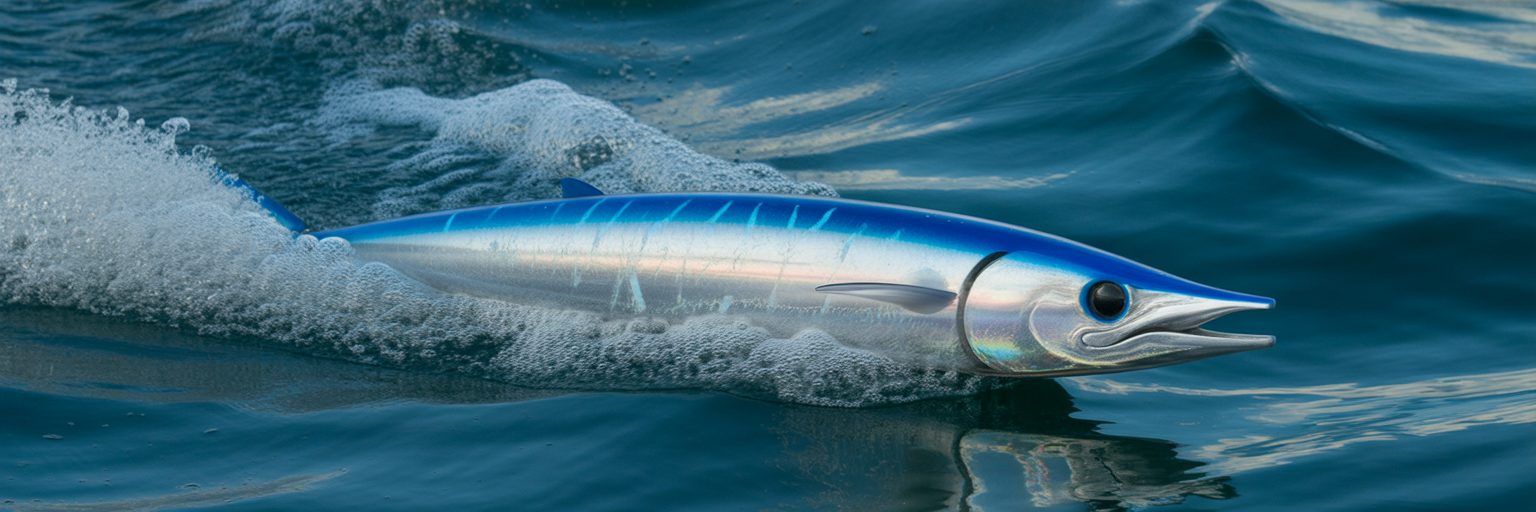
Trolling speed is not an arbitrary variable. It is a primary control that dictates lure action and must align with the hunting behaviour of specific species. The correct speed ensures your lures swim with the intended motion, whether it is a steady wobble or an erratic splash. As confirmed by experts at Sport Fishing Magazine, matching speed to your target is a proven standard for success.
The Conventional Range for Marlin and Tuna
For most big-game species, including marlin, tuna, and mahi-mahi, the optimal speed range is between 6 and 9 knots. This velocity allows skirted resin lures and natural baits to perform correctly, creating a lifelike swimming action that consistently draws strikes. Within this range, slight adjustments are necessary to "tune" the lures, ensuring they stay in the water and produce the desired surface commotion without skipping or spinning.
High-Speed Wahoo Trolling: A Specialized Approach
High-speed wahoo trolling is a distinct and aggressive technique requiring a different methodology. The goal is to cover vast stretches of water quickly and trigger a reaction strike from these notoriously fast predators. The accepted speed range is 12 to 18 knots. This approach demands specific gear adaptations to handle the increased forces and prevent equipment failure.
- Heavy, streamlined lures that track straight at high velocities are mandatory. Lures from our collection of high-speed bullets are engineered for this purpose.
- Stainless steel or cable leaders are essential to prevent bite-offs from the razor-sharp teeth of a wahoo.
| Target Species | Optimal Trolling Speed (Knots) | Recommended Lure Type |
|---|---|---|
| Blue & Black Marlin | 7 - 9 knots | Large Resin Lures, Skirted Ballyhoo |
| Tuna (Yellowfin & Bigeye) | 6 - 8 knots | Medium Resin Lures, Green Machines, Cedar Plugs |
| Mahi-Mahi (Dorado) | 6 - 8 knots | Small Skirted Lures, Feathers |
| Wahoo | 12 - 18 knots | Heavy Jet-Heads, Bullet Lures, High-Speed Plugs |
This table provides a clear reference for matching trolling speed and lure selection to primary big-game targets. Speeds are based on industry best practices for maximizing lure performance and triggering strikes.
Enhancing Your Spread with Teasers and Dredges
Teasers and dredges are non-hooked attractants that serve a critical function: creating a massive visual footprint to simulate a dense bait ball. Their purpose is to raise fish from the depths and incite competition among predators. This heightened aggression makes them more likely to strike one of the hooked big-game trolling lures in your spread. Different teaser types, such as squid chains and bird teasers, create surface commotion that draws attention from a great distance.
However, for creating the most realistic bait school illusion, dredges are unparalleled. These multi-tiered underwater arrays present a three-dimensional image of a tightly packed bait school, an irresistible target for billfish and tuna. As detailed in professional guides like the one from BD Outdoors, dredges are a cornerstone of modern billfishing techniques. Their strategic placement is key to their effectiveness. Teasers and dredges should be run from the transom corners or short riggers, positioned to lead fish directly towards the hooked lures in the main spread. This completes a professional setup, guiding predators into the strike zone and maximizing your chances of a hook-up with your target fish by species.
Troubleshooting and Adjusting Lure Performance

Even with a perfectly designed spread, on-the-water adjustments are often necessary to optimize performance. When a lure tracks incorrectly by spinning or skipping excessively on the surface, the first and most critical adjustment is to vary the boat's speed. A slight increase or decrease in speed is often all that is needed to get a lure swimming correctly. Only after adjusting speed should you consider gear changes.
For targeting fish holding at specific depths, specialized tools are required. Trolling planers are effective for getting surface lures deeper into the water column. A planer dives under pressure, pulling the line and lure down to reach fish holding in or below the thermocline. This is an excellent way to adjust the depth of a portion of your spread. For precise depth control, a downrigger is the superior tool. It uses a heavy cannonball weight to deploy a lure at a specific, measured depth, making it ideal for targeting fish marked on a sounder. The distinction is clear: planers offer general depth adjustment, while downriggers provide pinpoint accuracy for a single line. Using a high-quality, performance-tested lure like our Blue Abalone lure is also critical, as premium construction ensures stable tracking across a range of conditions.
Terminal Tackle Integrity and Post-Trip Maintenance
The final, non-negotiable component of consistent success lies in the integrity of your equipment. The offshore fishing terminal tackle, including swivels, leaders, and hooks, is the most common point of failure in big-game angling. The strength of these components must be matched to the immense power of your target species. For marlin and wahoo, using 400 to 700-pound test leaders is a professional standard that eliminates the risk of break-offs during a prolonged fight.
Equally important is disciplined post-trip maintenance. This routine preserves gear performance and ensures every piece of equipment is in perfect condition for the next deployment. A professional mindset demands attention to these details.
- Thoroughly rinse all lures, hooks, and leaders with freshwater to remove corrosive salt.
- Allow all components to dry completely before storage to prevent oxidation.
- Store lures in ventilated, roll-up lure bags to protect skirts from damage and prevent hook rust.
This disciplined approach is not optional. It is a fundamental practice that separates consistently successful anglers from the rest, ensuring your gear is always ready for the next opportunity.
Trolling Setup Checklist for Trolling Offshore
Before you start trolling offshore, run through this quick trolling setup checklist:
- Spread: four or five lines, typically short corner, long corner, short rigger, long rigger, and an optional shotgun.
- Speed: 6 to 9 knots for marlin, tuna, and mahi; 12 to 18 knots for high-speed wahoo trolling.
- Leaders: heavy monofilament or fluorocarbon for marlin and tuna, wire or cable for wahoo.
- Attractors: a dredge or squid chain from the corners or short riggers to raise fish into the spread.
- Lure check: swim every lure boat-side at speed before setting it back into position.
- Drags: preset at strike on lever-drag reels so the hook sets without breaking off.
What is the best trolling setup for beginners?
Start with a simple two- or four-rod trolling setup: two flat lines off the corners and two outrigger lines. Learn to keep those lures clean through turns and speed changes before adding a shotgun or teasers. For rod, reel, and line details, see our guide to building your offshore trolling setup and trolling rod set up.
How far back should lures run when trolling offshore?
Distances depend on your boat's wake, but most crews place flat lines on the first or second wake wave, riggers on the third through sixth waves, and the shotgun well beyond the rest of the spread in clean water. Adjust each position until the lure swims cleanly on the face of a wave.









