

The art of offshore trolling has evolved from dragging a single bait to a sophisticated science of presentation. A successful day on the water depends on more than just luck; it requires a meticulously planned offshore trolling setup designed to convince apex predators to strike. The fundamental objective is to create a compelling illusion of a fleeing school of baitfish, a presentation so convincing it triggers an aggressive, instinctual response from big-game species.
Core Principles of an Offshore Trolling Setup
The effectiveness of any trolling spread hinges on one critical principle: presenting each lure in ‘clean water’. This means positioning your lures outside the turbulent prop wash, where they can run true and remain highly visible to gamefish. A lure obscured by whitewater is a lure that goes unnoticed. The entire spread must function as a cohesive system, where lure selection, geometry, trolling speed, and gear work in synergy to create a lifelike and irresistible bait school simulation.
This system is not static. The perfect spread is dynamic, requiring constant adjustment based on sea conditions, water clarity, and observed fish behavior. A setup that performs flawlessly in calm seas may need significant modification in a heavy chop to keep lures from blowing out of the water. Understanding these core principles is the foundation upon which a high-performance trolling program is built. It transforms trolling from a passive activity into a strategic hunt.
Designing Your Trolling Spread Geometry
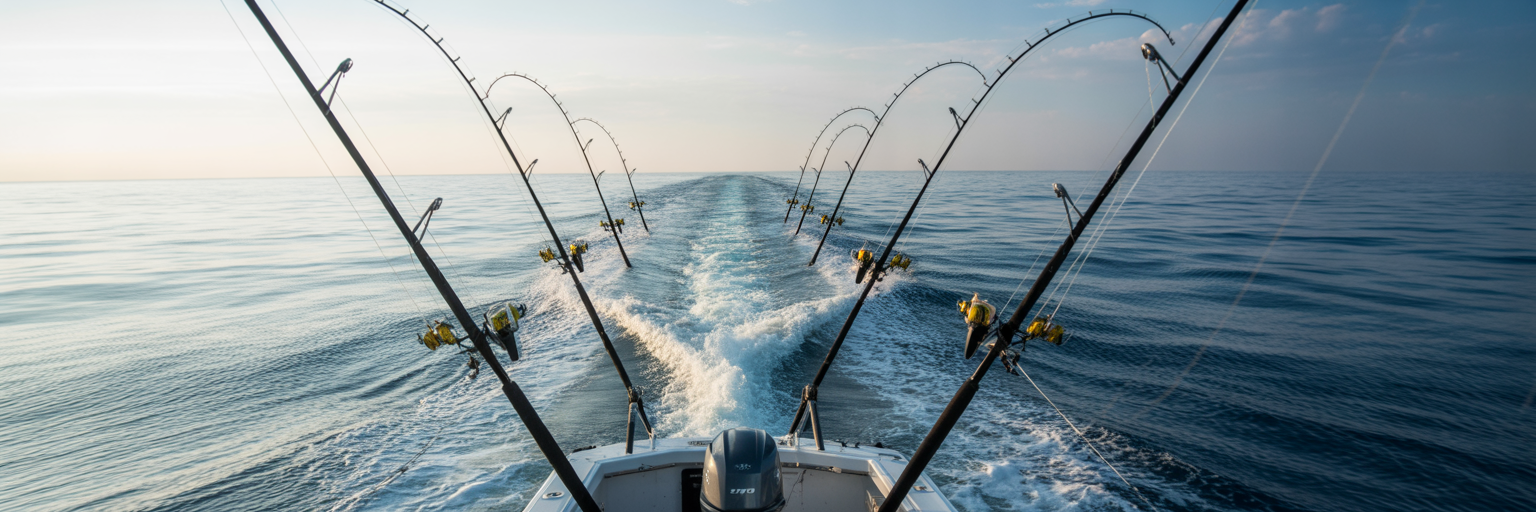
The spatial arrangement of your lures is critical to creating a three-dimensional illusion of a bait school and maximizing your hookup potential. A well-designed geometry ensures each lure performs optimally while allowing the vessel to make tight turns without tangling lines, a crucial capability when maneuvering on a fish. The standard spread includes several key positions:
- Flat Lines: Positioned closest to the transom, these lures run in the prop wash and are designed to target highly aggressive fish drawn to the commotion of the boat.
- Outriggers (Short and Long): Outriggers are essential for creating width. They lift the lines up and away from the boat, allowing lures to run in the undisturbed clean water on the outer edges of the wake. The short rigger covers the inner clean water lane, while the long rigger expands the spread’s footprint further out.
- Shotgun / Stinger: This is the longest line in the spread, running straight down the center far behind the boat. It is designed to tempt cautious or trailing fish that may be hesitant to approach the main group of lures.
This staggered, layered configuration is particularly effective as a trolling spread for marlin, which are visual hunters that often inspect a spread from a distance before committing. A well-rounded arsenal is key to filling these roles, and anglers can explore a complete collection of big-game fishing lures to build a versatile setup. The specific distances for each position should be adjusted to match your boat’s wake and the prevailing sea conditions.
| Position | Distance from Boat | Primary Role | Lure Placement |
|---|---|---|---|
| Flat Lines | Closest (1st-2nd Wake Wave) | Targets aggressive fish in the prop wash | Transom Clips |
| Short Rigger | Medium (3rd-4th Wake Wave) | Creates width and covers the outer edge of the wake | Outrigger (Lower Clip) |
| Long Rigger | Long (5th-6th Wake Wave) | Expands the spread's footprint into clean water | Outrigger (Upper Clip) |
| Shotgun / Stinger | Farthest (7th+ Wake Wave) | Tempts cautious, deep-lying fish | Center Rigger or Flat Line Clip |
Lure Selection for Target Species
Selecting the right big-game fishing lures is a species-specific discipline. While some lures have broad appeal, top anglers tailor their spread to the sensory preferences and feeding behaviors of their target. Understanding how fish perceive their environment is crucial; as highlighted in an article about fascinating fish biology, a target's unique adaptations dictate the most effective presentation.
Lure Strategies for Blue Marlin
Blue marlin are aggressive visual hunters attracted to commotion and flash. Large, skirted lures that create significant surface disturbance are highly effective. These lures push a lot of water, simulating the panic of a large baitfish. Materials that produce a strong visual signature are paramount. For example, the Blue Large Resin Abalone lure is specifically designed with this in mind, using genuine abalone shell to provide an unmatched flash that is visible from great distances.
Specialized Approach for Wahoo
Targeting wahoo requires a different strategy centered on speed and durability. Effective high-speed wahoo trolling is typically conducted between 12 and 18 knots. This necessitates the use of heavy, streamlined lures that can stay in the water and run true at speed. Due to their razor-sharp teeth, a heavy wire leader is non-negotiable to prevent immediate bite-offs. Lures with dark color combinations, such as black and purple or black and red, often produce the best results.
Tactics for Tuna
Tuna often feed on dense schools of small baitfish, making presentations that imitate a group of prey highly effective. Spreader bars and daisy chains, which consist of multiple teaser baits rigged in-line ahead of a hooked "stinger" lure, are standard equipment. These setups create the illusion of a small, panicked bait school, triggering a competitive feeding response from tuna. To build a versatile tackle box, serious anglers should explore lure options tailored for different species.
Assembling the Right Rod and Reel System
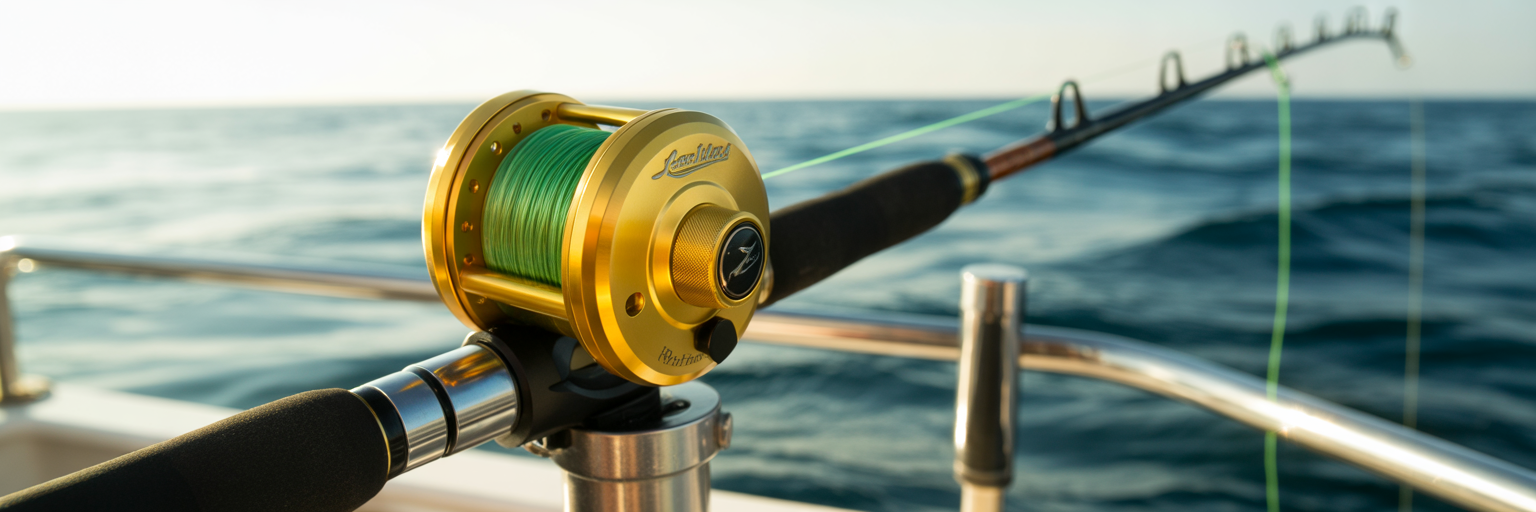
This offshore fishing gear guide focuses on the hardware that forms the backbone of your trolling system. Your rod and reel are your direct connection to a fish, and their performance under extreme pressure is critical.
- Reels: Lever-drag reels are the standard for offshore trolling. Their pre-settable drag systems allow for precise control, and their high line capacity is essential for handling the long, powerful runs of big-game fish like marlin and large tuna.
- Line: The optimal configuration combines a braided mainline with a monofilament or fluorocarbon topshot. Braid offers high strength at a thin diameter, maximizing reel capacity and reducing drag in the water. A 50 to 100-yard topshot of monofilament provides critical shock absorption during the strike and fight, while fluorocarbon offers a stealth advantage in clear water.
- Rods: A proper trolling rod must have a strong backbone to handle heavy drag pressures and control a powerful fish. At the same time, it needs a sensitive tip that allows you to read the lure's action and detect subtle strikes.
Terminal Tackle and Rigging for Performance
Terminal tackle is the final link between you and the fish, and it is no place to compromise on quality. The entire system is only as strong as its weakest component, and a failed swivel or hook can mean the difference between a successful catch and a lost opportunity. High-quality, ball-bearing snap swivels are essential to prevent line twist, which can weaken your line and ruin a lure’s intended action. Hook selection is equally important; strong, sharp J-hooks are standard for artificial lures, while circle hooks are preferred for live or dead bait to ensure a solid hookset in the corner of the jaw, improving fish survival upon release.
Leader material must be chosen for abrasion resistance and stealth. Heavy monofilament or fluorocarbon leaders are standard for most applications, providing a durable buffer against bills and rough skin. The clear exception is for toothy predators like wahoo, where a wire leader is required. Investing in professionally rigged lures, such as those in our medium resin collection, ensures that the terminal tackle is perfectly matched to the lure's performance potential.
Execution and On-Water Strategy
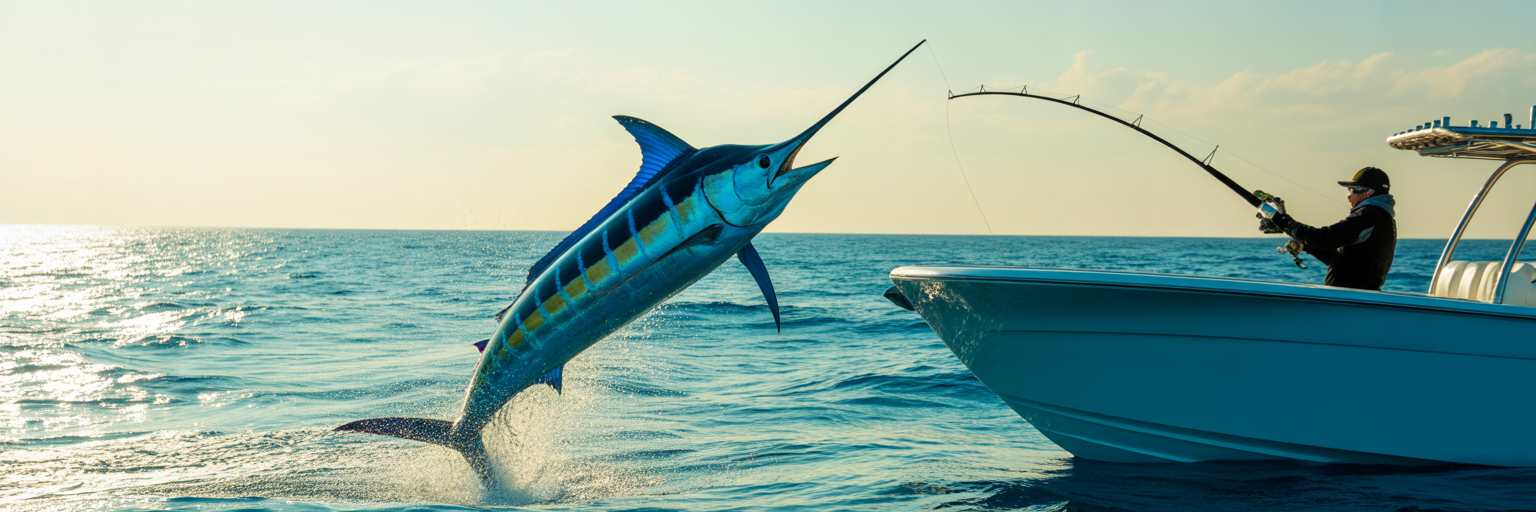
With the right gear assembled, success comes down to execution. Trolling speed must be adjusted for your target species and sea conditions. A good starting point is 7 to 9 knots for marlin and sailfish, while wahoo often require speeds of 12 to 18 knots. Before setting the lines, the drag should be set at the "strike" position to approximately 25-30% of the line's breaking strength. This provides enough pressure to set the hook firmly without risking a broken line on the initial run.
When a strike occurs, the most critical action is to maintain forward momentum. Continuing to move the boat forward keeps the line tight, drives the hook home, and keeps the other lures in the water, which can often trigger multiple hookups. For anglers new to this level of fishing, it is wise to begin with a simple two or four-rod spread. Mastering the fundamentals of setting lines, managing the spread in turns, and fighting fish on a smaller scale builds the confidence and skill needed to run more complex setups. To apply these principles with proven equipment, you can explore a full range of performance-tested lures at K2Fishing to complete your ideal offshore trolling setup.