Fundamentals of a Cohesive Trolling Spread
A successful offshore trolling campaign is not a matter of chance. It is the result of a carefully engineered system designed to mimic a panicked school of baitfish and trigger an aggressive predatory response. The fundamental goal of a well-designed offshore trolling spread is to create a cohesive illusion of life and vulnerability behind the boat. This is not about randomly deploying lures, but about precision and control. Each lure must occupy a specific ‘address’ in the water column, defined by its depth and distance from the transom. This precision is critical for maximizing water coverage and, just as importantly, preventing catastrophic tangles during turns.
Think of your spread as a series of distinct lanes in the boat’s wake. The turbulent prop wash provides a zone of chaos, while the cleaner water further out offers a space for more natural presentations. A properly constructed pattern allows the captain to steer the entire formation as a single unit, maintaining its shape and effectiveness through changing sea conditions. This systematic approach transforms a simple collection of lures into a highly effective hunting tool.
Anatomy of a Standard Five-Line Spread
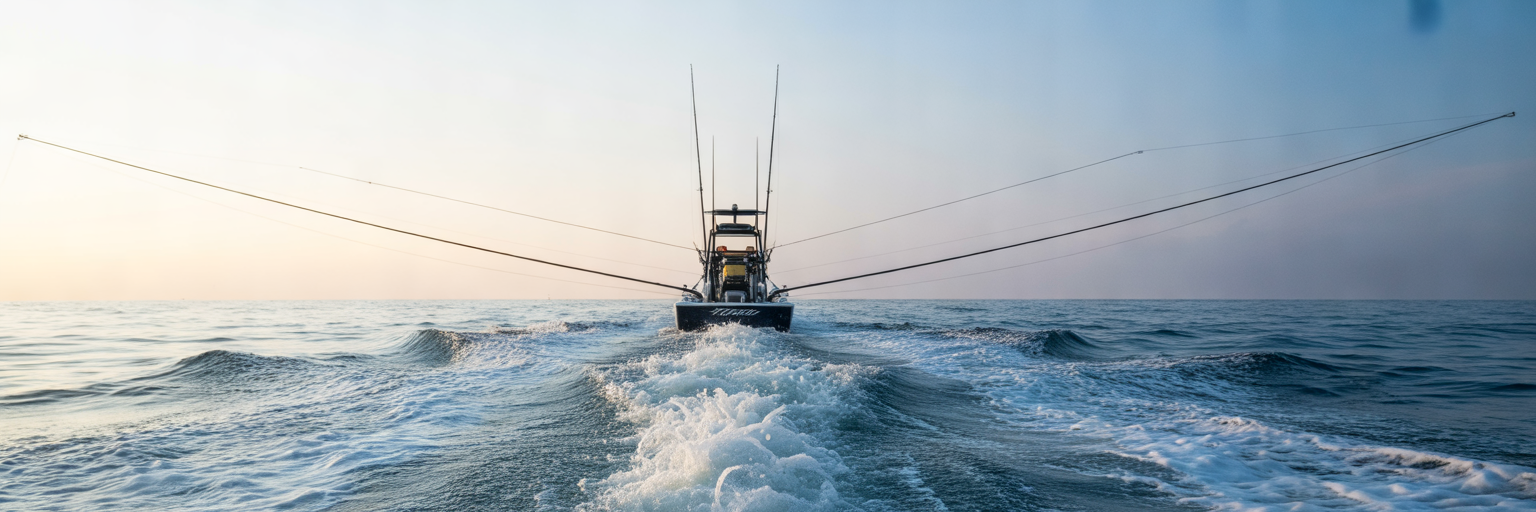
Understanding the architecture of a standard trolling pattern is the first step toward mastering its application. A classic five-line spread provides comprehensive coverage by targeting different zones in the wake. While there are many variations, this foundational setup provides a blueprint for understanding how to set up trolling lines for consistent results. The effectiveness of this pattern comes from assigning a specific purpose to each position, creating a layered presentation that appeals to a wide range of predators. For a complete overview of the gear involved, our guide on essential trolling setup components offers further detail.
The Flat Lines (Short Corners)
These are the two closest positions to the transom, typically running just outside the prop wash on the second or third wake wave. The turbulence in this zone acts as a natural attractor, creating commotion that draws attention. This makes the short corners a prime location for aggressive, large-profile lures that can handle chaotic water and trigger impulsive strikes from predators investigating the boat.
The Rigger Lines (Long Corners)
Deployed from the outriggers, these lines place lures wider and further back in cleaner, less disturbed water. This position is ideal for lures that require a more natural swimming action to be effective. By running in calmer water, these lures present a more realistic imitation of a fleeing baitfish, appealing to predators that may be wary of the boat’s immediate wake.
The Shotgun (Way-Way-Back)
The shotgun is the longest line in the spread, set directly down the center and far behind the other lures. Its purpose is to target cautious fish like large tuna or marlin that may be trailing the main commotion at a distance. This position demands a lure that tracks true and remains stable over a long line, acting as a final opportunity to entice a strike from a hesitant predator.
Strategic Lure Selection for Each Position
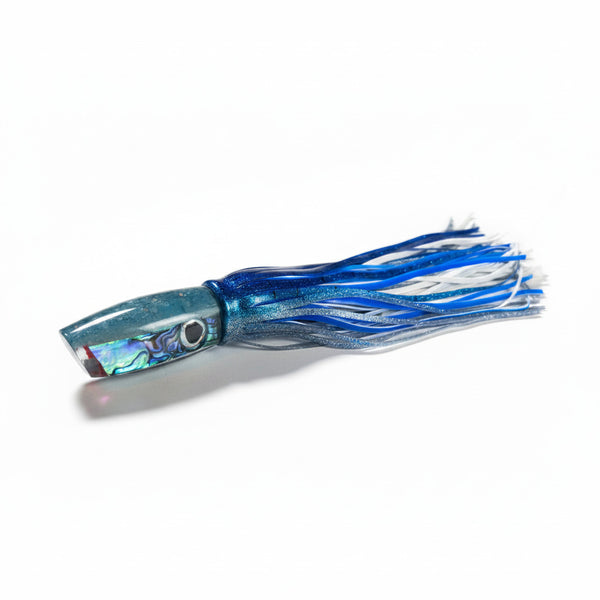
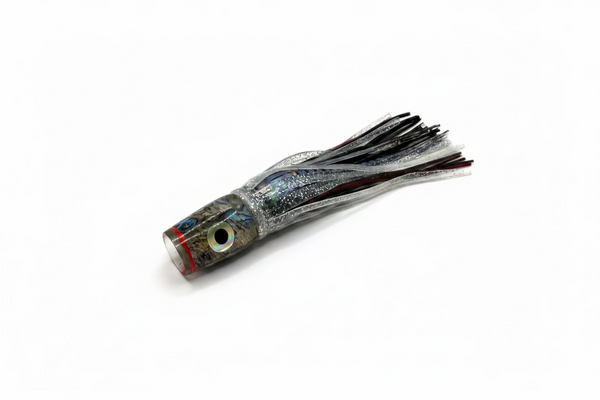
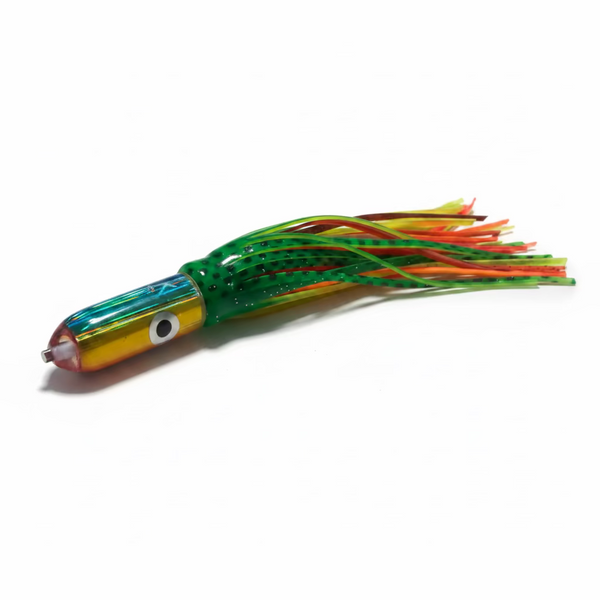
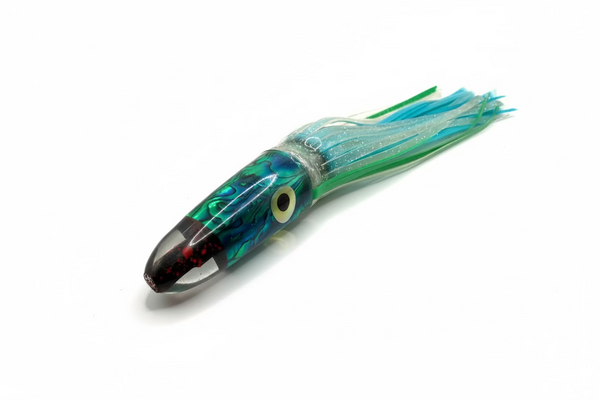
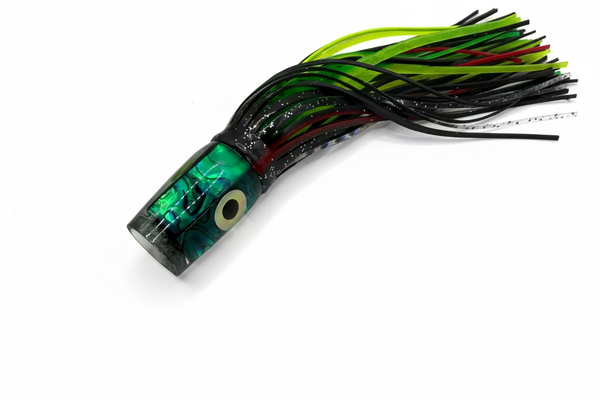
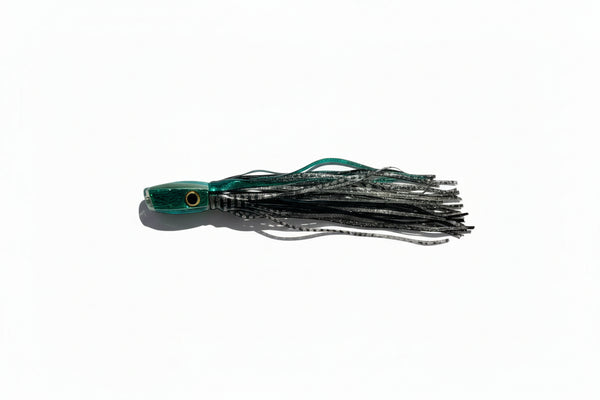
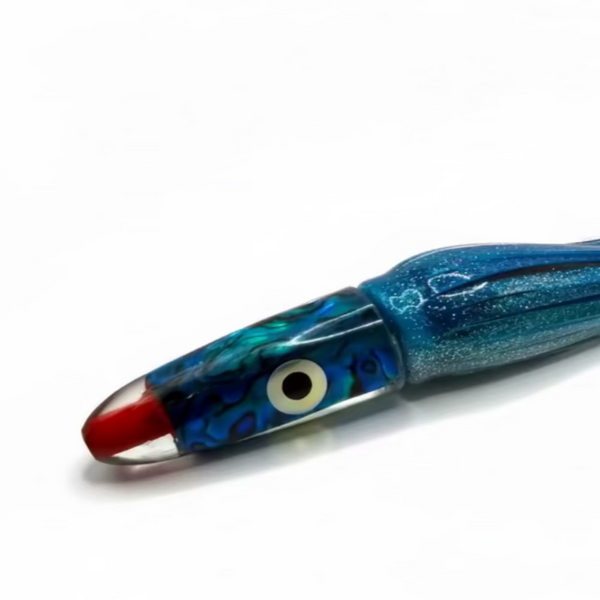
With the positions defined, the next step is to match lure characteristics to the specific water conditions of each address. The performance of your big-game fishing lures is directly tied to placing them where their design can be most effective. For the short-corner positions, select aggressive, large-profile lures that create significant commotion. The turbulent water here is the perfect environment for high-flash designs that demand attention. Our handcrafted lures with abalone resin excel in this role, as their unmatched flash cuts through the prop wash to draw immediate, powerful strikes.
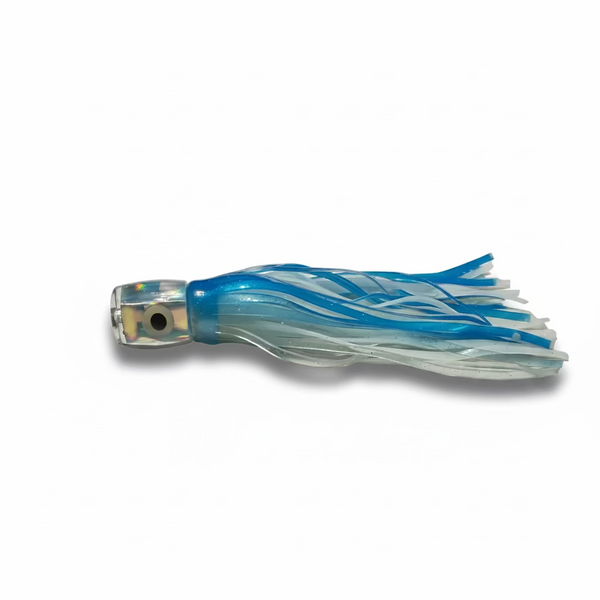
For the long-rigger positions, the strategy shifts. In this cleaner water, choose lures with more natural swimming actions and slightly smaller profiles. The goal is a realistic presentation that mimics a stray baitfish. Lures that track straight with a subtle action are highly effective here, as they appear to be an easy, isolated meal. You can learn more about matching lure profiles to specific predators in our guide to the best lures for marlin and tuna. Finally, the shotgun position requires a reliable lure that performs consistently over long distances. A smaller, natural-colored bullet head or a simple bird-and-squid chain often proves irresistible to wary fish trailing the spread.
Adapting Your Spread for Target Species
A generic spread is a starting point, but elite anglers adapt their entire pattern to the behavior of their target species. This involves modifying lure types, trolling speeds, and the overall presentation to match the feeding habits of specific predators. As highlighted by publications like Sport Fishing Magazine, distinct setups are proven to be more effective for different game fish.
Tuna Trolling Spread
When building a tuna trolling spread, the objective is to simulate a dense bait ball. This is effectively achieved using squid chains and spreader bars, which create the illusion of a large, panicked school. Tuna often prefer smaller profiles and clean-tracking lures, so position these setups on the riggers and run smaller bullet or jet head lures in the other positions. Maintaining a consistent speed of 5 to 7 knots is critical for this presentation.
Wahoo Trolling Spread
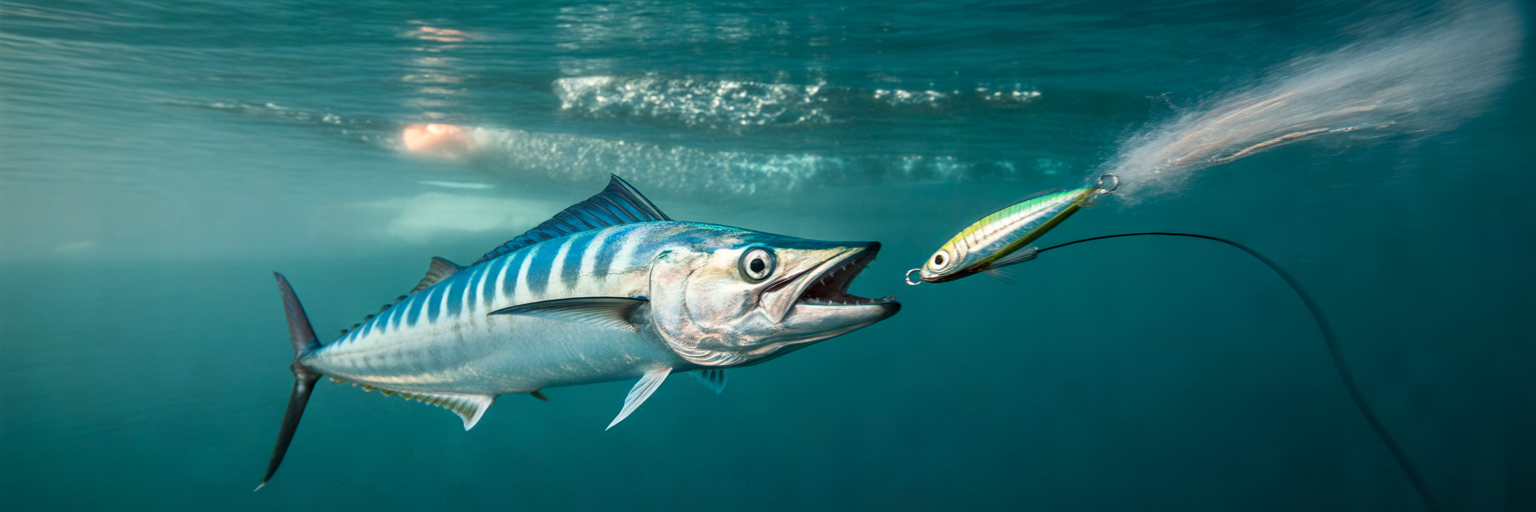
The wahoo trolling spread is built for speed and durability. Wahoo are ambush predators known for high-speed attacks, so trolling speeds of 8 to 12 knots or more are standard. This requires streamlined, heavy lures like high-speed jets or weighted bullet heads that can track straight without spinning. Due to their razor-sharp teeth, wire or cable leaders are non-negotiable. For a deeper look at this specialized approach, review our guide on advanced wahoo trolling strategies.
Marlin Trolling Spread
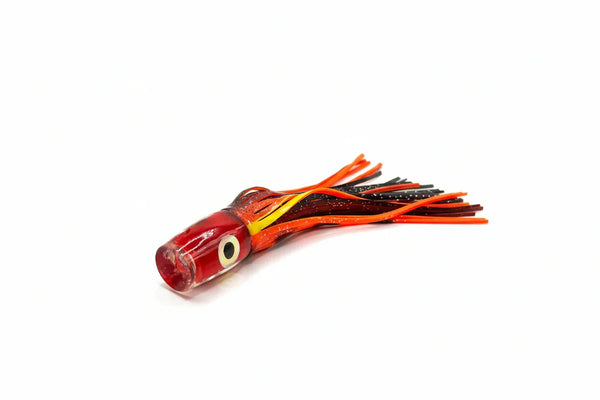
Targeting marlin involves creating maximum commotion to raise fish into the spread. Use large, aggressive chugger or slant-head lures on the short corners to act as teasers. These lures throw a significant amount of water and draw marlin in for a closer look. The hooked lures, typically placed on the riggers, should have a more natural swimming action to secure the bite once the fish is in the spread. Heavy monofilament or fluorocarbon leaders are standard.
| Factor | Tuna Spread | Wahoo Spread | Marlin Spread |
|---|---|---|---|
| Trolling Speed | 5-7 knots | 8-12+ knots | 6-8 knots |
| Key Lure Types | Squid chains, spreader bars, smaller bullets | High-speed jets, heavy bullets, lipped plugs | Large slant-heads, chuggers, plunger lures |
| Spread Focus | Simulating a dense bait ball | Speed, straight tracking, and durability | Creating commotion to raise fish, natural bait presentation |
| Terminal Tackle | Fluorocarbon leaders | Wire or cable leaders, shock absorbers | Heavy monofilament or fluorocarbon leaders |
This table outlines the primary adjustments in speed, lure selection, and focus required when building a trolling spread for tuna, wahoo, and marlin. These parameters are based on proven professional offshore fishing techniques.
Fine-Tuning for Maximum Performance
The difference between a good day and an exceptional one often lies in small, methodical adjustments. Top-tier anglers constantly study their vessel’s wake to optimize lure placement. Each boat creates unique pressure waves, or ‘harmonics,’ and positioning a lure on the face of a wave gives it the most life-like action. This is one of the most critical offshore fishing techniques for maximizing performance.
When the bite is slow, resist the urge to change everything at once. The cardinal rule of troubleshooting is to change only one variable at a time. Adjust a single lure, switch one color, alter your speed, or move a lure to a different position. This isolates what works and what does not. Standard trolling speeds of 5 to 7 knots are effective for tuna and marlin, but wahoo demand higher speeds. Do not hesitate to add non-hooked teasers and dredges to your spread. These tools create the illusion of a much larger bait school, drawing predators in from a distance and making your hooked lures appear to be easy targets. For more expert insights, explore our article on advanced offshore trolling techniques.
Maintaining an Organized and Effective Pattern
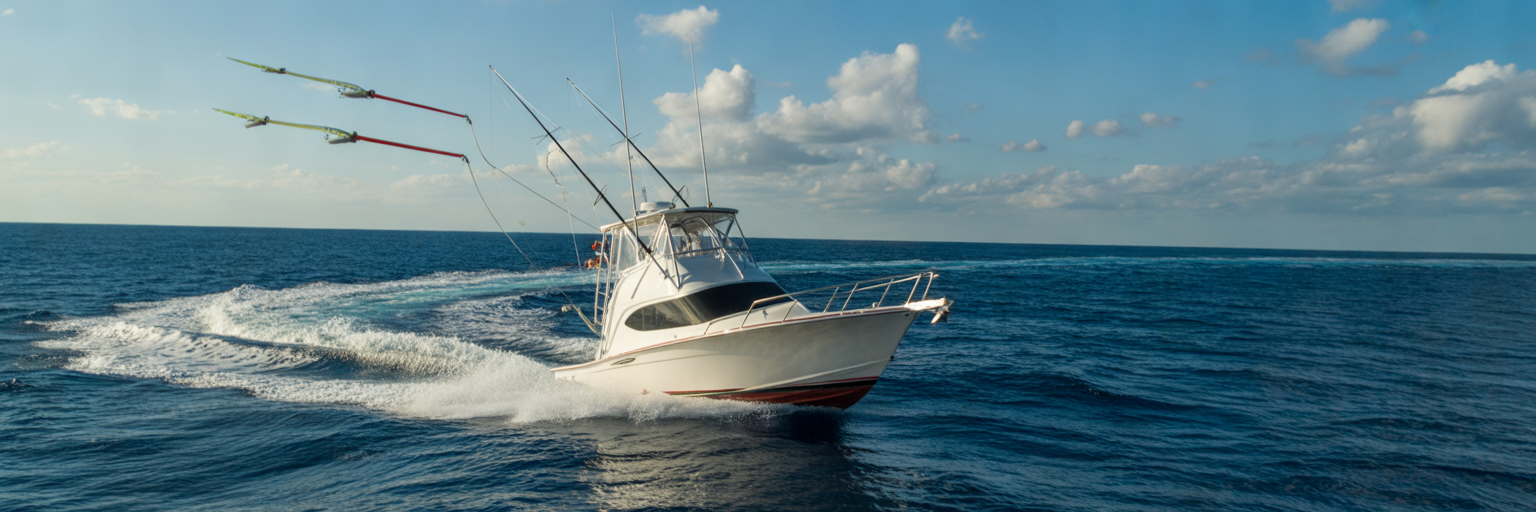
Discipline and organization are the cornerstones of a high-performance trolling operation. A well-managed spread is not only more effective but also far easier to clear when a fish is hooked, which is critical in high-pressure moments. A tangled spread is an unproductive one. To maintain order, especially during maneuvers, follow these guidelines:
- Execute wide, sweeping turns. Sharp turns cause inside lines to sink and outside lines to accelerate, pulling lures out of the water.
- Maintain constant speed through the turn. This helps keep consistent tension on all lines and ensures the lures continue to work properly.
- Communicate with the crew. Announce turns in advance so the team can watch the lines and anticipate any issues.
The most successful offshore anglers treat their trolling spread as a dynamic, adjustable system. Consistent observation, methodical adjustments, and a deep understanding of each component’s role are the keys to high performance and avoiding the common mistakes that can cost you fish.