

Selecting Trolling Lures for Marlin and Tuna
Success in big-game fishing is not a product of luck but of calculated decisions. The most critical choice an angler makes involves selecting the correct tackle for the target species, prevailing sea conditions, and trolling speed. Choosing the best trolling lures for marlin and tuna requires a systematic approach, where every component is optimized to trigger a specific predatory response. The key variables—lure head shape, size, color, and rigging—are not independent factors. They work in concert to create a presentation that mimics distressed or fleeing baitfish with precision. A lure's head design dictates its action and the acoustic signature it leaves in the water. Its size and color profile must align with the targeted predator's feeding habits and the ambient light conditions. Finally, the rigging ensures the lure performs correctly under pressure and can withstand the immense force of a trophy fish. This guide provides a performance-driven framework for selecting lures, because mastering the interplay of these elements is what defines consistently successful offshore fishing.
Lure Head Designs for Peak Performance
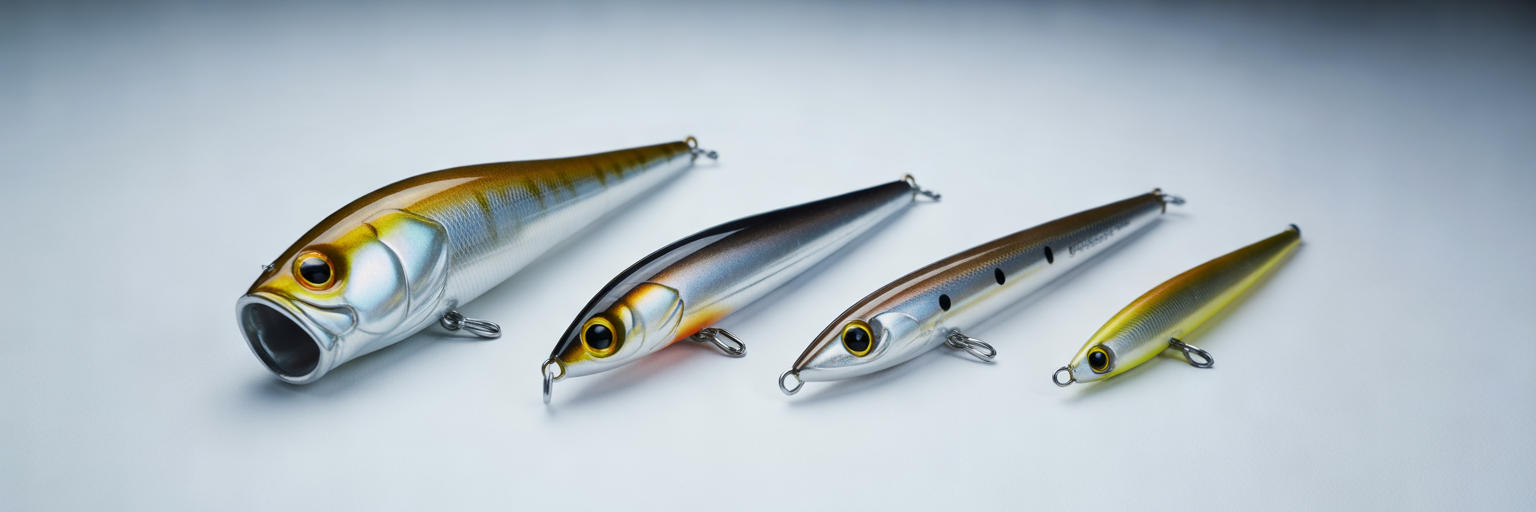
A lure's performance begins and ends with its head design. The geometry of the lure's face determines its action, stability, and the underwater disturbance it creates. Understanding these different lure head shapes is fundamental to building an effective trolling spread.
Aggressive Designs for Marlin
To attract a marlin, a lure must create significant surface commotion. Chuggers and pushers are engineered for this purpose. Their flat or cupped faces catch water, creating an explosive splash and a deep dive that leaves a thick 'smoke' trail of bubbles. This action mimics large, distressed prey, triggering an aggressive territorial or feeding strike from marlin. These designs are considered some of the best marlin lures for their ability to draw fish from a distance.
Streamlined Profiles for Tuna
Tuna hunt fast-moving baitfish, and your lures must match this behavior. Bullet and jet heads feature streamlined, conical profiles that allow them to track straight and true at high speeds, often between 8 and 15 knots. Their stability prevents them from tumbling out of the water, presenting a realistic imitation of fleeing bait. These are essential tuna trolling lures for any serious angler targeting yellowfin or bluefin.
Versatile All-Rounders
Slant-head and slider lures offer a balance of action suitable for both marlin and tuna. A slant-head's angled face gives it an erratic, side-to-side swimming motion combined with an occasional surface pop, imitating a disoriented baitfish. This unpredictable action can trigger strikes from multiple species. These performance-driven designs, like our handcrafted large resin lures, are engineered for specific actions that make them a valuable and versatile component of any trolling spread.
| Lure Head Type | Primary Action | Primary Target | Ideal Trolling Speed |
|---|---|---|---|
| Chugger / Pusher | Aggressive surface splash, deep dive, strong smoke trail | Marlin | 7-9 knots |
| Bullet / Jet Head | Stable, straight subsurface tracking | Tuna, Wahoo | 8-15+ knots |
| Slant-Head | Erratic side-to-side swimming, occasional surface pop | Marlin, Tuna | 7-10 knots |
| Slider | Subsurface swimming with a gentle, consistent wiggle | Tuna, Dolphin (Mahi-Mahi) | 6-9 knots |
Optimizing Lure Size and Color Contrast
Once the lure's action is selected, the next consideration is its visual profile. Size and color are powerful triggers that can be optimized based on two primary strategies: precisely imitating local baitfish or creating a high-contrast silhouette that stands out. Knowing how to choose lure color and size for different conditions is a critical skill.
Matching Size to Species
Lure size should correspond to the preferred meal of your target species. Presenting a bait profile that is too large or too small can result in missed strikes.
- For marlin: Larger lures, typically between 12 and 16 inches, present a substantial meal that is worth the energy expenditure for a large predator to chase down.
- For tuna: Smaller lures in the 6 to 10-inch range more accurately replicate the profile of the squid, mackerel, and flying fish that tuna commonly feed on.
Color Strategy for Bright Conditions
In clear water with bright sunlight, lures with high flash and natural color patterns excel. Blue and white, silver, and green and yellow combinations effectively mimic the iridescent scales of baitfish. For maximum visibility, nothing outperforms the multi-hued reflection of genuine shell. The abalone inlay in our Blue Large Resin Abalone lure creates a powerful, layered flash that reflects light in all directions, making it exceptionally effective at attracting pelagic predators from deep water.
Color Strategy for Low-Light Conditions
During dawn, dusk, or on heavily overcast days, contrast becomes more important than color. Dark, solid patterns such as black and purple or black and red create a distinct silhouette against the brighter surface light. This makes the lure easier for predators to track from below, increasing the likelihood of a strike in low-visibility environments.
Proper Rigging for Marlin and Tuna
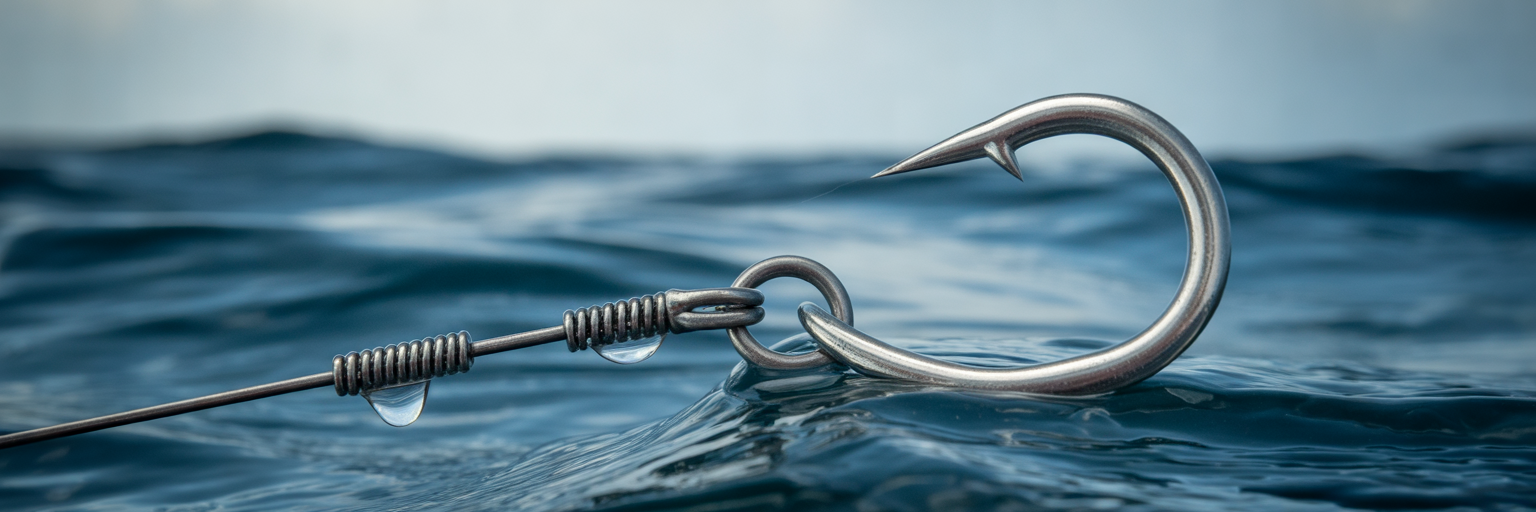
A perfectly selected lure is rendered useless by improper rigging. Species-specific rigging is a non-negotiable discipline that ensures correct lure performance and prevents catastrophic tackle failure during a fight. The leader and hook configuration must be matched to the target species.
- Rigging for Marlin: A marlin's bill is a formidable weapon capable of abrading through light leaders. For this reason, heavy monofilament leaders in the 300 to 400-pound test class are standard. This provides the necessary abrasion resistance to withstand prolonged contact. Anglers must also choose between single and double hook rigs, with single hooks offering a better hookup ratio on certain lure types and double hooks providing more security on aggressive strikes.
- Rigging for Tuna: Tuna possess exceptional eyesight and are notoriously line-shy. A stealthier presentation is required. Lighter fluorocarbon leaders, typically from 150 to 200-pound test, are preferred because fluorocarbon is nearly invisible underwater. This lighter leader also allows smaller lures to swim more naturally, which is critical for fooling wary tuna.
Ultimately, every component in the rigging system—from the crimps and chafe protection to the hooks themselves—must be of premium quality. A trophy fish will exploit any weak link. While this guide focuses on lures, broader resources like the Florida bottom fishing rigs guide from Hook Current can provide valuable knowledge on different tackle configurations. For specialized applications, a detailed tutorial on how to rig squid chains offers specific, actionable instructions to perfect your presentation.
Designing a Productive Trolling Spread
A productive trolling spread is a coordinated system, not a random assortment of lures. The goal is to create the illusion of a panicked school of baitfish, with each lure playing a specific role. Mastering these offshore trolling setups is key to maximizing your opportunities. A standard five-lure spread consists of distinct positions, each with a specific purpose:
- Short Corner: The closest lure to the boat, typically an aggressive chugger or pusher that creates significant commotion to attract fish into the spread.
- Long Corner: Positioned further back on the opposite side, this lure should also have a strong action but can be slightly smaller or run deeper.
- Short Rigger: Run from the outrigger, this position is often filled with a more natural-swimming lure like a slant-head or slider.
- Long Rigger: The second outrigger position, placed further back, is ideal for a lure that mimics a fleeing baitfish, such as a bullet head.
- Shotgun: The longest lure in the spread, run from the center of the boat. This position often draws strikes from cautious fish and is perfect for a small bullet or jet head.
The principle is to run high-action, aggressive lures in the short positions to act as teasers, drawing predators in. The more natural, streamlined lures are placed further back on the riggers and in the shotgun position to imitate baitfish breaking away from the school, presenting an easy target. This illusion is further enhanced by incorporating non-hooked hardware. Teasers, squid chains, and dredges create the appearance of a much larger bait school, increasing the spread's drawing power and pulling fish toward your hooked lures. For a more detailed breakdown of these principles, our article on essential trolling setup tips for offshore anglers provides a comprehensive overview.
Adjusting Trolling Strategy to Conditions
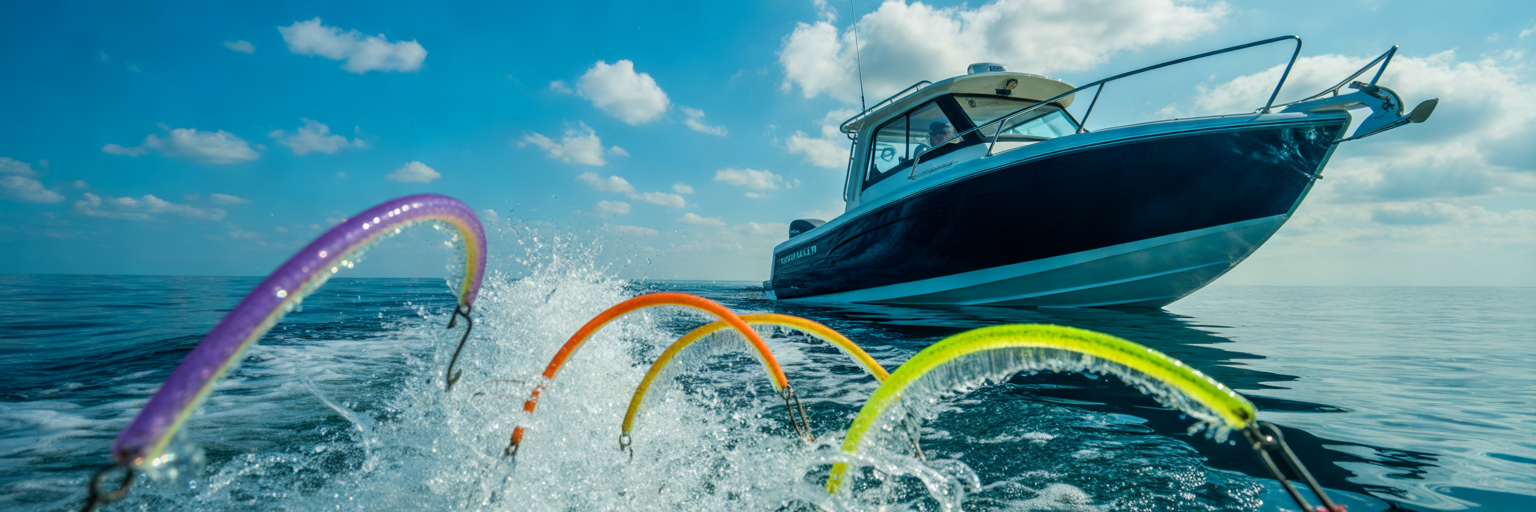
A well-designed spread is only the starting point. The most successful offshore anglers are dynamic, constantly adjusting their strategy based on real-time feedback from the environment. The relationship between trolling speed and lure performance is critical. Marlin are typically targeted at speeds between 7 and 10 knots, which allows aggressive lures to work properly. Tuna, however, often respond better to faster presentations, with speeds up to 15 knots or more being effective for certain species.
Sea conditions also dictate lure selection. In rough water, heavier, more stable lures are necessary to prevent them from tumbling and tangling. In calm seas, lures that create their own action, like slant-heads, become more effective. Constant observation is mandatory. An angler must 'tune' the spread by watching how each lure swims, ensuring it runs correctly without fouling. A tangled or poorly performing lure is not fishing. Understanding and avoiding common errors is part of this process, and a resource detailing common offshore trolling mistakes can help refine your technique. The ultimate takeaway is this: be prepared to change lures, colors, speeds, and positions. Adaptability is the final, and most important, variable in the equation for success.









