

The Art of the Trolling Spread
A trophy billfish often shadows a boat's wake, scrutinizing every detail before it strikes. The difference between a successful hook-up and a missed opportunity lies in the story your spread tells. A well-designed big-game trolling spread is not a random assortment of lures dragged behind a boat; it is a carefully constructed illusion. The goal is to mimic a panicked school of baitfish, creating a presentation so convincing that it triggers a predator’s deep-seated hunting instinct.
Think of it as setting a stage. Each lure, teaser, and its position contributes to a scene of chaos and opportunity. This strategic approach ensures that from whatever angle a game fish approaches, it encounters an irresistible target. This is not a game of chance but a calculated method to maximize your coverage of the water column and present a compelling narrative of a meal too good to pass up.
Positioning Lures for Maximum Impact
The geometry of your spread is fundamental to its success. Proper positioning ensures each lure performs optimally without interfering with others, covering multiple zones within the boat’s wake. The standard five-line formation provides a proven blueprint for how to set up trolling lures effectively. Each position has a distinct role in building the overall presentation.
- Short Corners (Flat Lines): These are your heavy hitters, placed closest to the transom in the turbulent propwash, typically on the second or third wake wave. They run deep and create a powerful silhouette that draws aggressive strikes.
- Long Corners (Outriggers): Set further back on the third or fourth wave, these lures run in cleaner water. Their position on the outriggers gives them a wider, more erratic action. For instance, many experienced captains run lures from our collection of large resin lures in these positions to create a significant presence.
- Shotgun: This is the wild card. Positioned far back in the clean water down the center, the shotgun lure often appears as a straggler, an easy target for cautious fish hanging back from the main commotion.
A key principle is the "wake wave" theory. Lures perform best when they are running down the face of a wave, making them more visible and active. Staggering lure distances is also critical. It not only prevents catastrophic tangles during turns but also creates a more natural, less uniform appearance that is far more appealing to wary predators.
Using Teasers to Create a Feeding Frenzy
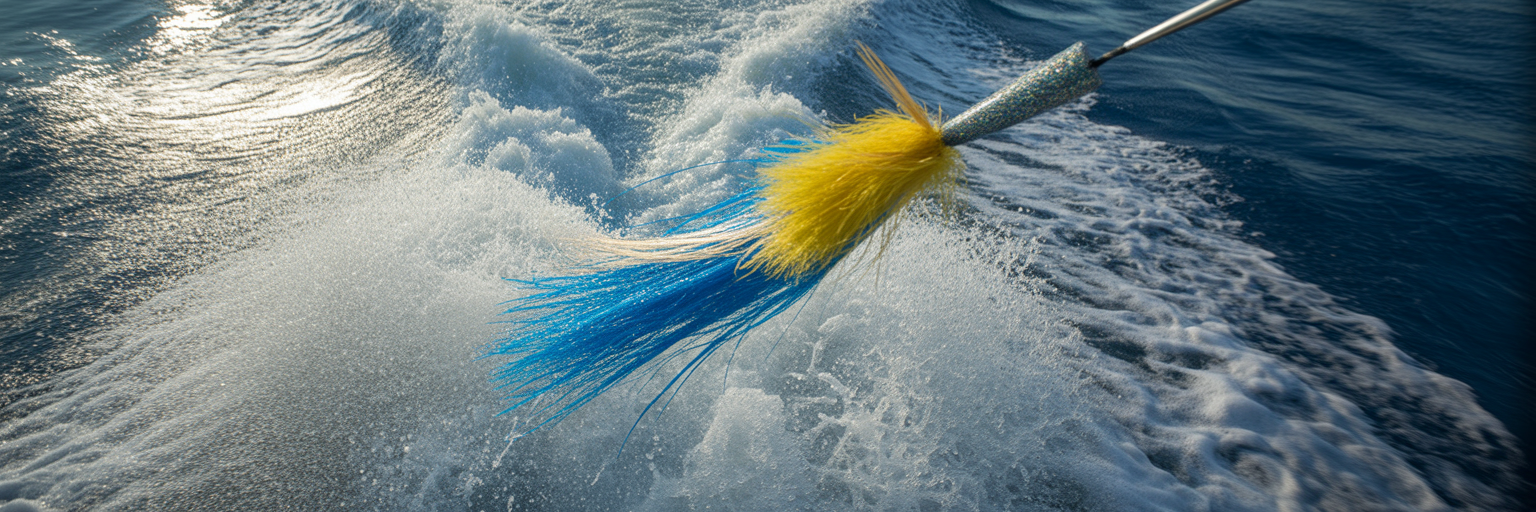
While hooked lures are designed to capture, teasers are designed purely for attraction. They are the billboards of your spread, creating maximum visual and acoustic disturbance to draw fish in from a distance. A teaser’s job is to start the party, pulling curious or hungry predators into your hook baits. Understanding the different types is key to building an effective presentation.
- Spreader Bars: These rigs simulate a tight school of baitfish on the surface. A well-designed trolling spreader bar setup creates a commotion that is impossible for nearby predators to ignore.
- Dredges: Pulled beneath the surface, dredges create the illusion of a large, deep bait ball, appealing to fish holding at different depths.
- Daisy Chains: A string of smaller, unhooked baits, a daisy chain mimics a small group of fleeing baitfish, triggering a competitive feeding response.
As noted by Sport Fishing Magazine, creating distinct patterns with teasers and lures is a hallmark of successful offshore trolling. Place teasers in the clean water just outside the propwash, ahead of your primary hook baits, so they are the first thing a fish sees. Exploring our complete range of handcrafted lures and teasers offers solutions for any trolling spread. Remember, teasers demand active engagement. Always have a pitch bait ready to deploy the moment a fish rises to investigate.
Matching Lures to Conditions and Targets
The perfect spread is not static; it is a dynamic system that must adapt to sea conditions, light levels, and target species. A successful marlin and tuna trolling setup, for example, looks very different from one designed for high-speed wahoo fishing. Slower speeds of 7-9 knots are ideal for marlin and tuna, allowing larger resin-head lures to work their magic. In contrast, wahoo often demand speeds of 12-18 knots, requiring heavier, streamlined lures that can handle the pace.
Lure color is another critical variable. In low light or overcast conditions, dark, high-contrast colors like black and purple create a strong silhouette that stands out. In bright sun and clear water, natural patterns that mimic local baitfish are more effective. The unmatched reflection from our Blue Abalone Lure is designed precisely for these conditions, mimicking the natural shimmer of baitfish. A varied spread that includes different lure styles, such as a chugger on a short corner and a slant-face on an outrigger, will appeal to different feeding moods and increase your chances of a strike.
| Target Species | Trolling Speed | Recommended Lure Type | Color Strategy |
|---|---|---|---|
| Blue/Black Marlin | 7-9 knots | Large Slant-Face or Chugger Lures | Bright colors (pink, blue) in clear water; Black/purple in low light |
| Tuna (Yellowfin/Bluefin) | 6-8 knots | Resin Bullets, Spreader Bars, Green Machines | Green, natural baitfish patterns, cedar plugs |
| Wahoo | 12-18 knots | High-Speed Jet Heads, Heavy Bullet Lures | Dark colors (black/red, black/purple) for silhouette at high speed |
| Dolphin (Mahi-Mahi) | 6-9 knots | Small Chuggers, Feathers, Daisy Chains | Bright and flashy colors (chartreuse, pink, blue/white) |
This table provides a starting point for matching your lure spread to specific big-game targets. Speeds and lure choices should always be adjusted based on sea conditions and observed fish behavior.
Avoiding Common Trolling Spread Mistakes
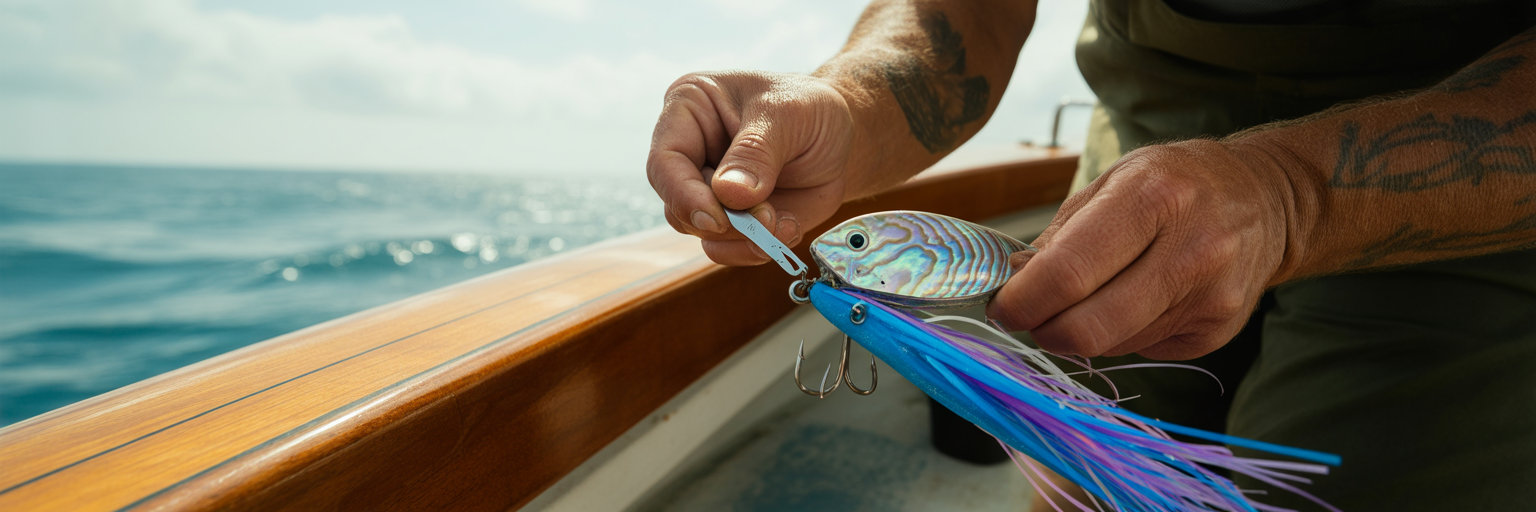
Even the most thoughtfully designed spread can fail if the small details are overlooked. Mastering offshore trolling techniques means paying close attention to execution and avoiding common pitfalls that can turn a promising day into a frustrating one. Have you checked if your spread is suffering from these issues?
- Improper Speed and Lure Action: A lure that is spinning, tumbling, or blowing out of the water is completely useless. Before setting it back, check its action boat-side and adjust your speed until it runs true. Our medium resin lures are handcrafted and tested to ensure they perform correctly right out of the package, avoiding common action-related issues.
- Incorrect Hook Orientation: The hook must be seated perfectly within the lure skirt, with the point riding up, to ensure proper action and a solid hook-up ratio. Using high-quality, ball-bearing swivels is non-negotiable to prevent line twist.
- Failure to Adjust for Sea Conditions: In rough seas, lures can pop out of the water. The solution is often to move them further back. The extra line in the water acts as a natural shock absorber, helping the lure stay in its effective zone.
- Over-Rigging: We all want strong connections, but bulky leaders, oversized hooks, or heavy hardware can deaden a lure’s natural action. The guiding principle is to use the lightest, strongest terminal tackle possible to let the lure swim freely.
Fine-Tuning Your Spread for Success
A successful trolling spread is a living system that requires strategic positioning, the right mix of attraction, and, most importantly, constant observation. Every day on the water is different. The currents shift, the light changes, and the fish’s mood can turn on a dime. The key is to learn from every strike and every miss, continuously adjusting your presentation.
Mastering the art of the trolling spread is an ongoing craft. It is this dedication to refinement that separates good anglers from great ones and consistently puts more trophy fish on the deck.