

The primary function of a squid chain teaser is to create a compelling illusion: a panicked school of squid fleeing a predator. This visual and hydrodynamic signature is engineered to draw big-game species into the trolling spread. Success depends on understanding the non-negotiable elements of a high-performance rig. To properly rig squid chains, one must begin with superior components, as the forces encountered in offshore environments are unforgiving.
Material selection is not a matter of preference but a fundamental requirement for durability. The leader must possess the strength to withstand aggressive strikes, while hardware must resist corrosion and failure under load. A high-quality ball-bearing snap swivel is essential for allowing the chase bait to swim naturally without introducing line twist. Similarly, beads play a critical protective role, preventing soft plastic squids from being damaged by the hard edges of crimps. The chase bait itself must be a proven performer, and our collection of large resin lures offers options tested in the most demanding conditions. Building a complete and reliable arsenal is a prerequisite for any serious angler, and as a resource from Hook Current on gearing up for success highlights, quality tackle is the foundation of effective fishing.
Fundamentals to Rig Squid Chains Effectively
A squid chain’s effectiveness is directly tied to its construction. The components must be matched to the target species and trolling conditions. Leader strength, for instance, must be scaled appropriately to handle the intended quarry. A lighter leader may suffice for mahi-mahi, but it will prove insufficient against the power of a blue marlin. Each element, from the leader to the final chase bait, contributes to a system designed for a specific purpose. Using premium materials is the baseline for building a rig that performs correctly and endures repeated use.
| Squid Size | Recommended Leader Strength | Primary Target Species |
|---|---|---|
| 6-inch Squids | 130-200 lb Monofilament | Mahi-Mahi, Blackfin Tuna, Sailfish |
| 9-inch Squids | 300-400 lb Monofilament | Blue Marlin, Yellowfin Tuna, Wahoo |
| 12-inch+ Squids | 400-500 lb Monofilament | Blue and Black Marlin, Large Tuna |
This table provides a clear reference for matching squid size with the appropriate leader strength, ensuring the rig has the durability to handle the intended target species. Selections are based on industry best practices for offshore trolling setups.
Step-by-Step Squid Chain Construction
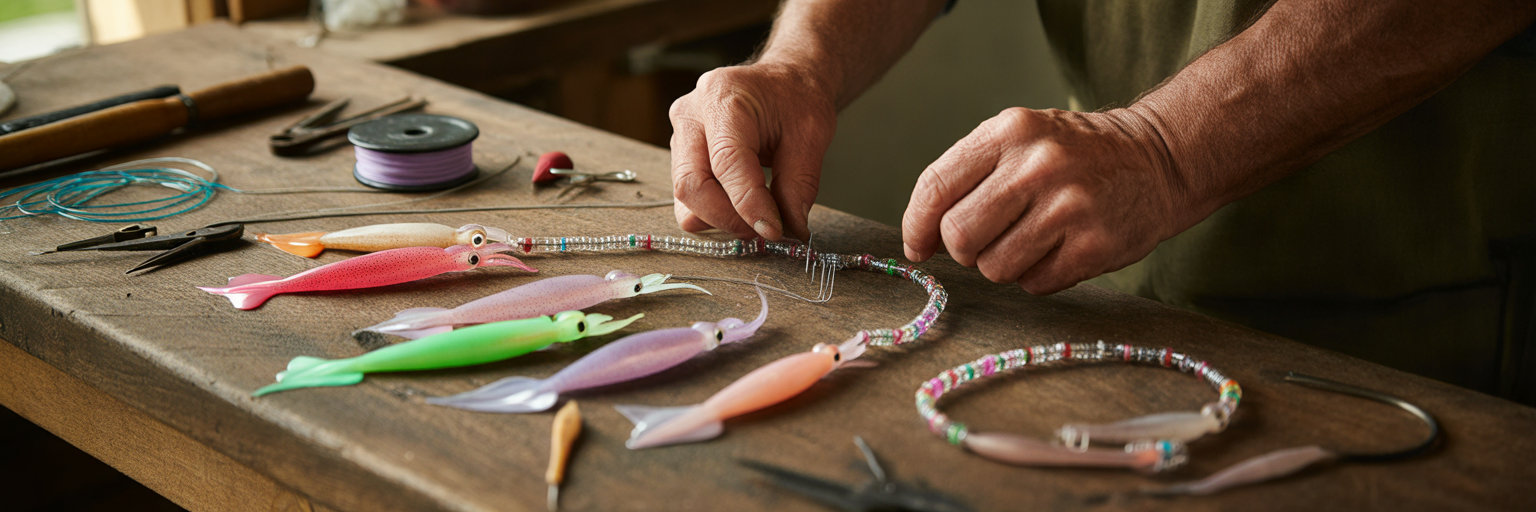
Knowing how to rig a squid chain with precision is what separates a functional teaser from a high-performance one. A meticulously assembled chain tracks straight, creates the right disturbance, and withstands the violence of a strike. The following steps provide a methodical approach to construction, ensuring every component works in harmony to produce a lifelike presentation. This process demands attention to detail, as even minor flaws in assembly can lead to gear failure or an unnatural action in the water. Follow this guide to rig squid chains that deliver consistent results.
-
Leader Preparation and Component Layout
Begin by cutting the monofilament leader to the desired length, typically between 15 and 25 feet. Lay the leader straight and arrange all components in sequence: crimps, beads, and squids. The spacing between each squid is critical for achieving a natural swimming motion. A proven standard is to maintain a distance of 1.5 times the length of a single squid between each one. This prevents the squids from bunching up while allowing them to move as a cohesive unit. -
Assembling the Chain
Slide the components onto the leader in the correct order for each squid station: a crimp, a bead, the squid itself, another bead, and a second crimp to lock it in place. The beads serve a vital protective function, creating a buffer between the soft plastic of the squid and the hard metal edge of the crimp. This small detail prevents the crimp from cutting into the squid's head over time, preserving the integrity of your rig. -
Securing the Squids
Proper crimping technique is essential for leader strength and reliability. Use a dedicated crimping tool that matches the size of your sleeves. The goal is to secure the squid in place without compromising the monofilament. Over-crimping can crush the leader and create a weak point, while under-crimping allows the squid to slip. As rigging experts featured in publications like Marlin Magazine emphasize, a perfect crimp has a slight flare at the edges, indicating optimal pressure was applied. -
Finishing the Terminal Ends
At the front of the chain, form a secure loop for attaching to the boat's cleat or rod tip. Pass the leader through the crimp, around the thimble, and back through the crimp twice to maximize strength and prevent chafe. At the tail end, attach the ball-bearing snap swivel that will hold your chase bait. This final connection point must be flawless, as it will bear the full force of a striking fish. A high-performance lure like our Flamingo Pink Striker completes the setup, providing a target that fish cannot resist.
Optimizing On-Water Performance
Once constructed, a squid chain's performance must be tuned to the dynamic conditions of the open ocean. Sea state, trolling speed, and target species all influence how the teaser should be deployed. The objective is to create a straight-tracking chain with a lifelike, splashing action that mimics fleeing baitfish. An angler must learn to "read the wake" and make adjustments to ensure the presentation remains optimal. This analytical approach transforms a well-built rig into a truly effective fish-raising tool.
In calm water, a standard chain may perform perfectly. However, in rougher seas, its presence can be diminished by surface chop. In these conditions, switching to a larger chain or adding a bird teaser ahead of the squids creates more splash and visibility. This is particularly important when creating tuna trolling rigs, as tuna are often drawn to significant surface commotion. Fine-tuning your setup based on what you observe is a key skill. For guidance on which lures and presentations work best for specific targets, anglers can select lures based on their target species to refine their approach.
Common performance issues can almost always be resolved with minor adjustments:
- Chain Spinning: This is often caused by excessive speed or an unbalanced chase lure. The first solution is to reduce the trolling speed slightly. If the issue persists, check that all components are aligned and the chase bait is swimming true.
- Chain Skipping on Surface: If the chain is frequently breaking the surface and skipping, the boat is likely moving too fast for the setup. Slow down until the squids remain just below the surface, creating a consistent bubble trail.
- Poor Action in Rough Seas: When the chain appears lost in the waves, it lacks the necessary presence. Increase its visual and hydrodynamic footprint by adding a bird teaser, using larger squids, or adding more squids to the chain.
Strategic Placement in the Trolling Spread
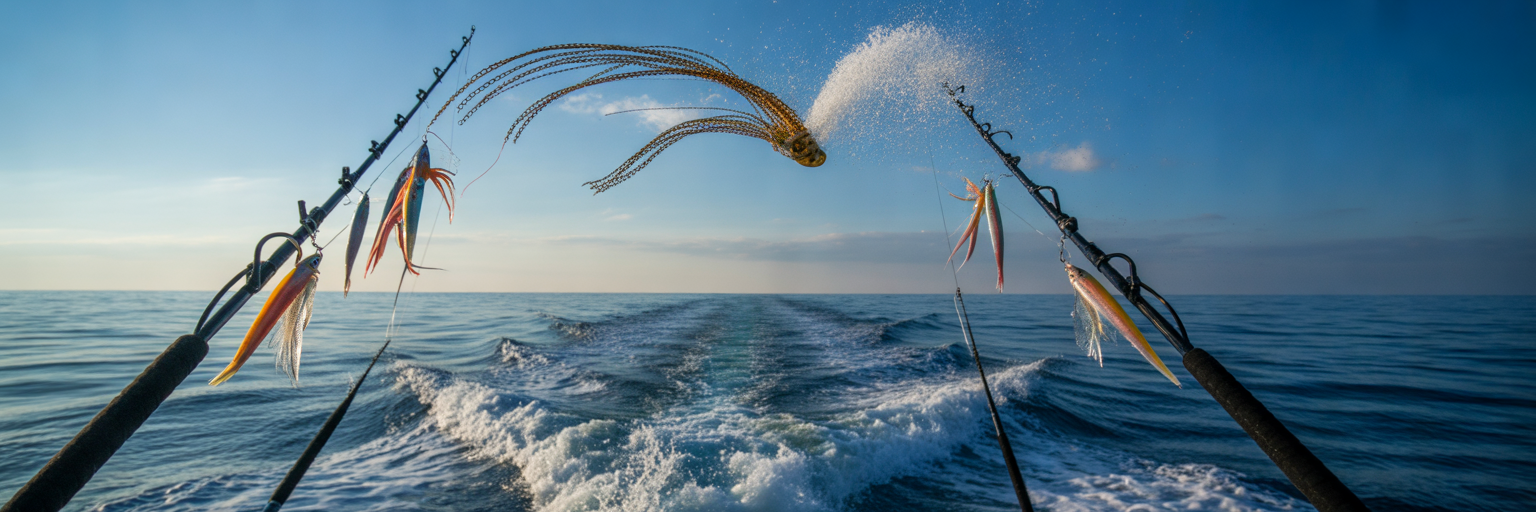
A squid chain does not operate in isolation. Its placement within the broader trolling spread is a tactical decision that directly impacts its effectiveness. The chain's primary role is to act as a massive attractor, pulling fish from the depths and into range of your hooked baits. Therefore, it must be positioned for maximum visibility. Common and effective positions include the short corner, running just outside the prop wash, or on a flat line directly off the transom where it creates an undeniable target.
Placement strategy should also adapt to the target species. Marlin are often aggressive and may charge a teaser placed close to the boat, while tuna and mahi-mahi sometimes prefer a teaser running in the cleaner water further back in the spread. Experimenting with different positions in your offshore trolling setups will reveal what works best on a given day. It is critical to remember that the squid chain is the teaser, not the terminal tackle. Its job is to excite the fish and draw a strike on one of your hooked big game fishing lures. The synergy between the teaser and the chase bait is what secures the hookup, and a complete collection of proven lures ensures you always have the right option to close the deal.
Advanced Rigging and Maintenance
For the dedicated angler, rigging excellence extends to proactive maintenance and advanced techniques that prevent gear failure. One such technique is a breakaway system, where the teaser is attached to the cleat with a rubber band or light twine. After a strike, the band breaks, allowing the crew to clear the teaser from the water quickly and reduce the chaos of fighting a fish with lines still in the water.
However, the most important discipline is routine gear care. A pre-trip inspection is non-negotiable for anyone serious about performance. Proactive maintenance is what prevents catastrophic failure when a trophy fish is on the line. Before each trip, conduct a thorough check:
- Inspect all crimps and loops for any signs of corrosion, cracking, or slippage.
- Run your fingers along the entire length of the leader, feeling for any nicks, chafe, or abrasions that could compromise its strength.
- Ensure the ball-bearing snap swivel rotates freely and the gate closes securely.
After use, always rinse the entire chain with fresh water and allow it to dry completely before storing. Coil it neatly to prevent tangles and store it away from direct sunlight to prevent UV damage to the leader and squids. This commitment to quality and maintenance reflects the core principles behind all K2Fishing gear.









