

The line between a lucky day and consistent bluewater success is drawn not by chance, but by precision. Targeting apex predators like marlin, tuna, and wahoo with a single, generic method is an inefficient use of time and resources. Mastering the unique predatory behaviors of each species is the foundation of high-performance angling. Effective species-specific trolling strategies require a disciplined approach to every variable, from lure selection to the precise speed of your vessel. This guide details the refined techniques that distinguish elite anglers, focusing on precise speed control, species-appropriate lure selection, and strategic spread configuration. These methods are engineered to convert opportunities into successful outcomes in competitive offshore environments.
Calibrating Speed and Spread for Optimal Performance
Before targeting a specific species, you must master the fundamentals of your trolling presentation. The most critical variable is speed, but not the number displayed on your GPS. True water speed, which accounts for currents and drift, is the only metric that matters for lure action. A paddlewheel sensor or calibrated sounder provides the necessary precision that GPS-based speed over ground (SOG) cannot. Without this data, you are operating with an incomplete picture of how your lures are performing.
The objective is to create a clean, cohesive spread that mimics a panicked bait school. This requires constant adjustment based on sea conditions. In calm seas, you can maintain your target speed, but in chop, you must slow down to prevent lures from skipping or surfacing erratically. In rough water, a significant speed reduction is necessary to stop your offshore trolling lures from blowing out of the water entirely. Each position in the spread, from the flat lines to the long riggers and shotgun, has a specific role. When properly configured, our complete range of lures works in unison to create an irresistible presentation. Constant monitoring and adjustment are non-negotiable for maintaining a spread that triggers strikes.
| Sea State | Trolling Speed Adjustment | Lure Behavior Consequence | Objective |
|---|---|---|---|
| Calm / Flat Seas | Maintain optimal target speed (e.g., 8 knots) | Lures run true with consistent action | Maximize lure performance and visual appeal |
| Moderate Chop (2-4 ft) | Reduce speed by 0.5-1 knot | Prevents lures from skipping or surfacing excessively | Maintain consistent depth and action |
| Rough Seas (4-6+ ft) | Reduce speed by 1-2+ knots | Stops lures from 'blowing out' or tumbling | Ensure the spread remains in the water and fishable |
Marlin Trolling Techniques for Apex Billfish
Targeting marlin requires a presentation built on size, aggression, and disturbance. These apex predators respond to large profiles that suggest a substantial meal. Your marlin trolling techniques should center on lures that create maximum commotion and visual appeal in the water. The most effective selections are designed to draw a marlin into the wake and provoke a territorial or predatory strike.
Your lure selection should include:
- Large skirted lures (12 inches or more) that push a significant amount of water.
- Plunger and chugger heads designed for an aggressive, side-to-side swimming action and explosive surface bursts.
- High-flash resin heads that create powerful visual signals, especially those with abalone shell inlays.
The optimal trolling speed is a steady 7 to 9 knots. This pace allows large, heavy lures and complex teasers like dredges to track properly and perform as designed. A classic marlin spread places the largest and most aggressive lures, like our Blue Large Resin Abalone lure, in the short corner and short rigger positions. These close-in lures act as the primary attractors, pulling fish into your spread. Success also depends on reading the water. Look for temperature breaks, current lines, and bait aggregations where marlin are most likely to be hunting.
Proven Trolling Methods for Targeting Tuna
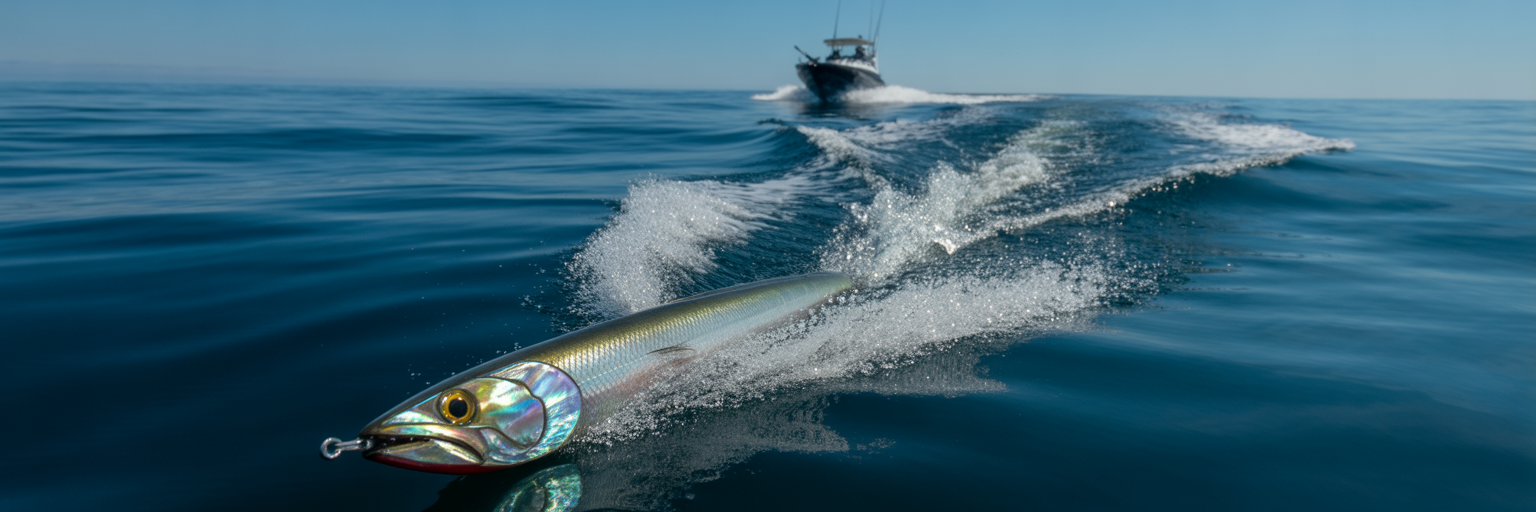
In contrast to marlin, tuna often prefer smaller, faster-moving prey, and your tactics must adapt accordingly. A successful tuna trolling spread is designed to imitate a large, scattered school of baitfish, creating a competitive feeding response. This typically involves deploying more lures than a marlin spread and focusing on profiles that match the local forage. While tuna can be aggressive, they are also known for being boat-shy, making long-distance presentations a critical component of your strategy.
An effective tuna spread often includes:
- Cedar plugs, a timeless classic for their erratic action.
- Small, feathered lures that mimic fleeing bait.
- Skirted bullet-head lures in the 7-to-9-inch range, which run straight and true.
- Daisy chains and spreader bars with squid imitations to simulate a dense school.
The productive speed range is between 5 and 9 knots. As a trolling speed analysis from Targeted Species confirms, the 6 to 9 knot range is a reliable standard for both yellowfin and bluefin. When creating a mixed spread for multiple pelagic species, a compromise speed around 8 to 10 knots can be effective. The shotgun position, set far behind the boat, is essential for wary tuna. For these long-range presentations, smaller skirted lures and our performance-driven bullet heads excel. When fish are holding deep and not feeding on the surface, use planers or heavier lures to get your presentation into the strike zone.
High-Speed Tactics for Ambush-Predator Wahoo
The strategy for wahoo is fundamentally different from that for marlin or tuna. Success hinges on triggering a reaction strike from these aggressive ambush predators. This requires a dedicated approach centered on velocity. The core of high speed wahoo trolling is covering water at speeds of 12 to 20 knots. This pace is too fast for most traditional lures and demands specialized equipment designed to perform under extreme pressure. Your gear must be purpose-built to stay submerged and run true while withstanding the violent impact of a wahoo strike.
This technique requires specific, non-negotiable gear. Heavy, streamlined lures like jet-heads and bullet-heads are mandatory, as they are engineered to remain stable at high speeds. A lure like our Flamingo Pink Striker is designed precisely for this application, combining a hydrodynamic profile with high-visibility flash. A 18 to 36-inch wire or cable leader is absolutely essential to prevent bite-offs from a wahoo’s razor-sharp teeth. A typical high-speed spread utilizes heavy trolling weights, often 32 to 64 ounces, or downriggers to keep lures running deep and true. This method puts immense strain on tackle. Heavy-duty rods, high-capacity reels with smooth, powerful drags, and robust terminal connections are not optional. They are necessary components for successfully landing one of the fastest fish in the ocean.
Synthesizing Your Approach for On-the-Water Success
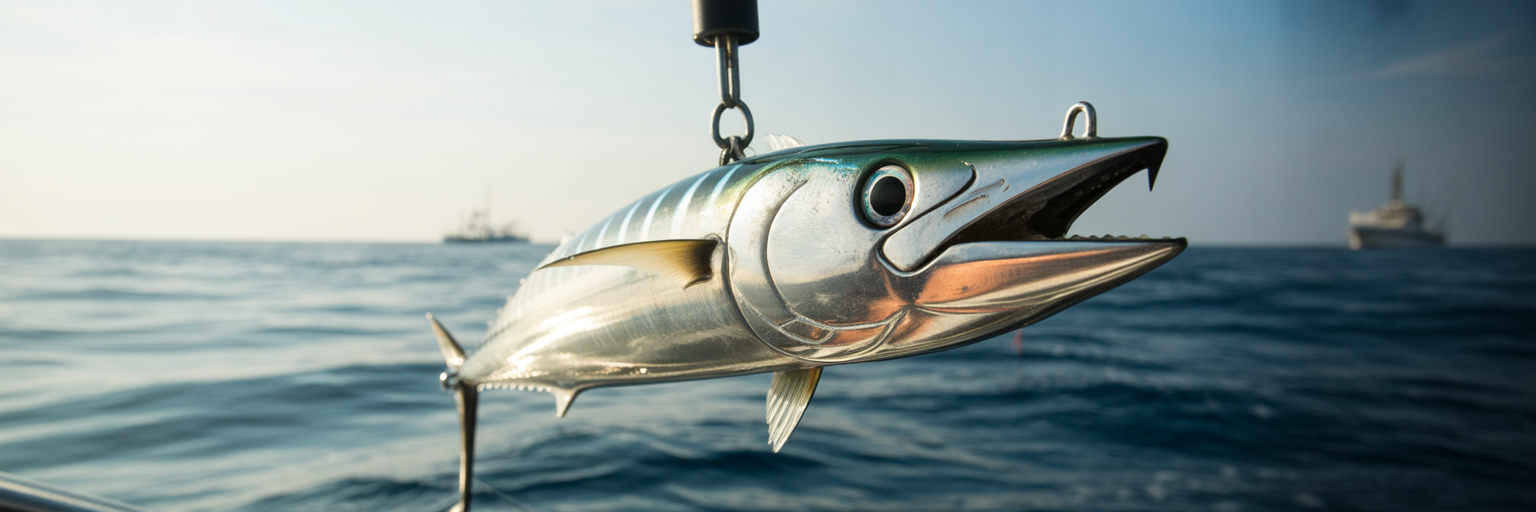
The speeds, lures, and spreads detailed here are proven starting points, not rigid rules. The most successful offshore anglers are those who use this knowledge as a foundation and adapt to daily conditions and observed fish behavior. A disciplined, methodical approach to experimentation is what separates good anglers from great ones. Systematically adjust lure colors, positions, and speeds throughout the day to identify the pattern that triggers strikes.
This is where investing in high-performance tackle becomes critical. Quality lures and hardware are not a luxury but a necessity for capitalizing on every opportunity. These are some of the most important big game fishing tips you can receive. Your gear must withstand the power of these apex predators. A disciplined, species-specific approach, combined with a willingness to adapt, is the ultimate hallmark of a top-tier offshore angler. To refine your arsenal, you can browse lures organized by target species and build a spread engineered for success.