

Elite marlin fishing is a discipline of skill, where consistent success is dictated by interpreting the fish's intent, not by chance. The ability to understand and anticipate a marlin's actions is the fundamental differentiator between proficient anglers and the world's top captains. Learning how to read marlin behavior transforms a speculative pursuit into a calculated one. These apex predators are driven by powerful biological imperatives for feeding and energy conservation, making their actions predictable responses to environmental and predatory stimuli. A deep comprehension of these drivers is the foundation of any successful offshore program. This article provides a systematic approach to interpreting marlin activity, covering how to identify prime feeding zones, decode a fish's mood in the spread, and apply tactical responses to convert opportunities into successful hook-ups.
The Foundation of Success: Understanding Marlin Behavior
Success in big-game fishing is not a matter of luck but a direct result of preparation meeting opportunity. For marlin, this means understanding the core biological drivers that dictate their every move. As apex predators, their behavior is governed by two primary principles: the instinct to feed efficiently and the need to conserve energy. Every action, from a blistering strike to a cautious follow, is a calculated decision based on these factors. An angler who grasps this concept moves beyond simply dragging lures and begins to think like the predator they are pursuing.
This understanding is the critical first step. A marlin’s world is one of currents, temperature breaks, and bait aggregations. Their responses to these conditions are not random. They are methodical, repeatable patterns that a skilled crew can learn to recognize and exploit. By analyzing these environmental cues and the fish's subsequent body language, you can anticipate its next move with a high degree of accuracy. The following sections will detail how to locate these high-probability zones, interpret the fish’s disposition once it enters the spread, and execute the precise boat and tackle adjustments required to trigger a strike.
Identifying Prime Marlin Feeding Zones
Marlin are constantly on the move, but their travels are not arbitrary. They follow predictable paths to locations where forage is concentrated, and understanding these environmental factors is essential for locating fish. These prime zones are where successful days are made, long before a lure ever hits the water. Analyzing marlin feeding patterns in relation to oceanographic features allows a crew to focus efforts on the most productive water.
Temperature Breaks and Convergence Zones
Significant changes in sea surface temperature (SST), known as temperature breaks, create biological walls that concentrate plankton. This, in turn, attracts the baitfish that marlin prey upon. Convergence zones, where currents meet, function similarly by accumulating nutrients and marine life. These areas are often visible as distinct changes in water color or clarity and are prime hunting grounds.
Current Edges, Rips, and Weed Lines
Currents act as natural conveyor belts for bait. The edges of major currents like the Gulf Stream create dynamic rips and eddies that trap sargassum and other debris, forming distinct weed lines. These lines provide cover for juvenile fish and other prey, making them a consistent feature for offshore predators. A well-formed weed line in otherwise empty water is one of the most promising signs an angler can find.
Underwater Structure: Seamounts and Canyons
Submerged mountains, ledges, and canyons disrupt current flow, forcing nutrient-rich water toward the surface in a process called upwelling. This creates a self-sustaining ecosystem that attracts baitfish and, consequently, marlin. These structures serve as natural ambush points where predators can hold with minimal energy expenditure while waiting for prey. As noted in a tactical overview by Marlin Magazine, a captain's ability to interpret these conditions is a hallmark of professional outfits. Understanding these zones is also critical for anglers targeting specific species, as detailed in our comprehensive guide on how to fish by species.
Decoding Marlin Moods in the Spread
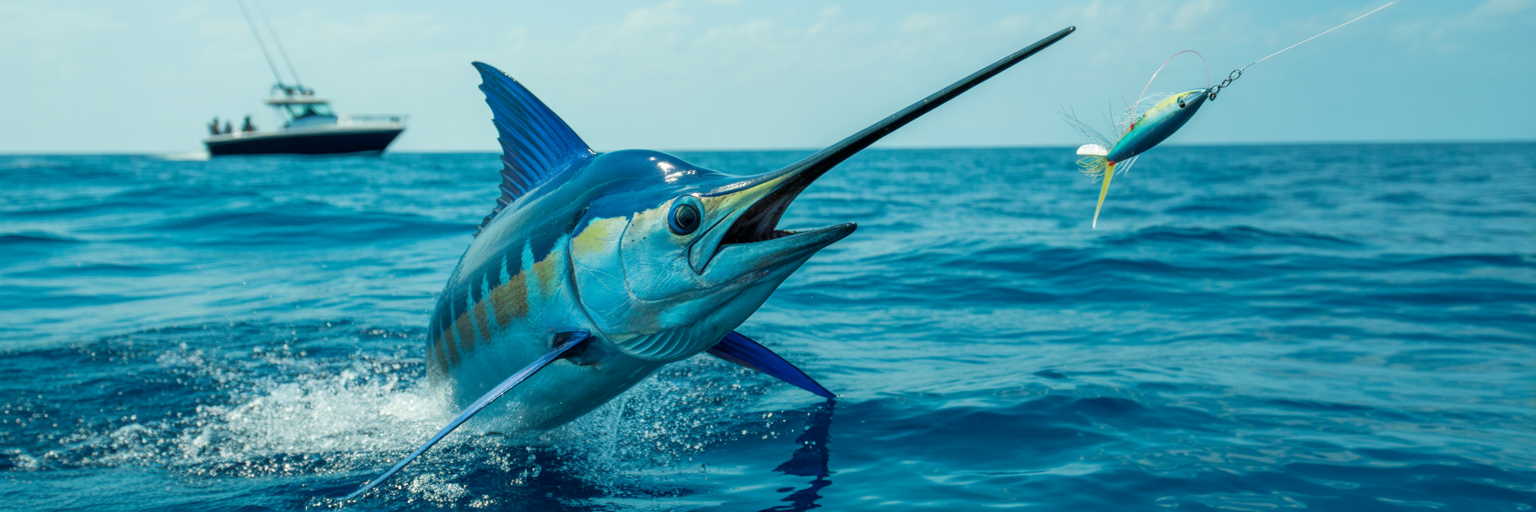
Once a marlin appears behind the boat, the crew must immediately assess its disposition. The fish’s body language provides clear signals about its intent, allowing the team to make tactical adjustments. Distinguishing between an aggressive, "hot" fish ready to eat and a cautious, "window shopping" fish is a critical skill. A hot fish is an immediate opportunity, while a cautious one requires finesse and strategic changes to provoke a strike.
An aggressive marlin will often appear with its colors fully "lit up" in vibrant blues and purples, pectoral fins flared, as it charges a teaser or lure with clear intent. This fish is committed to feeding. Conversely, a tentative marlin may display dull, washed-out colors and keep its fins tucked close to its body. It will often shadow the spread from a distance, fading in and out of view without committing to a specific target. Teasers and dredges are excellent diagnostic tools in this scenario, as a fish’s reaction to them quickly reveals its level of aggression. The goal is to convert that interest into a definitive strike, often by presenting a lure engineered for this exact purpose. Our high-performance large resin lures, for example, are designed with specific actions and flash profiles to trigger an aggressive response from big-game predators.
| Behavioral Cue | Aggressive ('Hot') Marlin | Cautious ('Window Shopping') Marlin |
|---|---|---|
| Coloration | Vibrant, 'lit-up' blues and purples | Dull, washed-out colors |
| Fin Posture | Pectoral and dorsal fins flared | Fins held tight against the body |
| Approach | Direct, fast charge on a teaser or lure | Shadowing the spread from a distance |
| Commitment | Strikes with intent to kill and eat | Fades in and out, reluctant to commit |
| Required Action | Immediate pitch bait or clear for lure strike | Finesse, change lure/bait, adjust boat speed |
Tactical Boat Handling and Presentation
The vessel is not merely a fishing platform; it is an integral part of the lure presentation. An experienced captain uses the boat to manipulate the spread, transforming a standard trolling pattern into a dynamic imitation of panicked bait. This is one of the most effective big game fishing strategies for converting a following fish into a hooked one. The synergy between a captain's maneuvers and the crew's readiness is paramount for successful offshore trolling for marlin.
Strategic turns and throttle adjustments can make lures appear more lifelike and trigger a predatory response. The S-turn is a classic and highly effective maneuver:
- Initiate a gradual turn: The captain begins a wide, arcing turn to port or starboard.
- Inside lures slow and sink: The lures on the inside of the turn lose speed, drop slightly in the water column, and appear to be injured or stunned.
- Outside lures accelerate: Simultaneously, the lures on the outside of the turn speed up and create more surface commotion, mimicking fleeing bait.
- Trigger the strike: This sudden change in speed, depth, and action often provokes an aggressive strike from a marlin that was previously hesitant.
Subtle throttle adjustments, such as bumping the engines in and out of gear, can also impart an irresistible, erratic action to the lures. A lure like our Blue Large Resin Abalone lure is specifically designed with a stable yet dynamic profile that performs optimally during these aggressive, action-inducing maneuvers.
Mastering the Fight After the Strike
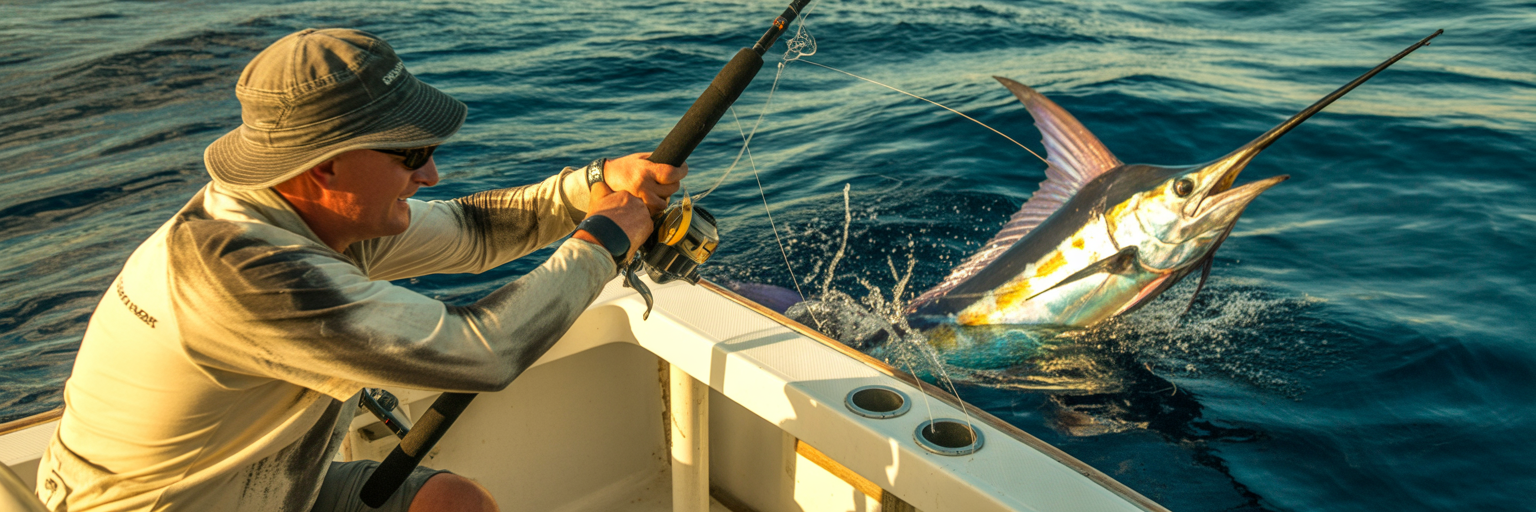
The moments following a hook-up are decisive. A common but critical error is to continue pulling directly away from a running marlin, which creates a large belly in the line and gives the fish maximum leverage. Superior marlin fishing techniques involve proactive boat handling to control the fight from the outset. The most effective tactic is to turn the boat and drive toward the fish at an angle, keeping the line tight and the pressure direct.
This maneuver accomplishes several objectives. First, it dramatically reduces the amount of belly in the line, ensuring that every movement from the rod tip translates directly to the hook. Second, it allows the angler to regain line much faster than they could by simply winding against a running fish. This keeps the marlin off-balance and prevents it from gaining a prolonged, energy-sapping run. By actively chasing the fish, the captain shortens the fight time, which reduces physical strain on the angler and, most importantly, significantly increases the marlin's chances of survival upon release. Maintaining optimal line angles is key to dictating the terms of the engagement.
Optimizing Your Tackle for Peak Performance
Success in marlin fishing demands equipment that can withstand immense force and perform without failure. The professional standard for blue marlin trolling setups is tackle in the 50-lb to 130-lb class. This gear provides the necessary power to control large fish and shorten fight times. The ideal rod features a stiff backbone for lifting power combined with a sensitive tip to detect subtle strikes. This is paired with a high-speed, lever-drag reel capable of holding ample line and delivering smooth, consistent drag pressure.
Hook selection is another critical component. While double-hook rigs were once common, the modern standard for conservation-minded anglers is a single, heavy-gauge circle hook. This configuration provides a secure, jaw-corner hook-set that minimizes injury to the fish and facilitates a healthy release. Every piece of terminal tackle, from the leader to the swivels, must be of the highest quality to handle the violent stresses of a marlin strike. It is this commitment to performance that guides our product design. Premium lures, such as our Flamingo Pink Striker, are designed and rigged in the USA with these high-performance standards in mind, ensuring they are prepared for the rigors of big-game fishing.









