

The Critical Need for Maintaining Offshore Fishing Gear
The corrosive nature of saltwater is a relentless force against high-performance equipment. Marine-grade metals, engineered for strength and durability, can corrode at an accelerated rate when exposed to the saline environment of the open ocean. For serious anglers, meticulous maintenance of offshore fishing gear is not an optional task but a fundamental discipline for protecting a significant investment. The science is straightforward: as saltwater evaporates, it leaves behind abrasive salt crystals that attract moisture from the air, dramatically speeding up oxidation. These crystals can work their way into the tightest tolerances, seizing critical internal components like bearings, gears, and drag systems.
A consistent, post-trip cleaning routine is the cornerstone of effective saltwater fishing gear maintenance. This approach is far more effective for preserving gear integrity than infrequent, intensive deep-cleaning sessions which often occur after damage has already begun. The foundational first step in this process is a thorough freshwater rinse immediately after returning to the dock. Before rinsing, it is critical to tighten the reel's drag completely. This action protects the delicate drag washers from water intrusion. Using a gentle, low-pressure spray, methodically rinse the entire rod and reel to remove surface salt, sand, and other contaminants. This initial step prevents abrasive particles from being forced past seals and into the reel's interior during the more intensive cleaning that follows.
Essential Salt-Neutralizing Washes and Cleaners
After the initial freshwater rinse removes loose debris, the next step involves specialized salt-neutralizing agents. This is where professional-grade products demonstrate their value. Cleaners such as Star brite Salt Off or Salt-Away are formulated not just to wash away grime but to chemically break down and neutralize the sodium chloride deposits that cling to surfaces. This chemical action is the primary differentiator between a dedicated marine wash and a standard household detergent. While dish soap might create foam and appear effective, it is incapable of dissolving salt crystals. Worse, its harsh surfactants can strip away vital lubricants from reel mechanisms and dry out protective rubber gaskets and seals, leading to premature wear and failure.
As highlighted in a report by Star brite, the benefits of these specialized washes extend beyond simple cleaning. Many are formulated to be pH-neutral and leave behind a thin, non-greasy polymer film that offers temporary protection against future salt spray. When considering options like salt away vs salt off, both offer superior performance over household alternatives. The application is direct: mix the concentrate according to manufacturer directions, apply liberally to all surfaces of rods, reels, and high-performance lures like our Blue Large Resin Abalone lure, and let it sit for a few minutes before a final, gentle freshwater rinse. This process ensures that corrosive residues are fully neutralized, not just moved around.
| Feature | Specialized Marine Wash (e.g., Salt Off) | Household Detergent (e.g., Dish Soap) |
|---|---|---|
| Salt Removal Mechanism | Chemically dissolves and neutralizes salt crystals | Physically lifts surface dirt and grime only |
| Effect on Lubricants | pH-neutral; preserves essential oils and greases | Strips away protective lubricants, increasing friction |
| Effect on Seals/Gaskets | Formulated to be safe on rubber and plastics | Can dry out and crack rubber seals over time |
| Protective Barrier | Often leaves a temporary, non-greasy polymer coating | Offers no residual protection against future corrosion |
This table illustrates the critical performance differences between products designed for marine environments and general-purpose household cleaners. The choice of cleaner directly impacts the long-term health and performance of your offshore gear.
Advanced Corrosion Inhibitors for Long-Term Protection

With the gear thoroughly cleaned and neutralized, the focus shifts from reactive cleaning to proactive, long-term protection. This is the role of advanced corrosion inhibitors, which serve as the primary defense for equipment during storage and between trips. It is essential to distinguish these specialized products from standard lubricants or multi-purpose sprays. While a common spray like WD-40 can displace water, it is not formulated for the persistent, long-term barrier protection required in a saltwater environment. The best corrosion inhibitor for fishing gear will be a product specifically designed for this purpose, such as Boeshield T-9 or CorrosionX.
These high-performance inhibitors function by displacing any residual moisture and then curing into a thin, waxy, and non-hardening film. This micro-barrier effectively seals metal surfaces from oxygen, halting the corrosion process before it can begin. A significant practical advantage of this waxy film is that, unlike oily coatings, it does not attract and hold sand, dust, or other grit. This prevents the formation of an abrasive paste that can damage line, rod guides, and reel components during use. The application process is precise. Once the gear is completely clean and dry, a light, even coat should be applied to all external metal surfaces, including reel bodies, handles, spools, and rod guides. After application, wipe away any excess with a clean cloth to leave a uniform, protective film. This final step is essential for protecting the investment in premium, performance-oriented gear and ensuring it remains in peak condition.
Specialized Treatments for Lines and Sensitive Components
A comprehensive maintenance protocol extends to often-overlooked components like the fishing line and the internal mechanics of a reel. Proper fishing rod cleaning and reel care require component-specific treatments. For the fishing line itself, a dedicated line conditioner like Reel Magic is indispensable. These products lubricate the line to reduce friction as it passes through the rod guides, which improves casting distance and retrieval smoothness. More importantly, they help prevent salt buildup on the line and offer protection against UV degradation, significantly extending the line's usable life and performance integrity.
Understanding the correct application for each product is critical to avoid causing unintended damage. A clear distinction must be made between products for external protection and those for internal lubrication. Misapplication, such as spraying a penetrating oil into a reel body, can dissolve factory-applied greases, leading to catastrophic mechanical failure under load. The guide on how to clean fishing reels properly is simple when broken down:
- Corrosion Inhibitors: For external metal surfaces of rods and reels only, applied after cleaning.
- Line Conditioners: For the fishing line itself, applied to the spool of line.
- Reel Oils and Greases: For internal components like gears and bearings, to be used only during periodic servicing by a qualified technician or experienced angler.
Adhering to this hierarchy of treatments ensures your equipment performs flawlessly when you target specific trophy species, providing reliability when it matters most.
Final Inspection and Proper Gear Storage Protocols
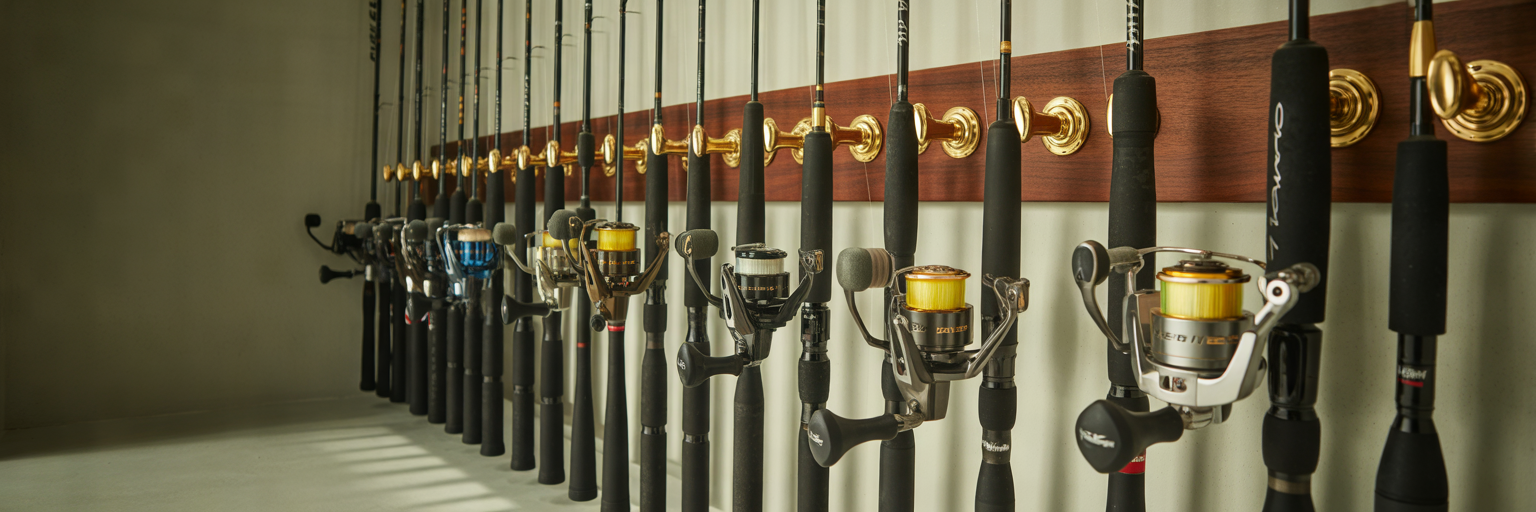
The maintenance discipline does not conclude with cleaning and treating the gear. The final, critical steps are inspection and proper storage, which secure the benefits of your efforts. Before storing, every component must be thoroughly dry. Trapped moisture, even after a meticulous cleaning, will create a humid microclimate that negates all your work and promotes corrosion from within. The ideal storage environment is a cool, dry, and well-ventilated space, away from direct sunlight.
Avoid common poor practices like storing rods and reels in damp, sealed bags or leaving them in unventilated boat compartments. These environments trap salt-laden air and moisture, creating a perfect breeding ground for corrosion. Before putting any reel away, there is one final, non-negotiable action: loosen the drag completely. Leaving the drag system tightened during storage causes permanent compression of the drag washers. This results in jerky, unreliable performance and a significant reduction in maximum drag pressure, a failure that often reveals itself at the worst possible moment. This complete maintenance regimen is essential for protecting the financial investment in high-quality equipment like our complete collection of offshore gear and ensuring absolute reliability and peak performance on the water.









