

Rigging trolling lures correctly is defined as assembling leaders, hooks, swivels, and lines so each lure runs at the right depth, angle, and speed to trigger strikes. A properly rigged trolling lure system covers every connection point from the main line to the hook, and each element affects how the lure behaves in the water. IGFA rules set the standard for offshore leader setups, recommending 400-pound-test monofilament for marlin leaders and 80-pound-test fluorocarbon for swordfish rigs. Most offshore captains run 3 to 5 lines across a spread, with trolling speeds between 6 and 8 knots for skirted lures. Get the rigging wrong, and even the best lure in the water will spin, dive, or run dead.
What does rigging trolling lures correctly require?
Rigging trolling lures correctly starts with the right materials. Without the proper tools and leader components, even the most expensive offshore lure will fail at the worst moment.
The core tools every angler needs are crimping pliers, aluminum or copper crimps, barrel swivels, snap swivels, and a quality leader spool. Main line is typically braided, running from 50-pound to 130-pound test depending on target species. The leader connects to the main line and takes the real punishment from fish, structure, and lure action.
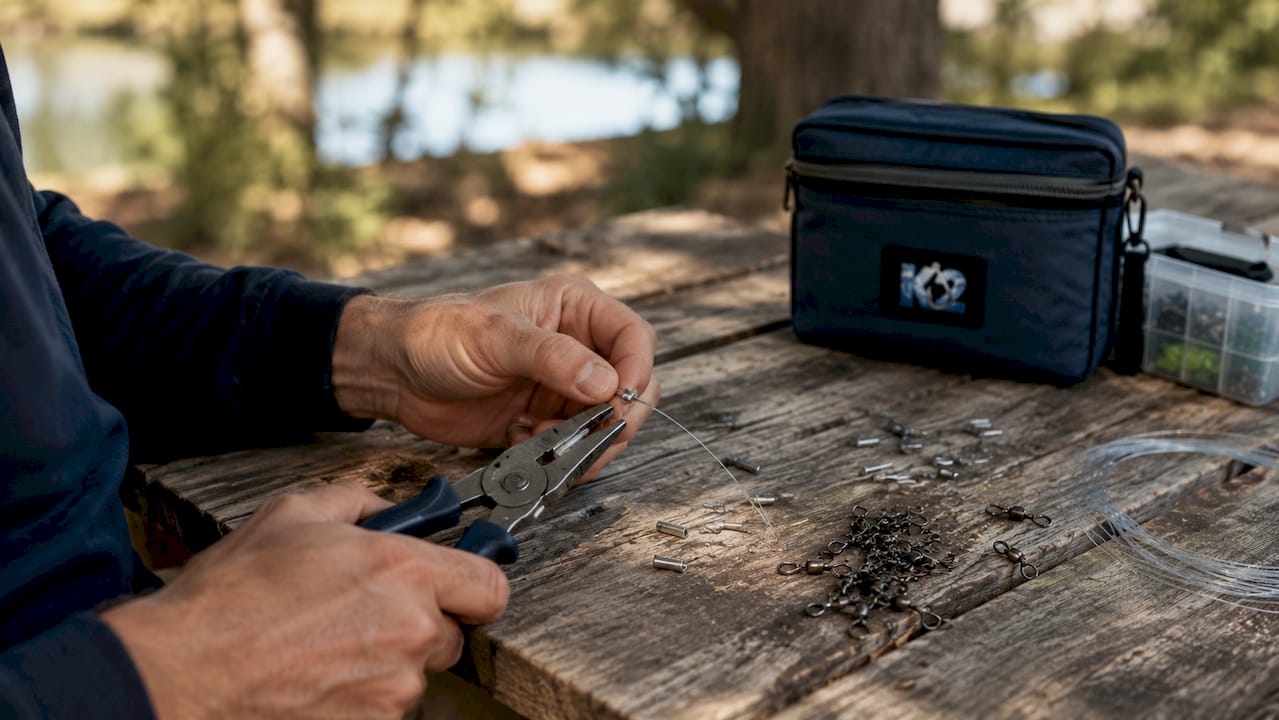
Leader material comparison
Leader material choice depends on water clarity and the species you are targeting. Fluorocarbon leaders provide abrasion resistance and near invisibility in clear water, making them the top choice for blue water fishing. Monofilament leaders are easier to tie and absorb shock better, which helps when fish make sudden runs close to the boat. Wire and cable leaders are non-negotiable for toothy species like wahoo and king mackerel.
| Leader Material | Typical Strength | Best Use |
|---|---|---|
| Fluorocarbon | 40–200 lb test | Clear water, marlin, tuna, swordfish |
| Monofilament | 30–400 lb test | General offshore, shock absorption |
| Single-strand wire | Up to 175 lb test | Slow to mid-speed wahoo, kingfish |
| Stranded cable | 175–600 lb test | High-speed wahoo, heavy rigs |
Single-strand stainless wire in #9 gauge suits slow to mid-speed trolling, while stranded cable in the 175 to 600-pound range handles high-speed wahoo rigs. That distinction matters because the wrong wire type can kink, break, or kill lure action at speed.
Pro Tip: Crimp leaders over 100-pound test rather than tying knots. Knots in heavy mono or fluorocarbon lose significant strength under load. For leaders under 100-pound test, a well-tied Bimini Twist or Albright knot holds reliably.
How do you rig trolling lures step by step?
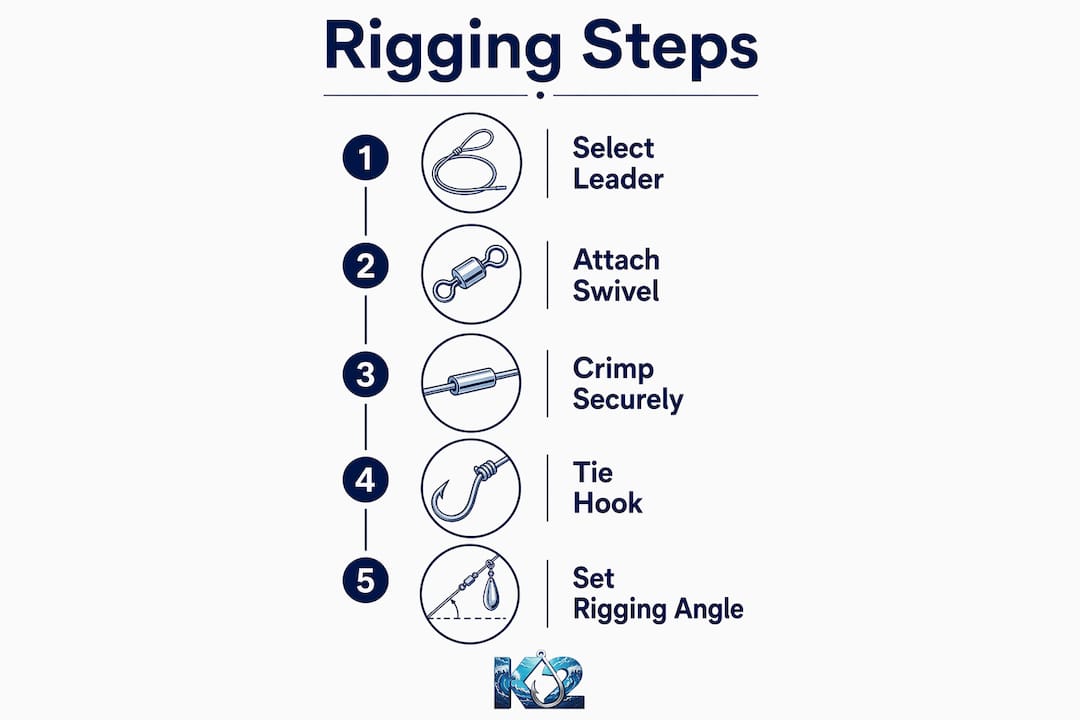
A repeatable rigging sequence produces consistent results. Skipping steps or improvising connections is how anglers lose fish and lures offshore.
-
Select your main line and leader strength. Match both to your target species. Chasing blue marlin requires heavier braid and a 200-pound-plus monofilament leader. Targeting mahi or smaller tuna allows lighter setups with 60 to 80-pound fluorocarbon.
-
Connect the leader to the main line. Use a double uni knot or an Albright knot for braid-to-mono connections. For heavy leaders over 100-pound test, use a crimped loop-to-loop connection with aluminum or copper crimps sized to your leader diameter.
-
Attach a quality swivel between the main line and leader. High-quality swivels reduce line twist and allow fast lure changes without re-rigging the entire leader. A snap swivel at the lure end lets you swap lures in seconds when conditions change.
-
Attach the lure to the leader at the correct rigging angle. The rigging angle is the angle at which the hook exits the lure head. A straight exit produces a lure that runs true and pops on the surface. An angled exit causes the lure to dive or spin, which kills action and reduces strikes.
-
Test the lure action before deploying. Drop the lure alongside the boat at trolling speed and watch it for 30 seconds. A correctly rigged lure pops, dives, and resurfaces in a rhythmic pattern. A spinning or corkscrewing lure signals a rigging angle problem or a swivel failure.
Leader length affects presentation directly. Longer leaders improve shock absorption and give the lure more natural movement, but they increase tangle risk in a multi-line spread. A standard offshore leader runs 15 to 30 feet for most skirted lures. Threading natural bait like ballyhoo behind a skirted lure adds scent and a natural profile, which consistently increases strikes on mahi and tuna.
Pro Tip: Rigging angle affects lure vibration more than most anglers realize. A lure head angled slightly downward at 10 to 15 degrees produces the most consistent surface action. Test this adjustment with your specific lure head shape, since flat-faced heads and cup-faced heads respond differently.
How do you set up a trolling spread for offshore fishing?
A trolling spread is the arrangement of multiple lines behind the boat, each running a different lure at a different distance and depth. The goal is to cover multiple feeding zones and present varied lure profiles simultaneously.
The standard offshore spread uses five positions: short rigger, long rigger, flat line, second flat line, and shotgun. Short rigger lines run 50 to 75 feet back, long riggers run 100 to 150 feet, flat lines run 40 to 100 feet, and the shotgun line runs 150 to 200 feet or more. Beginners should start with three lines to reduce tangle risk before adding complexity.
| Line Position | Distance Behind Boat | Recommended Lure Type |
|---|---|---|
| Short rigger | 50–75 feet | Large skirted lure or jet head |
| Long rigger | 100–150 feet | Medium skirted lure or feather |
| Flat line | 40–100 feet | Spoon, small skirted, or natural bait |
| Shotgun | 150–200+ feet | Small lure or natural bait |
Vary lure colors and types across the spread to create diverse feeding stimuli. Running four identical lures looks unnatural to predatory fish. A mix of bright colors like pink and chartreuse in the short positions and darker or natural colors in the longer positions covers more visual triggers. Check out K2fishing’s guide on building a trolling spread for detailed position-by-position advice.
Pro Tip: Adjust your spread based on sea conditions. In rough water, pull lures closer to the boat so they stay in the wave troughs and maintain action. In flat calm water, extend distances to keep lures out of the prop wash.
How does speed affect trolling lure performance?
Trolling speed is the single most overlooked variable in lure rigging and presentation. The right speed for one lure type will kill the action of another.
Optimal trolling speeds break down by lure type: 6 to 8 knots for skirted baits, 4 to 6 knots for spoons, and 12 knots or higher for high-speed wahoo trolling with bullet-head lures. Running a spoon at 8 knots causes it to spin and lose its wobble entirely. Running a skirted lure at 4 knots makes it sink and drag rather than pop on the surface.
GPS speed is not the same as effective trolling speed. Currents push or pull the boat relative to the water, so a GPS reading of 7 knots could mean 5 knots or 9 knots of actual water speed. Watch the lure’s bubble trail and surface action to judge speed accurately. A correctly running skirted lure pops in and out of the surface with a consistent bubble trail.
Water clarity also dictates leader material. Fluorocarbon is the preferred choice in clear blue water because fish can see monofilament and wire at close range. In stained or murky water, wire and cable leaders are acceptable since visibility is already reduced.
Common rigging and speed problems to watch for:
- Lure spinning: Caused by a failed swivel, incorrect rigging angle, or running too fast for the lure head design.
- Lure diving and not surfacing: Leader is too heavy, rigging angle is too steep, or speed is too slow.
- Lure skipping out of water: Speed is too high for the lure head, or the leader is too light to anchor the lure properly.
- Line twist building up: Swivel is undersized or has failed under load. Replace swivels after every heavy fish.
For species-specific rigging adjustments, the lure head shape, hook size, and leader strength all change depending on whether you are targeting marlin, wahoo, or tuna.
What I’ve learned from years of watching lures instead of instruments
The biggest mistake I see experienced anglers make is trusting their GPS over their eyes. Speed instruments give you a number. The water gives you the truth.
Every time I have changed speed based on what the lure was doing rather than what the GPS said, I have caught more fish. A lure that is barely popping needs more throttle. A lure that is skipping wildly needs less. No instrument tells you that. You have to watch.
The second thing I have learned is that rigging is not a one-time task. Connections fail. Crimps work loose. Swivels corrode. I check every connection before each drop-back and after every fish. That habit has saved more rigs than any premium component ever did.
The third lesson is harder to accept: there is no universal rig. The setup that crushed wahoo off the Bahamas last season may do nothing in the Gulf Stream this season. Conditions, bait schools, water temperature, and current all shift what fish want. The anglers who adapt their leader material, lure type, and spread position to what they observe on the day consistently outfish those who run the same spread every trip. K2fishing’s offshore trolling lure guide covers this adaptability principle in depth, and it is worth reading before your next trip.
Experiment. Take notes. Come back with better data than you left with.
— Daniel
K2fishing lures built for the rigs you just learned
Rigging technique only works when the lure itself is built to perform. K2fishing handcrafts offshore trolling lures from abalone resin in the USA, producing a brightness and flash that standard plastic lures cannot match.
The Red Abalone Big Eye Lure at 7.5 inches is built for the short rigger and flat line positions, where marlin and tuna strike hardest. The Ghost White Abalone Lure runs clean in the long rigger position and produces in clear blue water where visibility is high. Every K2fishing lure ships ready to rig with durable hardware and is tested in real offshore conditions before it reaches your hands. Browse the full lineup at K2fishing.com and match the right lure to every position in your spread.
Key takeaways
Rigging trolling lures correctly requires matching leader material, rigging angle, swivel quality, and trolling speed to the specific lure type and target species.
| Point | Details |
|---|---|
| Leader material selection | Use fluorocarbon in clear water and wire or cable for toothy species like wahoo. |
| Crimp vs. knot | Crimp leaders over 100-pound test; tie knots on lighter leaders for reliable strength. |
| Rigging angle matters | A 10 to 15-degree downward angle on the hook exit produces the most consistent surface action. |
| Spread distances | Run short riggers at 50–75 feet and shotgun lines at 150–200 feet for a full offshore spread. |
| Watch the lure, not the GPS | Currents make GPS speed misleading; adjust throttle based on actual lure action and bubble trail. |
FAQ
What is a rigged trolling lure system?
A rigged trolling lure system is the complete assembly of main line, leader, swivels, and hook attached to a trolling lure so it runs at the correct depth and angle. Every component from the braid to the hook point affects how the lure behaves at trolling speed.
How does rigging angle affect lure action?
The rigging angle controls the direction the lure head faces at speed, which determines whether the lure pops on the surface, dives, or spins. A hook exit angled slightly downward at 10 to 15 degrees produces the most consistent rhythmic action for skirted offshore lures.
Why do tournament anglers pre-rig their lures?
Pre-rigged lures allow anglers to swap a damaged or unproductive lure in seconds without re-tying leaders or re-crimping connections. That speed keeps lines in the water longer during peak feeding windows, which directly increases hookup opportunities during a tournament day.
What leader strength should I use for marlin?
IGFA standards recommend 400-pound-test monofilament for marlin leaders in class tackle fishing. For lighter setups outside IGFA rules, most captains run 200 to 300-pound monofilament to balance strength with lure action.
What trolling speed works best for skirted lures?
Skirted lures perform best at 6 to 8 knots of water speed. Watch the lure’s bubble trail and surface pop rather than relying on GPS, since currents can make your actual water speed significantly different from your displayed boat speed.