

In big-game fishing, the moment of truth is the hookup, not the strike. Meticulous preparation separates successful anglers from those with stories about the one that got away. Understanding how to rig trolling lures correctly is the discipline that transforms a potential bite into a secured catch. The lure’s primary function is attraction, but it is the integrity of the rig that ensures capture. Most failures, from poor lure action and fouled hooks to component breakage under extreme load, originate from improper rigging techniques.
An expertly executed offshore trolling lure setup delivers the consistency and predictability required for high-stakes angling. The lure and rig must function as a single, purpose-built system designed for maximum performance. This foundational principle of big game lure rigging is not about luck; it is about eliminating variables through precision and quality components. The following sections detail the materials, techniques, and checks necessary to achieve this professional standard.
Selecting High-Performance Rigging Components
Building a reliable marlin rig begins with selecting materials engineered to withstand immense force and abrasion. The components you choose are not merely accessories; they are the critical links between you and a fish of a lifetime. Every element, from the leader to the hook, must be chosen for its specific performance characteristics.
Leader Material: Monofilament vs. Fluorocarbon
For heavy-tackle marlin fishing, 300 to 400-pound test monofilament is the industry standard for good reason. It provides an exceptional balance of durability, high abrasion resistance against a marlin's bill, and a degree of controlled stretch that acts as a shock absorber during violent strikes. This forgiveness can be the difference between a pulled hook and a successful hookset. While fluorocarbon offers the advantage of near-invisibility in the water, its drawbacks in this application are significant. It is considerably more expensive and its inherent stiffness can impede the natural swimming action of a trolling lure.
| Factor | Monofilament | Fluorocarbon |
|---|---|---|
| Abrasion Resistance | Excellent; withstands bill rash | Very high, but can be brittle |
| Stretch | Moderate; acts as a shock absorber | Low; less forgiveness on strike |
| Visibility | Visible in water | Nearly invisible |
| Cost | Cost-effective | Significantly more expensive |
| Stiffness & Handling | Supple and easy to crimp | Stiff; can impede lure action |
Hook Selection: The Shift to Single-Hook Rigs
Hook selection is governed by a critical rule: the gape of the hook must be wider than the diameter of the lure head. This ensures the hook point has a clear path to find purchase. For standard 12 to 16-inch lures, such as the high-performance options in our collection of large resin lures, hook sizes typically range from 9/0 to 12/0. As noted in expert guidance from sources like Marlin Magazine, the professional consensus has shifted decisively toward the single hook marlin rig. This configuration offers superior lure balance, reduces the chances of the lure fouling on itself, and improves safety for both the crew during handling and the fish upon release.
Mastering Single-Hook Rigging Techniques
The mechanics of assembling a professional-grade rig are what guarantee its performance. The objective is to create a system where the hook is perfectly positioned for a solid hookset the moment a marlin strikes. This is achieved through a series of precise, repeatable steps that eliminate chance from the equation.
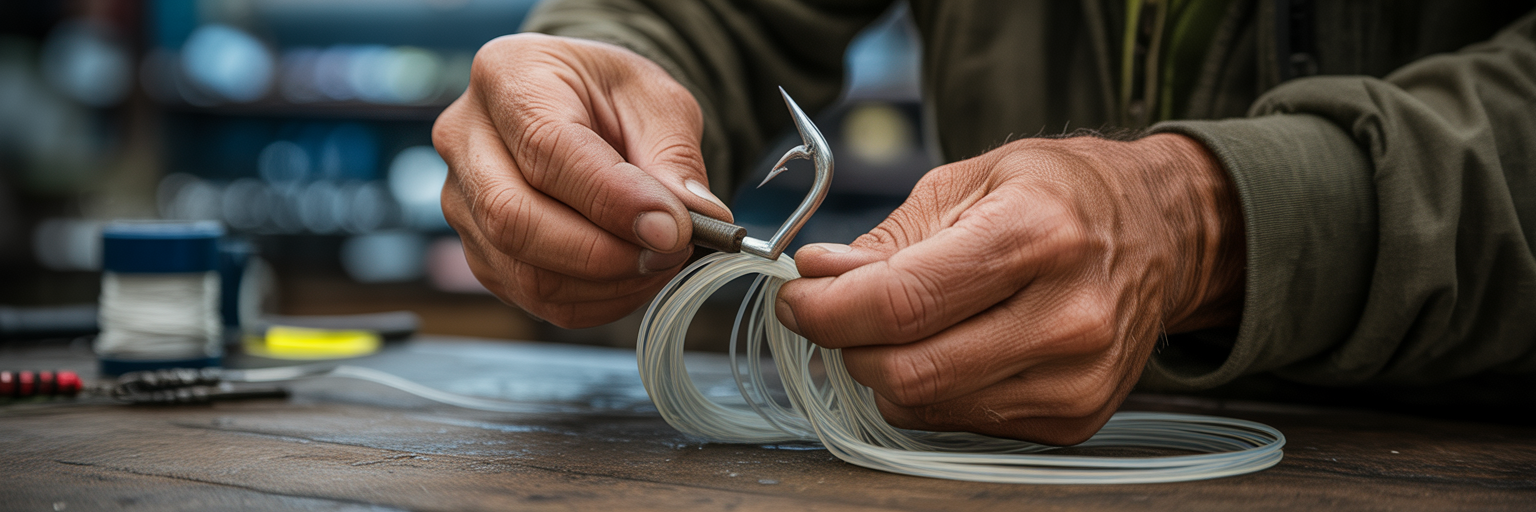
The "stiff rig" is the cornerstone of modern single-hook rigging. Its purpose is to lock the hook in a fixed, upright position, preventing it from spinning, flipping, or fouling in the lure's skirts. This ensures the hook point is always oriented for maximum penetration. Building this rig requires attention to detail.
- Establish Hook Position: The hook should be positioned so its eye is just inside the back of the lure skirt. This placement ensures the hook is concealed yet ready to engage.
- Create the Stiff Connection: The core of the technique involves using heat-shrink tubing over the leader and hook eye. After crimping the hook to the leader, a section of tubing is slid over the connection and carefully heated. As it shrinks, it creates a rigid link that holds the hook firmly in line with the leader.
- Ensure Upright Orientation: For ultimate performance, the hook point must ride up. Advanced methods to guarantee this include adding a small keel weight to the hook shank or using specialized ball-bearing swivels that are integrated into the stiff rig. This small adjustment forces the hook into the optimal position behind the lure.
Mastering these techniques is a hallmark of a serious angler. This commitment to performance-driven preparation reflects the same philosophy we apply to every lure we build at K2Fishing, where precision engineering delivers proven results on the water.
Adapting Rigs to Lure Head Designs
A perfectly constructed rig is only effective if it complements the lure it is paired with. The rig and lure must function as a single, harmonious system, and a lure's head shape dictates its specific rigging needs. Failing to account for this relationship can sabotage a lure's intended action and drastically reduce its effectiveness.
Different marlin fishing lures require distinct rigging considerations. For aggressive, cup-faced "chugger" lures, such as our Blue Large Resin Abalone lure, exact hook placement is critical. The rig must be positioned to preserve the lure's signature surface commotion and bubble trail without interfering with its side-to-side swimming motion. Even a slight imbalance can cause the lure to spin out, rendering it useless.
In contrast, bullet and slant-head designs are often more forgiving, but they still demand precision. Lures like our Flamingo Abalone Bullet Lure are designed for straight, high-speed tracking or a specific diving action. A well-balanced rig is essential to maximize this performance. Another crucial detail is proper skirt seating. A skirt that is not securely fastened can wash out over the hook, destroying the lure's profile and fouling the rig. The rig must enhance, not hinder, the hydrodynamic properties engineered into the lure head.
Perfecting Connections and Pre-Deployment Checks
The final steps in rigging are dedicated to quality control. Even the best components and techniques are worthless if the connections fail. The crimped connection is the most common point of failure in an offshore trolling lure setup, and it demands absolute precision. There is no room for error when a tournament win or a personal best is on the line.
Improper crimping presents two distinct dangers:
- Under-compression: A crimp that is too loose will allow the leader to slip under load, resulting in a lost fish and a lost lure.
- Over-compression: A crimp that is too tight can crush the monofilament, creating a weak point that is likely to snap under the sudden pressure of a strike.
Using a premium bench or hand crimper and precisely matching the crimp sleeve to the leader diameter is non-negotiable for a tournament-grade connection. As experts featured on platforms like In The Spread consistently demonstrate, the final, mandatory step is to test the fully rigged lure. By pulling it alongside the boat at trolling speed, you can verify that it tracks true and swims correctly without spinning. This pre-deployment check ensures your lure is performing perfectly before it ever enters the strike zone.









