

Introduction
The pursuit of marlin is a discipline where success is measured in fractions of a degree and seconds of reaction time. The difference between a productive day and an empty one often comes down to the final few feet of line. Selecting the right trolling lures for marlin is a science of hydrodynamics, and this guide provides a professional framework for choosing lures based on performance.
Fundamentals of Selecting Trolling Lures for Marlin
Before considering a single color or shape, the professional angler evaluates a lure’s inherent action and its stability at trolling speed. These two factors are the foundation of a successful presentation. The primary goal is to select a lure that performs optimally in the given sea conditions. A common mistake is choosing a lure based on its appearance in hand rather than its proven performance in the water.
The relationship between lure aggression and sea state is critical. Calm conditions allow for more active, erratic lures that create their own disturbance to attract attention. Conversely, rough seas demand more stable, straight-running lures that can maintain their depth and action without blowing out of the water. Your trolling spread should function as a coordinated menu, offering various actions to appeal to a marlin’s different feeding moods.
Ultimately, lure selection is a dynamic process. It requires constant observation of how each lure is running and a willingness to make adjustments based on water conditions and the behavior of the fish. A static, unchanging approach is the enemy of consistent success.
Matching Lure Head Shape to Trolling Position
The engineering of a lure's head dictates its action in the water. Understanding the specific function of different marlin lure head shapes is essential for building a spread where each component works in harmony. The placement of each lure is not arbitrary but a calculated decision to maximize its inherent action.
- Slant-Headed Lures: Engineered with an angled face, these lures produce an aggressive, side-to-side swimming motion combined with a cycle of diving deep and surfacing with a splash. This erratic action makes them highly visible. They are best placed on the short corner or short rigger positions in calm to moderate seas where their action can be fully expressed.
- Cup-Faced 'Chugger' Lures: The concave face on these lures catches water, creating a distinct 'pop' and a heavy, consistent smoke trail of bubbles. This commotion draws attention from a distance. Their stability and noticeable action make them extremely versatile and effective in almost any position in the spread.
- Bullet-Headed Lures: These lures are designed for a subtle, straight-running action that perfectly mimics a panicked baitfish attempting to escape. Their streamlined profile allows them to run true just below the surface. They are designated for the long rigger and shotgun positions, presenting an easy, natural-looking target. For anglers seeking a proven straight-runner, a lure like the K2Fishing Blackfin Bullet is engineered for this exact purpose.
- Jet-Headed Lures: Featuring channels drilled through the head, these lures force water through, creating a unique and highly visible bubble trail. This design adds weight and stability, allowing the lure to run straight and slightly deeper. Jets are ideal for the shotgun position in rough water or for higher trolling speeds.
| Lure Head Shape | Primary Action | Ideal Trolling Position | Optimal Sea Conditions |
|---|---|---|---|
| Slant Head | Aggressive, erratic dive and pop | Short Corner, Short Rigger | Calm to Moderate |
| Cup-Face (Chugger) | Loud pop, heavy bubble trail | Any Position (Versatile) | All Conditions |
| Bullet Head | Subtle, straight-running | Long Rigger, Shotgun | Calm to Moderate |
| Jet Head | Straight-running with bubble jets | Shotgun, Long Rigger | Moderate to Rough |
Strategic Use of Lure Size and Color
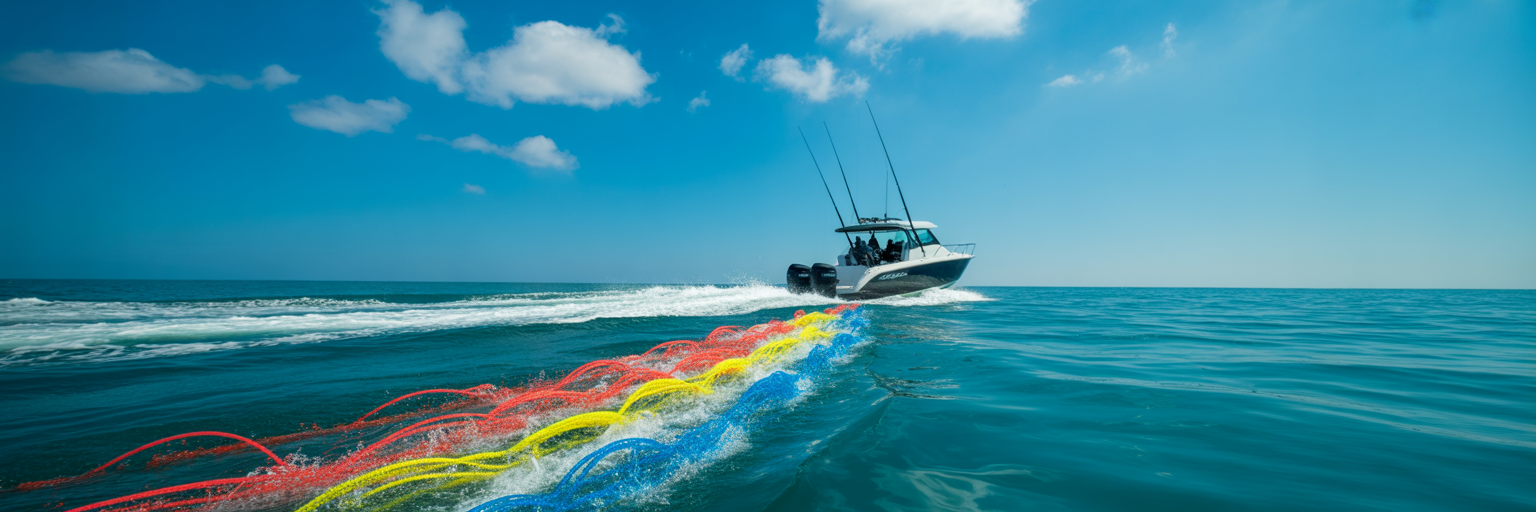
While head shape determines action, size and color are tactical variables used to trigger a strike. The professional approach moves beyond simple preference and applies these elements with strategic intent. The guiding principle is to adapt to the prevailing environmental conditions and local forage.
In clear, bright conditions, the strategy is to 'match the hatch' with natural patterns. Lures with an abalone resin design, like the K2Fishing Blue Large Resin Abalone lure, provide an unmatched flash that is highly effective in these conditions. Colors like blue, silver, and green mimic common baitfish. In overcast or murky water, high-contrast colors such as black, purple, and pink create a more visible silhouette against the surface light.
Varying lure sizes within the spread imitates the diversity of a natural bait school. A general rule is to run larger, more aggressive lures closer to the boat in the corner positions, with progressively smaller lures placed further back on the riggers and in the shotgun position. This presents a dynamic and realistic target. Researching local baitfish and targeting specific marlin species, such as using larger lures for blue marlin and smaller profiles for white marlin, is a hallmark of a professional angler.
Constructing a High-Performance Trolling Spread
A well-constructed spread is more than a random assortment of lures. It is a cohesive system designed to present a compelling scenario to a predator. Achieving the best marlin lure spread involves assigning a specific role to each of the five key trolling positions based on the principles of lure action.
A sample professional spread using advanced offshore trolling techniques would be structured as follows:
- Short Corner: A large, aggressive slant-head or chugger. This lure runs close to the transom wash and teasers, creating significant commotion to attract a marlin into the spread.
- Long Corner: A medium-sized, active lure that complements the short corner. A cup-faced lure or a slightly less aggressive slant-head works well here.
- Short Rigger: A medium-sized lure with a consistent, predictable action. This is often a chugger or a stable slant-head that runs cleanly in its own water.
- Long Rigger: A straight-running bullet or a small chugger. This lure presents an easy, vulnerable target for a fish that may be hesitant to approach the boat.
- Shotgun: The longest and stealthiest position, reserved for a bullet or jet head that mimics a lone, fleeing baitfish.
Skirt material also plays a role. Lightweight vinyl skirts enhance action in calm water, while heavier rubber skirts provide stability in rough seas. As trolling experts from Sport Fishing Magazine emphasize, the goal is to make the entire spread swim as a single, coordinated unit. Finally, staggering the distances of each lure is critical to allow for sharp turns without creating a tangled mess. Anglers looking to build their arsenal can browse a full range of high-performance big game fishing lures to fill every position in their spread.
Advanced Rigging for Maximum Hookup Ratios
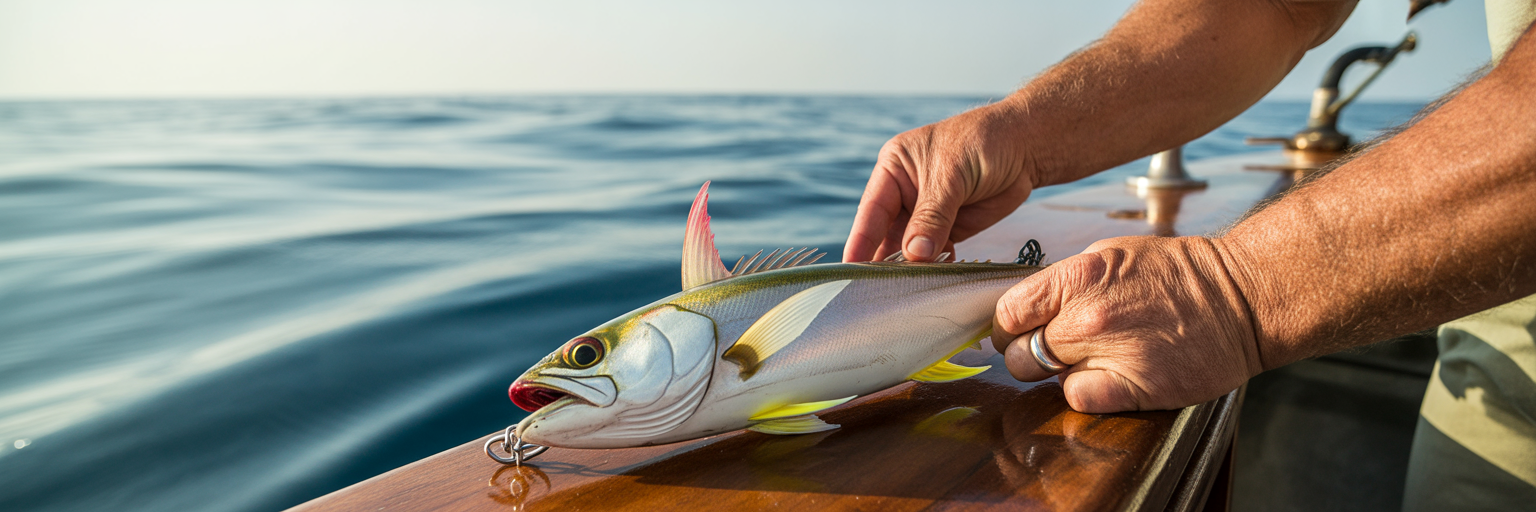
A marlin strike is a violent event that tests every component of your tackle. Answering the question of how to rig marlin lures with technical precision is what separates a missed opportunity from a successful catch. The modern single-hook stiff rig is the professional standard for a reason. It provides a predictable hook-point orientation, leading to a solid, secure hookset in the corner of the jaw and dramatically increasing your landing ratio.
Matching the hook size to the lure is a critical detail. A reliable rule of thumb is that the gape of the hook should approximate the diameter of the lure head. This ensures the hook point rides in the optimal position without impeding the lure's action. In contrast, older double-hook soft rigs can foul easily and often result in less secure hookups.
The terminal connection is a non-negotiable point of focus. Every hook must be file-sharpened to a needle point before deployment. All connections should be made with premium, abrasion-resistant leader material and secured with professionally applied crimps. As detailed by the rigging experts at In The Spread, the entire system—from hook point to leader connection—must be flawless to withstand the power of a large blue marlin. There is no room for compromise.
Adapting Your Spread for Consistent Success
The most effective trolling spread is not a fixed setup but a dynamic system that requires constant evaluation and adjustment. Success on the water depends on your ability to read conditions and respond accordingly. Key triggers for making a change include shifts in wind, current, or water clarity.
The most important indicator, however, is a lack of strikes. If the spread is not producing, do not hesitate to experiment. Swap a lure from the rigger to the corner, change a color pattern, or alter your trolling speed to find the day's preferred presentation. The "hot spot" in the spread can change from one day to the next.
Finally, the hallmark of a truly professional operation is meticulous record-keeping. Logging which lures, colors, positions, and sea conditions produce strikes transforms anecdotal success into a repeatable, data-driven strategy. This transforms anecdotal success into a repeatable, data-driven strategy. For anglers who value collaboration and sharing such data, connecting with our network of professional partners can provide invaluable insights.









