Mastering Advanced Trolling Presentation
In big-game fishing, the margin between a productive day and a record-breaking one is defined by precision. The most consistent anglers understand that success is not accidental but the direct result of a meticulously engineered system. An Advanced Trolling Presentation is this system. It moves beyond simply dragging lures through the water, treating the entire spread as a cohesive, hydrodynamic illusion of live prey. This approach requires a complete synthesis of lure choice, spread geometry, boat speed, and sea conditions, all working in concert to create an irresistible signal for apex predators.
This is not a matter of luck. It is the art and science of deception, where every component has a purpose. The objective is to present a scenario so convincing that species like marlin, tuna, and wahoo are compelled to strike. For the serious angler, mastering this holistic strategy is the definitive path to superior results. The following sections detail the technical components required to build and execute a presentation that performs at the highest level, turning opportunity into consistent offshore success.
Optimizing Lure Dynamics and Action
The performance of an individual lure is the foundation of the entire presentation. Each lure must run true to its design specifications to contribute effectively to the spread. This requires a technical understanding of lure dynamics and a commitment to precise tuning.
Achieving the Ideal Lure Action
Different lures are engineered for specific actions to trigger distinct predatory responses. For marlin, the classic "smoke-and-pop" cycle is a proven producer. This involves the lure diving just below the surface, creating a thick smoke trail, before surfacing with an aggressive splash. As noted by professionals in Sport Fishing Magazine, achieving this rhythmic dive and surface action every three to five seconds is a primary trigger for aggressive strikes. This consistent rhythm is what separates a well-tuned lure from a simple piece of hardware.
Tuning Lures for Peak Performance
Even the best big game fishing lures require tuning to perform correctly based on rigging and conditions. A lure that spins, tumbles, or "blows out" of the water is ineffective. To correct improper action, follow a systematic process:
- Adjust Leader Placement: Ensure the leader exits the lure head from the center. An off-center exit point will cause the lure to pull to one side.
- Check Hook Rigging: The hook set must be aligned perfectly with the lure body. A misaligned hook can act as a rudder, causing the lure to spin or track incorrectly.
- Modify Pin Settings: For lures with adjustable pin rigging, moving the pin can alter the lure's pivot point, changing its action from more aggressive to more stable.
Matching Speed to Lure Design
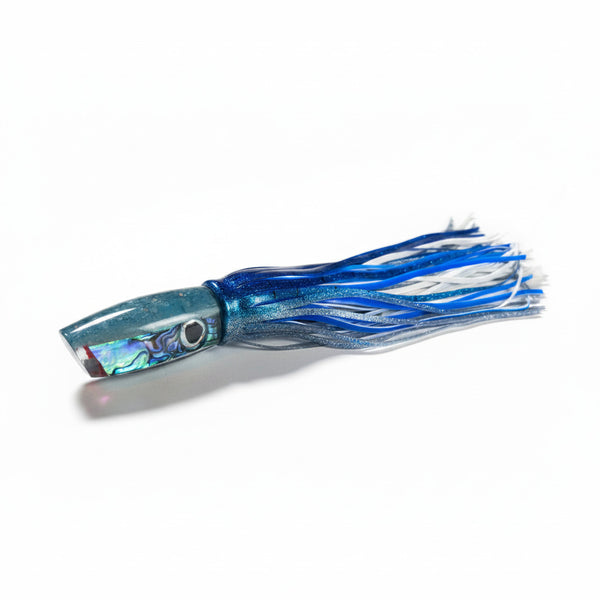
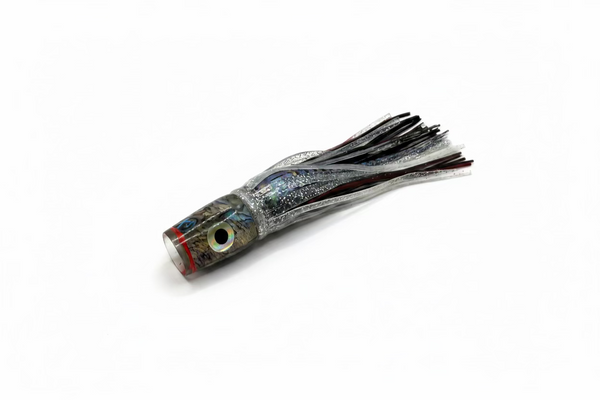
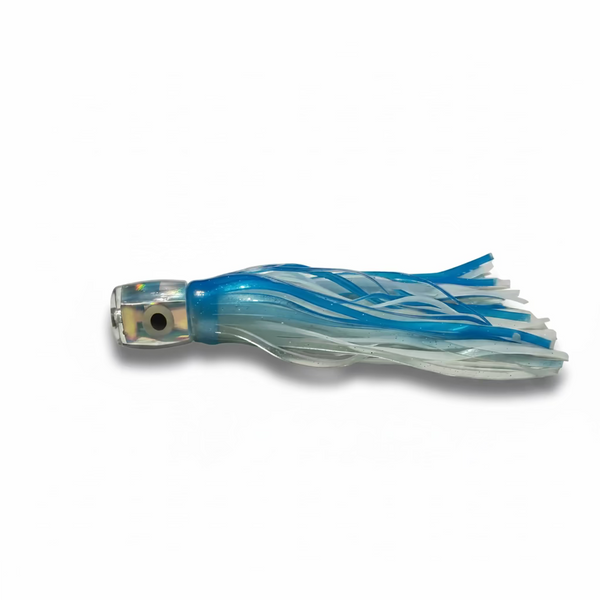
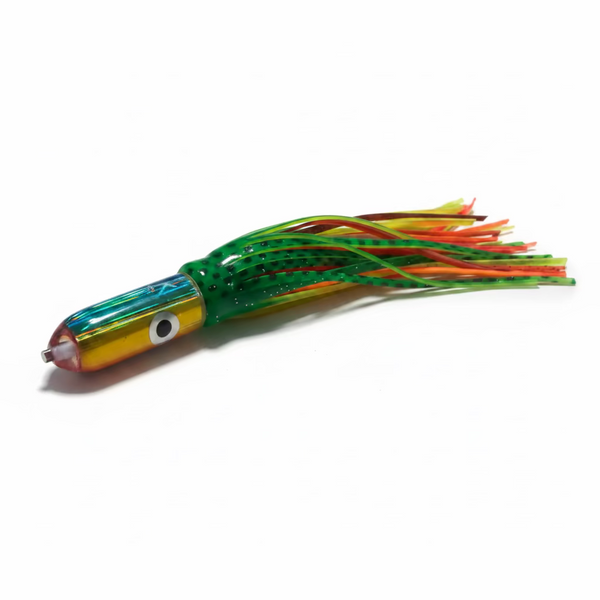
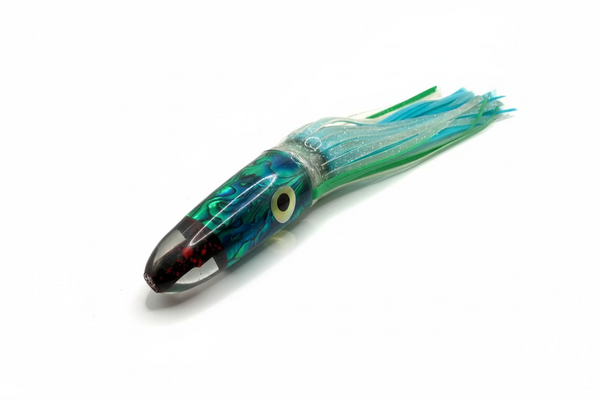
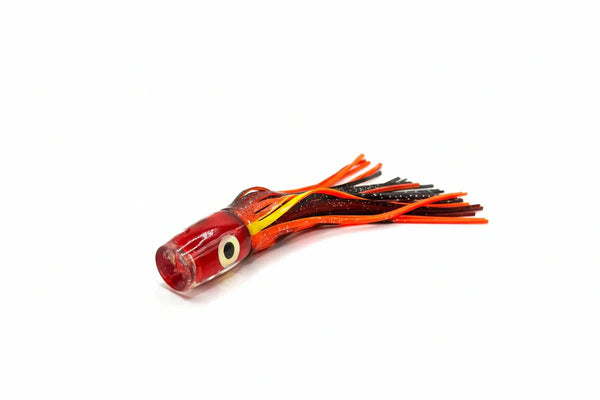
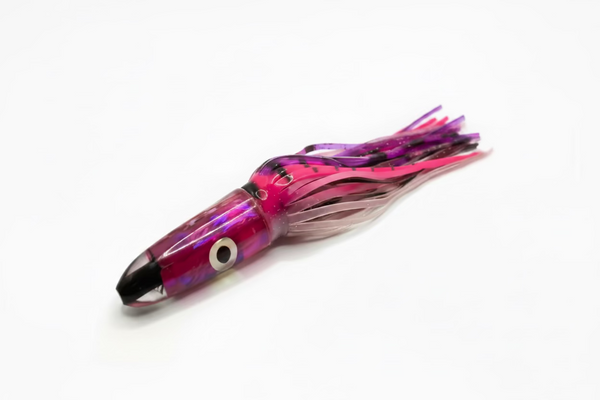
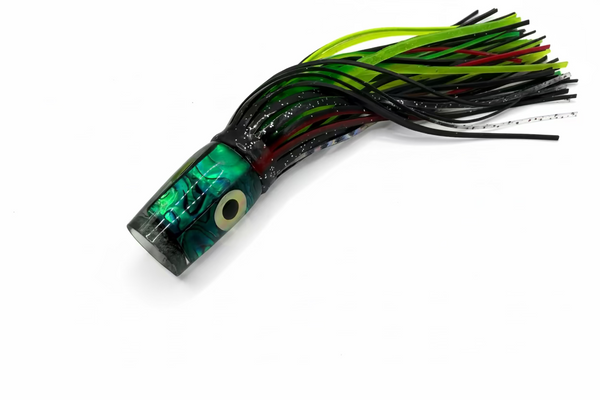
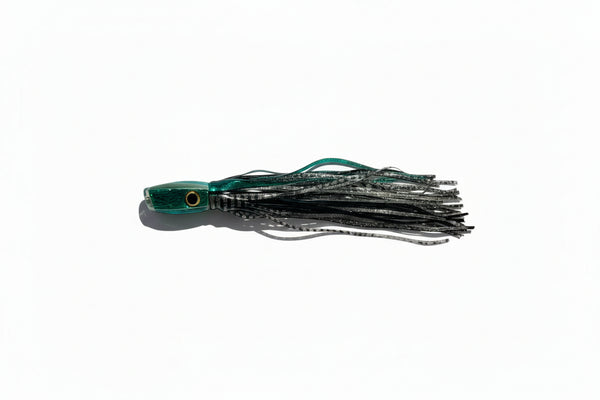
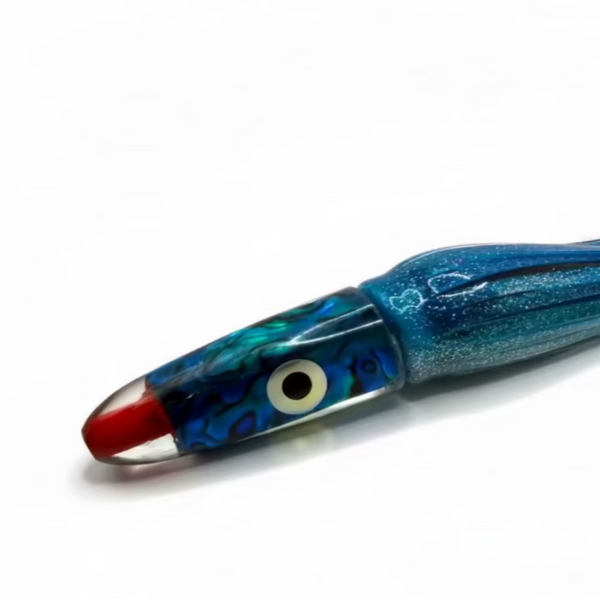
The relationship between trolling speed and lure design is critical. Most offshore trolling occurs between 5 and 8 knots, but the optimal speed depends on the lure's head shape. The unique design of large resin lures, like those in our collection, is engineered to create a specific disturbance that attracts trophy fish at these speeds. Slanted heads require a certain velocity to achieve their signature side-to-side swimming action, while jets and bullets can often handle higher speeds. Constant observation from the boat is non-negotiable to ensure every lure is swimming at its peak potential.
Engineering a High-Performance Spread Geometry
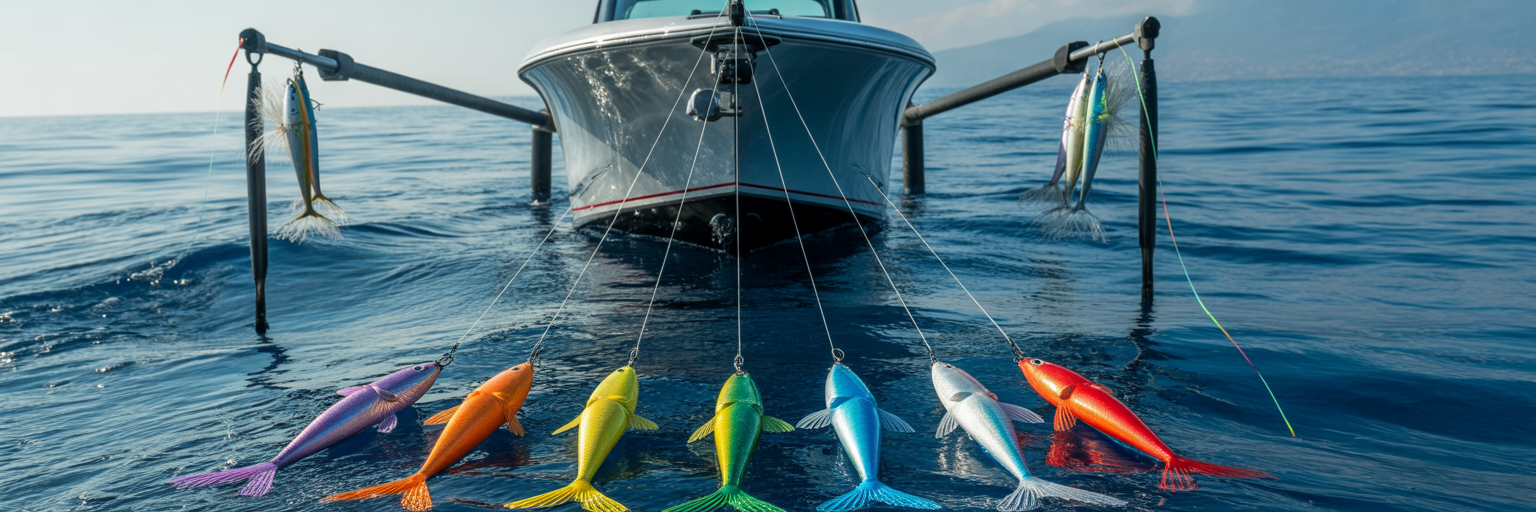
With individual lures tuned for performance, the next step is arranging them into a strategic formation. The geometry of the spread is designed to create a system that is far more compelling than the sum of its parts.
Mimicking a Natural Bait School
A well-designed marlin trolling spread does not present a random collection of targets. Instead, it mimics a panicked school of baitfish. This illusion triggers a competitive feeding response in predators, encouraging them to single out a target from the "school" and strike with commitment. The entire presentation, from the teasers to the hook baits, should work together to create this dynamic and chaotic scene.
Positioning for Maximum Impact
Standard spread architecture places lures in specific zones for maximum effect. Larger, more aggressive lures are typically run on the short corner and short rigger positions, close to the boat. Their high-impact action draws fish into the spread. Smaller, more subtle lures are positioned further back on the long riggers and in the shotgun position, representing stragglers that are easy targets for an interested predator. Understanding how to set up trolling lures in this formation is fundamental to creating a productive spread.
The Importance of Clean Water
For a lure to be seen, it must run in an undisturbed lane of water. "Clean water" refers to the clear paths outside the boat's prop wash and wake turbulence. Using outriggers to spread the lines and adjusting halyard heights to change the entry angle are key techniques. This ensures each lure is fully visible and its action is not dampened by aerated water, giving predators a clear target.
Integrating Teasers and Dredges
Non-hooked elements are not accessories but integral components of an advanced presentation. Dredges and teaser chains create a large visual footprint and generate commotion that simulates a significant bait presence. They serve to attract predators from a distance and guide them toward the hooked lures within the spread, dramatically increasing the presentation's effective range.
Adapting Your Presentation to Sea Conditions
A static trolling strategy will fail in the dynamic offshore environment. The most effective anglers continuously adapt their presentation to prevailing sea conditions. Lure performance, spread integrity, and boat handling must all be adjusted to maintain effectiveness, whether in calm seas or challenging chop.
The ability to read the water and make tactical changes is paramount. For example, trolling in rough seas requires a more compact and controlled approach to prevent tangles and maintain lure action. Conversely, calm conditions may demand a wider, faster presentation to create artificial excitement. Wave direction also dictates performance. A head sea can cause lures to blow out, requiring a reduction in speed, while a following sea may necessitate an increase in speed to keep lures from losing their action. Success hinges on your ability to read the environment and make adjustments. Checking reliable sources for tides and weather, like those found on HookCurrent, is a fundamental part of pre-trip planning for any serious offshore angler.
| Factor | Strategy for Rough Seas | Strategy for Calm Seas |
|---|---|---|
| Spread Distance | Bring spread closer to the boat | Lengthen the spread for a wider footprint |
| Lure Selection | Heavier, deeper-diving lures (e.g., jets, bullets) | Lighter, high-action lures (e.g., slanted heads) |
| Trolling Speed | Reduce speed to maintain control | Increase speed to create commotion |
| Line Count | Reduce lines to prevent tangles | Maximize lines to cover more water |
Ultimately, constant observation is the rule. The goal is to ensure every lure continues to swim correctly, regardless of the conditions, by making proactive adjustments to the spread and boat speed.
Executing Precision Boat Handling and Maneuvers
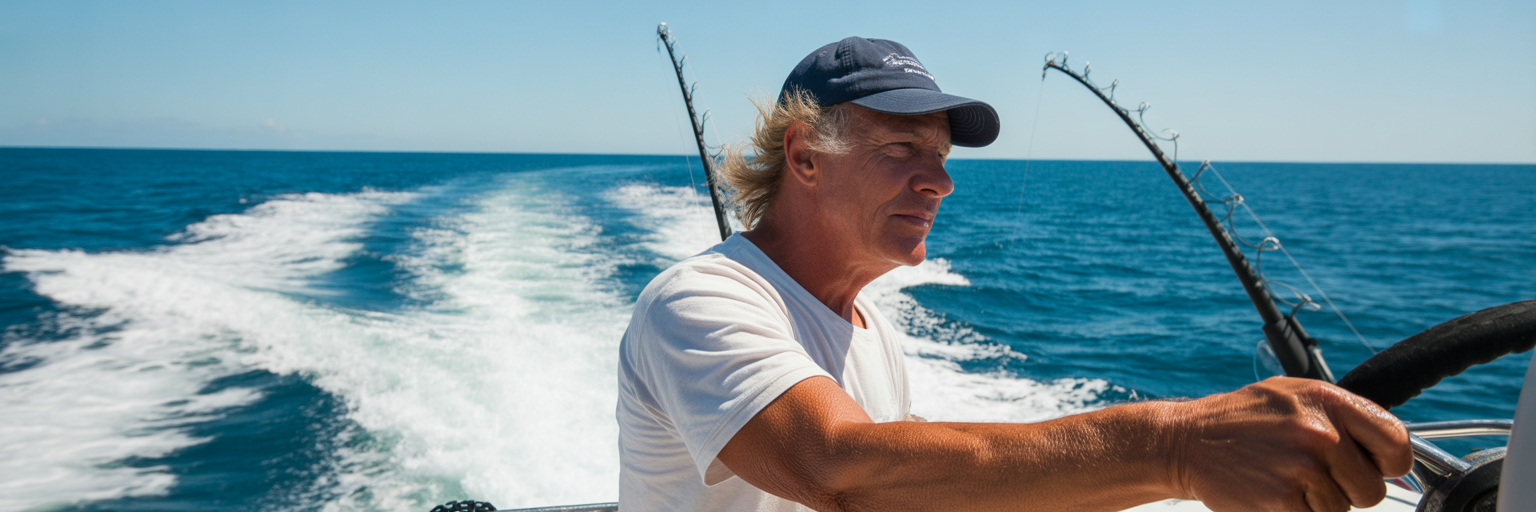
The captain's role is as critical to the success of offshore trolling techniques as the lures themselves. Precision boat handling is not a passive activity. It is the dynamic element that maintains the integrity of the spread and converts strikes into hookups. Expert helmsmanship involves proactive, constant micro-adjustments to keep every lure working in its optimal state.
Maintaining Spread Integrity in Turns
Sharp turns are the enemy of a well-run trolling spread. When turning, the inside lines slow down and sink, risking tangles, while the outside lines accelerate and can "blow out" of the water. Executing wide, gentle arcs is essential to keep all lures swimming correctly and at their designated depths. This maintains the carefully constructed illusion of a bait school and ensures the presentation remains effective through course changes.
Post-Hookup Maneuvers
The moments after a strike are critical. Once a fish is hooked, the captain's immediate responsibility is to clear a path for the angler. This is typically achieved by turning the boat slightly toward the side of the hooked fish. This maneuver swings the remaining lines and teasers away from the fight, preventing tangles and allowing the angler to work the fish with minimal obstruction. It is a coordinated and decisive action that requires clear communication between the helm and the cockpit.
The Bait-and-Switch Tactic
The bait-and-switch is one of the most advanced and exciting maneuvers in trolling. It involves teasing a fish to the boat with a hookless lure, then pulling the teaser away at the last second as an angler presents a pitch bait. This requires perfect timing and coordination between the captain, who positions the boat, the crew member managing the teaser, and the angler. These advanced maneuvers are perfected by the seasoned captains and crews we are proud to call our partners.
The Principle of Constant Refinement
Mastery in offshore fishing is not a final destination. It is a process of continuous adaptation and refinement. There is no single "perfect" presentation, because sea conditions, light levels, and fish behavior are in a constant state of flux. The most successful anglers are perpetual students of the ocean, always observing, analyzing, and adjusting their strategy based on real-time feedback.
This commitment to improvement requires a systematic approach to experimentation. To build a reliable knowledge base and avoid drawing false conclusions, it is essential to be methodical:
- Change only one variable at a time. Whether it is a lure's color, position in the spread, or a minor change in trolling speed, isolating the variable is the only way to know what truly made a difference.
- Keep a detailed log. Record the date, sea conditions, location, and what produced results. Note which lures were hit, in what position, and at what time of day.
- Analyze the data over time. Patterns will emerge from your logbook, providing a powerful predictive tool for future trips under similar conditions.
This disciplined process transforms experience into expertise. A commitment to refinement requires having a versatile arsenal. Explore our full collection of handcrafted lures to find the right tools for your next experiment. The ultimate advantage belongs to the angler who never stops learning.