Optimizing Your Offshore Trolling Setups
Success in big-game fishing is a function of precision and preparation, not chance. The trolling spread is a complex system where minor errors produce major consequences, turning a promising day into a frustrating one. Mastering the details of your offshore trolling setups is what separates consistently successful anglers from the rest. Even the most significant investments in gear can be undermined by common, avoidable big game fishing mistakes.
This guide identifies and corrects five frequent errors that compromise trolling performance. By understanding these pitfalls and implementing disciplined practices, serious anglers can refine their approach and substantially elevate their catch rates. The objective is to move beyond hope and into a state of calculated execution, where every component of your spread works in perfect concert to attract and land trophy fish.
Mistake 1: Failing to Verify Lure and Bait Action
The primary objective of a trolling lure is to perfectly imitate the swimming motion of a distressed baitfish. An unnatural or erratic action, such as spinning or tumbling, does not attract predators; it repels them. The most critical error an angler can make is deploying a lure without first confirming its performance in the water. This simple oversight negates the purpose of the entire presentation.
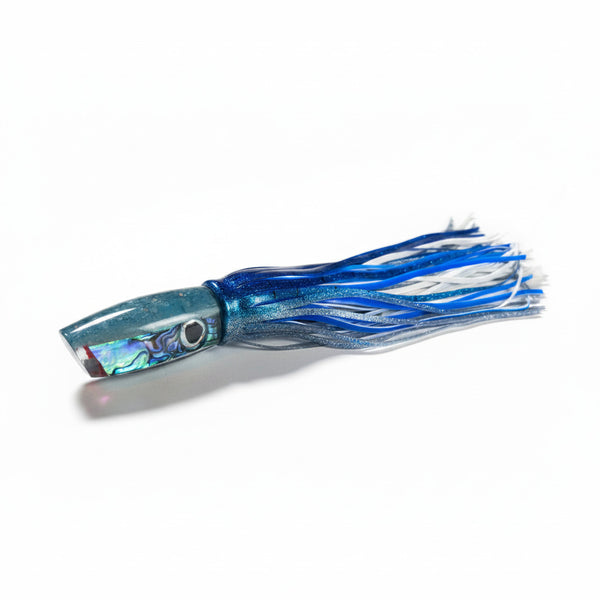
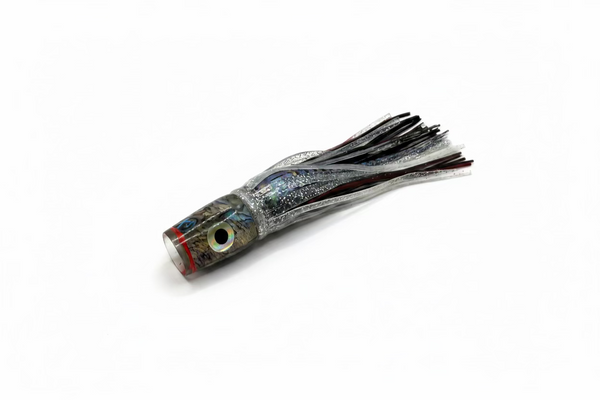
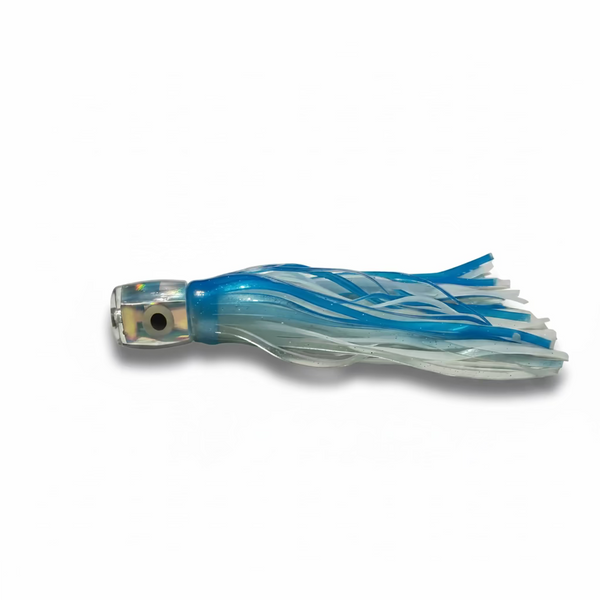
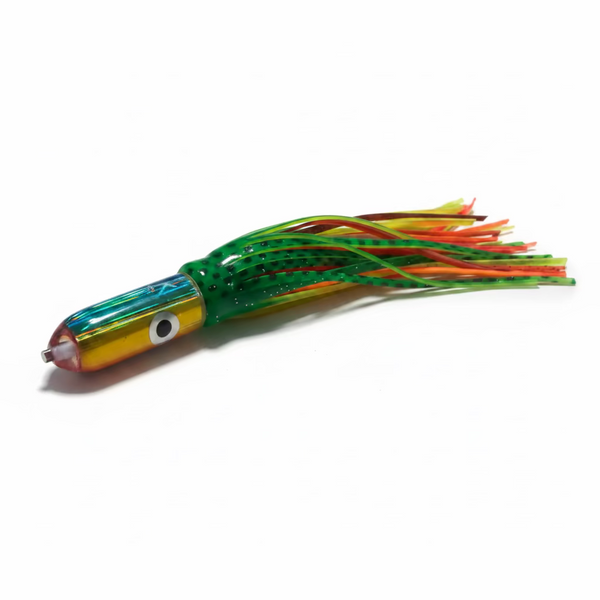
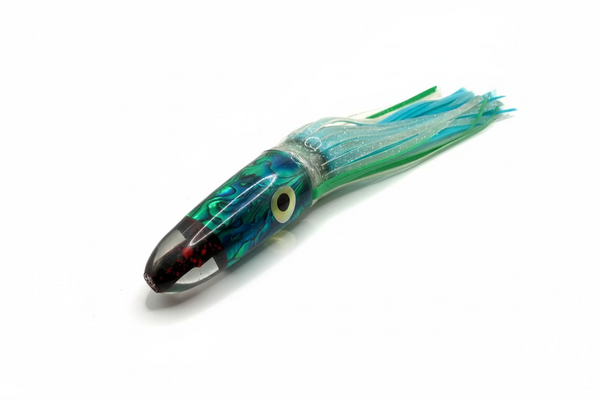
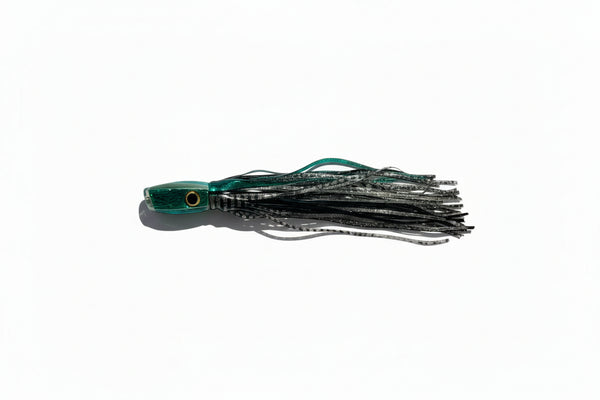
The solution is a non-negotiable, boat-side test. Before setting any lure in the spread, run it next to the boat at your intended trolling speed. A high-quality resin head should exhibit a steady, purposeful swimming motion, not a chaotic spin. This is where the inherent design of professionally engineered lures, such as those in our large resin collection, becomes critical. Their balance and hydrodynamics are engineered for optimal trolling lure action.
Common causes of poor action include:
- Improper hook placement in rigged natural baits
- Fouled leaders or swivels clogged with debris
- Incorrectly seated pin rigs that disrupt balance
- Lure design that is fundamentally unsuited for the intended speed
This quick verification process takes only seconds but is the foundational step for a productive day offshore.
Mistake 2: Running an Overcrowded Spread
There is a persistent belief among some anglers that more lines in the water equate to more opportunities. This approach is often counterproductive. An overcrowded spread frequently leads to severe tangles, especially during turns, in rough seas, or when a fish is hooked. The resulting chaos can cost valuable time and, more importantly, lost fish.
A "less is more" philosophy is far more effective. A clean, well-managed three-to-five-line spread is superior to a crowded and unmanageable one. Fewer lines allow for precise placement in clean water lanes, free from prop wash and turbulence. This simplifies management, reduces the likelihood of tangles, and allows the crew to focus on lure performance and strike detection.
For anglers learning how to set up trolling lines, a foundational strategy is essential. Begin with a simple three-line configuration, such as two flat lines and a long shotgun position. Master the management of this basic spread, understanding how each line behaves during turns and in different sea conditions. Only after achieving complete control should you consider adding more complex positions like outriggers. This methodical approach builds competence and ensures your spread remains an asset, not a liability.
Mistake 3: Improper or Inconsistent Trolling Speed
Trolling speed is one of the most critical variables in your offshore presentation. Each lure is engineered to perform within a specific speed range. Trolling too slowly renders a lure lifeless and unappealing. Trolling too quickly causes it to blow out of the water or spin unnaturally, destroying its intended action. Consistency is just as important; erratic speed changes disrupt the harmony of the entire spread.
Anglers must rely on GPS speed-over-ground (SOG) for accuracy. Engine RPMs are an unreliable measure, as they do not account for the effects of current, wind, or sea state. A highly effective technique is to troll in wide S-turns. This tactic allows you to observe how your lures behave at slightly different speeds as the boat turns, helping you identify the optimal SOG for your specific spread and conditions.
Furthermore, the ideal speed varies by target species. The optimal trolling speed for marlin is generally faster than what is preferred by tuna. Adjustments are necessary based on your target and the prevailing sea state. Speed control is an active, not passive, part of trolling that requires constant attention. To refine your approach, you can select gear based on your target species and its known behaviors.
| Target Species | Typical Trolling Speed (Knots) | Key Considerations |
|---|---|---|
| Blue & Black Marlin | 7.5 - 9.0 knots | Speed may increase in calm seas. Lure action is paramount. |
| Striped Marlin | 6.5 - 8.0 knots | Often respond to a slightly slower, more deliberate presentation. |
| Wahoo | 8.0 - 12.0+ knots | Known to strike high-speed presentations; some anglers troll up to 15 knots. |
| Yellowfin & Bigeye Tuna | 5.5 - 7.5 knots | Often prefer slower speeds, especially when feeding on smaller bait. |
| Dolphin (Mahi-Mahi) | 6.0 - 8.5 knots | Aggressive feeders that respond to a wide range of speeds. |
Mistake 4: Neglecting to Check for Debris
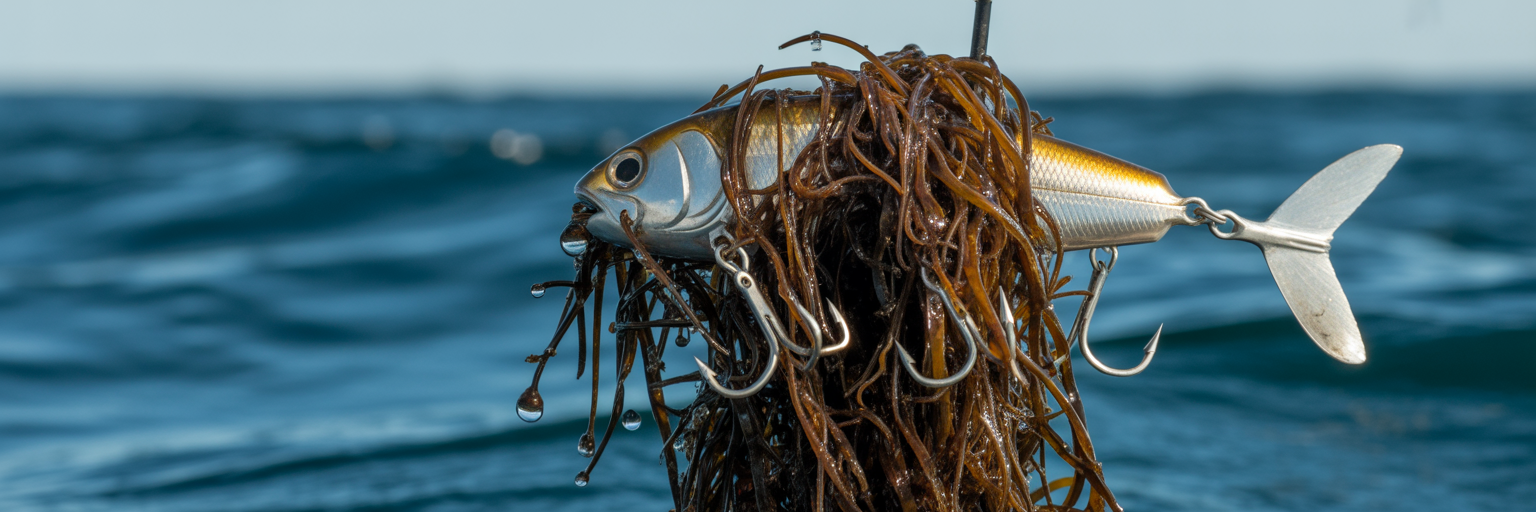
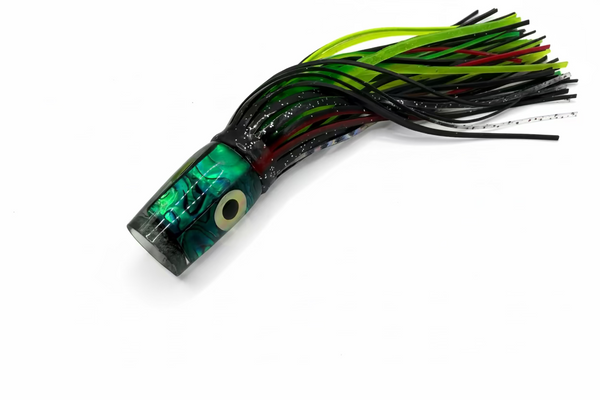
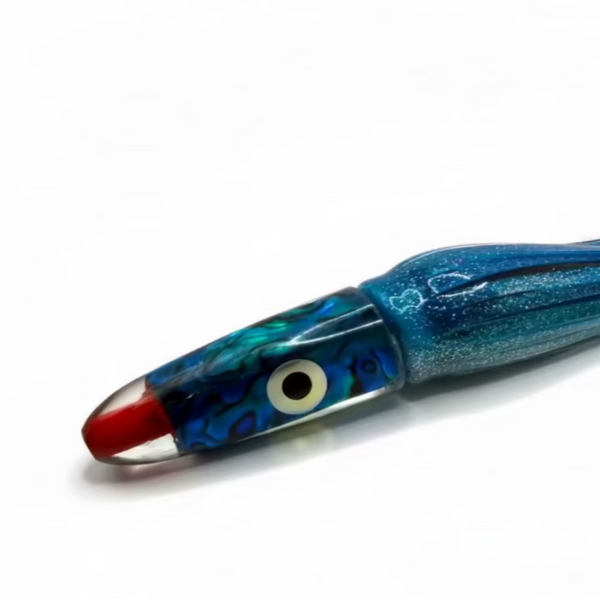
Even a small piece of sargassum weed or floating debris can completely foul a high-performance lure, ruining its action and rendering it invisible to predators. Finely tuned lures, such as a premium blue abalone lure, are particularly susceptible. Their effectiveness depends entirely on a clean, unimpeded presentation that allows their reflective properties to work as designed.
A disciplined checking schedule is not a chore; it is essential system maintenance. We recommend that each line be reeled in and inspected every 15 to 30 minutes, or even more frequently when trolling through weedy areas. This proactive approach ensures every lure in your spread is fishing effectively at all times. Waiting for a lull in the action to check lines is a reactive mistake that costs opportunities.
Proactive observation is a key differentiator of professional crews. Learn to recognize the clear visual cues of a fouled lure:
- A rod tip that ceases its rhythmic, pulsing vibration.
- A fishing line that tracks straight back through the water with no movement.
- The absence of a distinct smoke or bubble trail from the lure head.
When you spot any of these signs, the line must be cleared immediately. A fouled lure is not fishing.
Mistake 5: Poor Terminal Tackle Maintenance
The connection between you and a trophy fish is only as strong as its weakest link. A single point of failure in your terminal tackle guarantees a lost fish. Comprehensive terminal tackle maintenance is not optional; it is a core discipline of successful offshore angling. This involves meticulous attention to hooks, swivels, and leaders.
Hook Integrity
Dull hooks are a primary cause of pulled hooks and lost fish. They fail to penetrate the hard, bony mouths of big-game species like marlin and tuna. Always use premium, chemically sharpened hooks. Before each trip, inspect every hook point for sharpness and touch up any that are not perfectly sticky-sharp. A hook that cannot easily scratch your thumbnail is not ready for service.
The Role of Ball-Bearing Swivels
High-quality ball-bearing swivels are essential for preventing line twist, especially under the heavy, sustained load of a fighting fish or a large lure. Inferior barrel swivels are prone to seizing up under pressure, which introduces destructive twist into your line and can lead to catastrophic failure. Invest in top-tier ball-bearing swivels for all connections to ensure smooth rotation and maximum strength.
Leader and Connection Checks
Your leader is the final, critical link. Before every trip, run your fingers down the entire length of each leader, checking for any nicks, abrasions, or chafing. Any compromised section must be replaced without question. Additionally, all knots and crimps must be executed to professional standards. Use only proven connection methods and test each one rigorously before deployment. A poorly tied knot or a faulty crimp will fail at the moment of truth. Ensuring the integrity of your complete trolling system is paramount.
Achieving Peak Trolling Performance
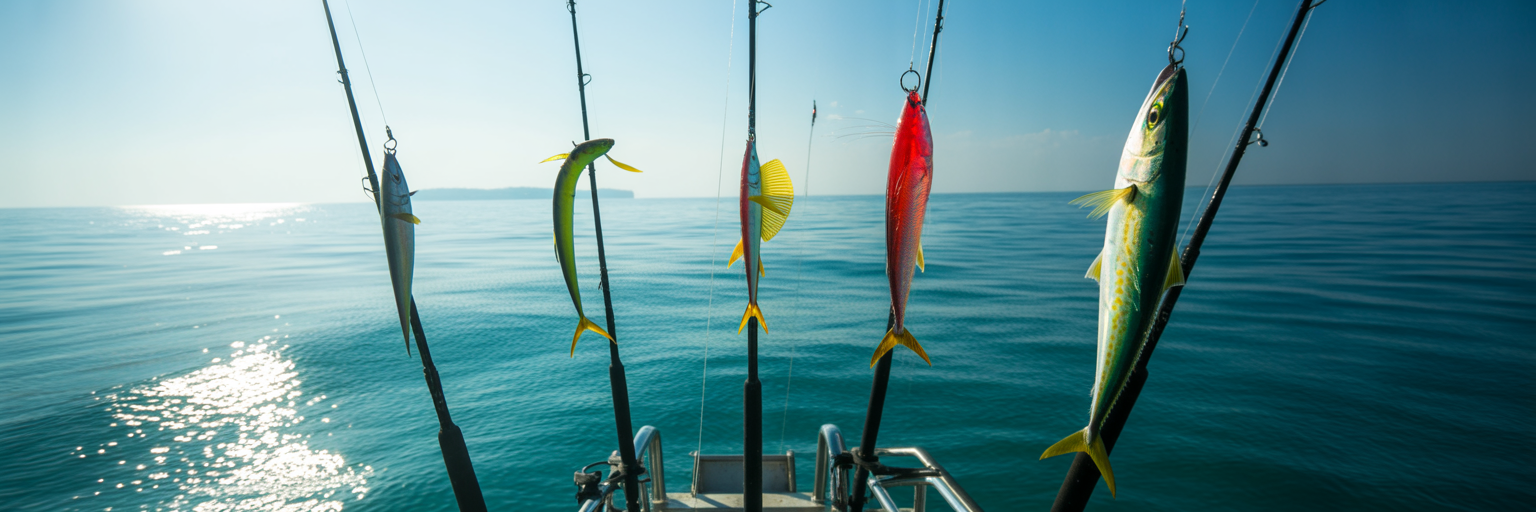
Avoiding these five common mistakes is the foundation of consistent success in big-game fishing. Verifying lure action, managing the spread cleanly, controlling speed with precision, checking for debris, and ensuring tackle integrity are not just suggestions; they are the pillars of a professional operation. Meticulous attention to these details is what maximizes the performance of quality gear and transforms an average day into a highly productive one.
Integrate these practices into your pre-trip preparation and on-water routine. Over time, they will evolve from conscious actions into the ingrained habits that define elite offshore anglers. The pursuit of excellence in fishing is a continuous process of refinement and discipline. At K2Fishing, we are committed to providing the performance-tested equipment that supports this pursuit, helping you turn preparation into unparalleled results on the water.